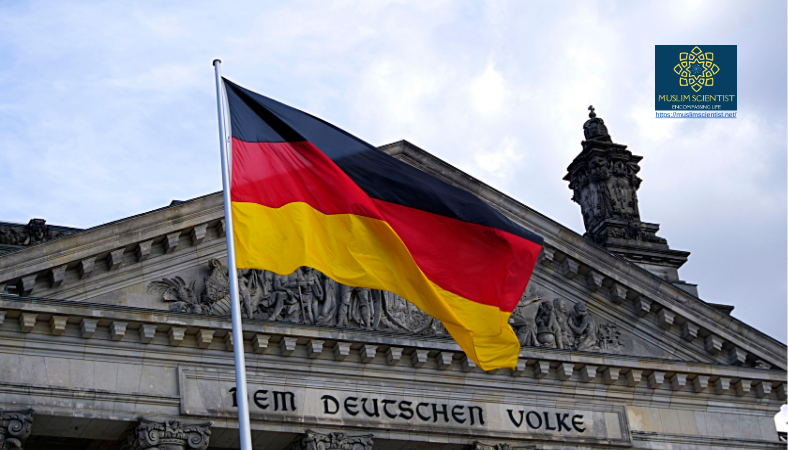
Often discussed but rarely understood in its full complexity, the Muslim community in Germany is coming into clearer focus thanks to new data from the government’s German Islam Conference. Based on the comprehensive “Muslim Life in Germany 2020” study and subsequent analyses, the findings paint a picture of a large, young, and remarkably diverse community that is actively engaged in German society while navigating the realities of religious practice and, for some, discrimination.
With approximately 5.5 million followers, Muslims constitute about 6.6% of Germany’s total population, forming the country’s second-largest religious community after Christians. Nearly three million of them are German citizens. This isn’t a monolithic group; it’s a vibrant tapestry of ethnicities, traditions, and levels of religious observance, challenging stereotypes and inviting a more nuanced public conversation.
“The data is clear: Muslims are a firm part of German society,” said a spokesperson for the German Islam Conference. “They are young, they are active in their communities, and the overwhelming majority feel a strong connection to Germany. Our focus now is on addressing the challenges they face, particularly regarding discrimination, to ensure equal participation for all.”
A Demographic Snapshot: Young, Family-Oriented, and Diverse
The Muslim population in Germany stands out demographically. With an average age of just 32—compared to over 44 for the general population—it is a significantly younger community. This youth carries implications for schools, the future workforce, and civic life. The average Muslim household size is 3.6 persons, reflecting a family-oriented community, while the stereotype of Muslims often living alone is debunked by data showing only about 11% of Muslim households are single-person.
Table 1: The Demographic & Social Profile of Muslims in Germany
| Aspect | Key Data | What It Means |
|---|---|---|
| Total Population | ~5.5 million (6.6% of total) | The second-largest religious community in Germany. |
| Citizenship | Nearly 3 million are German citizens. | Deep legal and formal ties to the German state. |
| Average Age | ~32 years old. | A young community compared to the national average of 44+. |
| Household Size | Average of 3.6 persons. | Indicates a community where family structures are central. |
| Community Activity | 1 in 8 are active in a mosque congregation. | Shows significant organized religious and social engagement. |
| Social Integration | ~65% have weekly contact with native German friends. | Indicates widespread social mixing and open networks. |
The community’s diversity is one of its defining features. While 45% have Turkish roots—still the largest single group—their share has decreased since 2015. A growing 27% have Arab roots, largely from Syria and the Middle East, followed by communities from South-Eastern Europe (19%) and from countries like Afghanistan and Iran (9%). This diversity extends to religious denominations: about three-quarters identify as Sunni, 8% as Alevi, and 4% as Shia.
Faith in Daily Life: Practice, Piety, and Personal Choice
For many Muslims in Germany, religious practice is an integral part of daily life. The data reveals high levels of observance for certain rituals:
- 70% follow Islamic dietary rules.
- 66% celebrate religious holidays like Eid.
- 75% fast during Ramadan (56% completely, 20% in part).
Prayer, one of the five pillars of Islam, is practiced daily by 39% of Muslims. The data also shows a notable gender dynamic in religiosity: Muslim women report being “very devout” at a higher rate than men (one in three vs. one in four), and nearly half of women pray daily compared to just under a third of men.
The topic of the headscarf (hijab) illustrates the personal nature of faith. Only 30% of Muslim women in Germany wear one. The reasons for not wearing it are varied: 77% do not see it as necessary for their faith practice, 56% simply do not like covering their head, and 35% cite fear of social repercussions—a concern validated by studies showing Muslim women with headscarves face significant discrimination in employment, housing, and education.
Facing Reality: The Persistent Challenge of Discrimination
The report does not shy away from documenting the challenges. Experiences of hostility and discrimination due to faith or origin are a reality for many Muslims in Germany. The work of the Independent Expert Group on Anti-Muslim Sentiment (UEM), which published a nearly 400-page report in 2023, is cited as a key resource.
A striking finding is that second-generation Muslims—those born and raised in Germany—often perceive more discrimination than the first generation. Analysts suggest this is because they naturally expect full acceptance as equal members of society and are more sensitive to gaps between that expectation and reality. When asked if “Muslims are not recognised as part of society in Germany,” 14% strongly agreed and another 30% somewhat agreed.
Belonging and Building Bridges: A Story of Connection
Despite these challenges, the dominant narrative from the data is one of connection and belonging.
- Strong Ties to Germany: Over 80% of Muslims said they feel a strong connection to Germany.
- Language at Home: In 75% of Muslim families, German is spoken (often alongside a heritage language) with children, a strong indicator of integration.
- Active in Broader Society: While mosque involvement is high, many Muslims are active in secular associations like sports clubs. A third of those in associations belong to one not linked to their country of origin.
- Openness to Interaction: About 65% have weekly contact with native German friends. Even those with less contact express a strong desire for more, indicating no desire for societal separation.
This openness extends to interfaith engagement: 89% of Muslims have visited a church, though knowledge of and contact with Judaism, as in wider society, is less common.
Table 2: Religious Practice & Social Perception Among German Muslims
| Aspect | Key Data | Context & Implication |
|---|---|---|
| Core Religious Practice | 70% follow dietary rules; 75% fast in Ramadan. | High adherence to central Islamic practices across the community. |
| Daily Prayer | 39% pray daily (higher among women). | Shows a committed core while reflecting a spectrum of observance. |
| Headscarf Wear | 30% of Muslim women. | Demonstrates that piety is expressed personally; many choose not to wear it. |
| Experience of Non-Recognition | 44% agree Muslims are not seen as part of society. | Highlights a significant perception gap affecting sense of belonging. |
| Feeling of Connection | Over 80% feel strong ties to Germany. | Contradicts isolation narratives; shows strong identification with the country. |
The Path Forward: Data as a Foundation for Dialogue
The comprehensive data from the German Islam Conference moves the discussion about Muslims in Germany from speculation to fact. It confirms the community’s deep roots and vibrant diversity, highlights its successful social and civic engagement, and honestly confronts the barriers of discrimination that hinder full equality.
For policymakers and civil society, the evidence provides a roadmap: fostering the clear desire for social interaction, protecting against discrimination (especially for visible markers like the headscarf), and building upon the strong foundation of belonging that most Muslims already feel. For the public, it offers an invaluable opportunity to replace stereotypes with the nuanced, human reality of millions of fellow citizens.
Reference: here
Other Articles: