In the heart of predominantly Catholic Poland, a quiet yet profound transformation is unfolding. Against a backdrop of sweeping political rhetoric and cultural assumptions that often cast Islam as a foreign intruder, a small but significant group of Poles is embracing the religion and, in doing so, redefining what it means to be Polish, faithful, and at home.
This is not a story of radical rupture or imported traditions. Based on intimate research from Jagiellonian University scholars, the narrative of Polish converts to Islam—particularly women—is one of thoughtful synthesis, pragmatic negotiation, and a steadfast claim to their national identity. They are not abandoning Poland; they are weaving their new faith into its existing cultural fabric, creating what researchers term a distinctly “Polish Islam.”
The Landscape: A Small Minority in a Homogeneous Nation
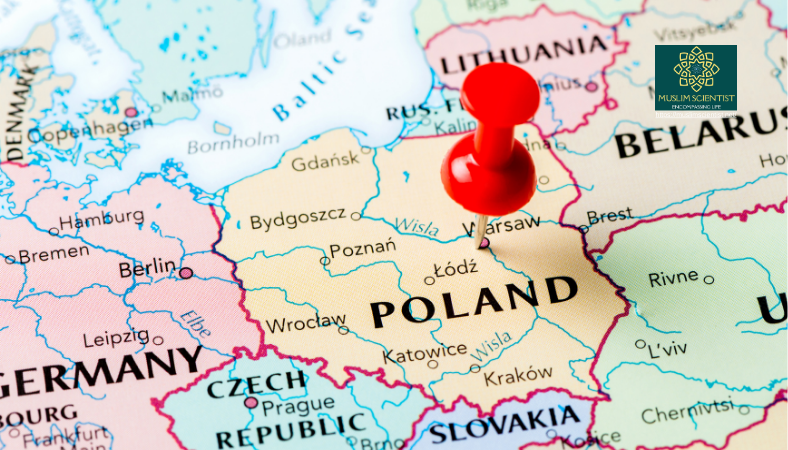
To understand their journey, one must first grasp the context. Poland is one of Europe’s most religiously homogeneous nations, with over 90% identifying as Roman Catholic. The Muslim community is tiny, estimated between 25,000 and 35,000 people in a country of 38 million. This community is itself a mosaic of three groups (see Table 1).
Table 1: The Three Pillars of Islam in Poland
| Group | Estimated Size | Historical & Social Context |
|---|---|---|
| Polish Tatars | Up to 4,500 | Indigenous Muslims with roots dating to the 14th century. Fully assimilated, seen as a historic part of the Polish cultural landscape. |
| Muslim Immigrants | ~20,000 | Diverse population from Muslim-majority countries, including students, professionals, and refugees. |
| Polish Converts | 500 – 3,000 | Ethnic Poles who have chosen to embrace Islam. The primary focus of this research. |
For converts, the path is uniquely complex. They navigate between the established, “Polish” Islam of the Tatars, the diverse global practices of immigrant Muslims, and the dominant Catholic culture that is deeply intertwined with Polish nationalism.
Invisibility and Visibility: Navigating Daily Life
One of the most striking features of Polish Islam is its limited public visibility. There are only a handful of purpose-built mosques. The hijab (headscarf) remains an uncommon sight, often drawing stares or questions.
The women in the study demonstrated remarkable agency in navigating this visibility. Their choices were deeply contextual and pragmatic. For some, wearing the hijab became a powerful act of visible identity. As one convert stated: “I have always been somehow visible… So now it also does not bother me… I do what I think is appropriate.”
For others, concerns about job prospects or protecting their children from stigma led to more private expressions of faith. This flexibility underscores a key finding: for Polish converts, religious practice is not about rigid adherence to a foreign script, but a lived experience negotiated within the realities of Polish society.
This chart reveals a crucial insight: conversion rarely meant social isolation. Most converts maintained strong, active ties with their non-Muslim Polish families and friends.
Blending Traditions: Christmas Carols and Charity
The true heart of “Polish Islam” lies in the creative, everyday blending of traditions. Converts actively renegotiate the meaning of cultural and family rituals, infusing them with Islamic spirit rather than rejecting them outright.
A central dilemma is Christmas—a holiday deeply entwined with both Catholicism and Polish family life. The research found that 71% of converts participated in Catholic holiday celebrations. They reframe these gatherings not as religious compromise, but as cherished cultural and family moments.
“For us Wigilia [Christmas Eve supper] is more of a custom; it’s about sitting together… So I don’t have a problem with it,” explained one interviewee. Some even attend Midnight Mass with their families. In a beautiful act of synthesis, one convert proposed replacing adult Christmas gift exchanges with collective charity donations, aligning the Christian tradition of giving with Zakat (Islamic almsgiving)—a “fusion of something from our tradition and something from Christianity.”
This extends to their public identity. Converts leverage their “Polishness”—their language, cultural knowledge, and lifelong community ties—to neutralize potential “otherness.” A convert in a small village noted that because neighbors had known her since childhood, she was still seen as “one of us, although a Muslim,” unlike her Syrian friend who faced direct prejudice.
Digital Ummah and National Pride
For converts scattered across Poland, the internet has become a vital space for community building, learning, and support. Online forums and social media groups create a “virtual Ummah” (global Muslim community), allowing especially women to explore their faith autonomously and find a collective voice.
This digital space also fuels a fascinating negotiation with Polish nationalism. In the face of political rhetoric that often equates Polish identity with Catholicism and views conversion as a betrayal, many converts respond by emphasizing their Polish patriotism. They cite the centuries-old loyalty of Polish Tatars as proof that Islam and Polishness are compatible.
Some even engage with national events. Despite the presence of far-right, anti-Muslim slogans at the annual Independence March in Warsaw, some Polish Muslims have used social media to encourage fellow believers to attend, asserting their rightful place in the national narrative.
A New Paradigm: The “Potato Islam” Continuum
The research ultimately shatters monolithic views. The experience of Polish Islam exists on a broad spectrum. As one respondent eloquently framed it, this ranges from the invisible, private “potato Islam” (the potato being the Polish staple—humble, everyday, blended into the fabric of life) to the more visible “Scheherazade complex.” Most converts navigate the vast, creative middle ground.
Table 2: Strategies for Integrating Faith and Polish Identity
| Strategy | Description | Example from Research |
|---|---|---|
| Pragmatic Syncretism | Blending Islamic tenets with Polish cultural practices. | Adapting Christmas celebrations to focus on family and charity. |
| Identity Leverage | Using deep cultural capital (language, history) to claim belonging. | A village convert using her local roots to maintain social acceptance. |
| Virtual Community Building | Finding fellowship and theological support online. | Women using forums to discuss practice away from male-dominated spaces. |
| Patriotic Reclamation | Asserting national pride and history to counter nativist rhetoric. | Highlighting Tatar history as evidence of Islam’s Polish roots. |
| Quiet Diplomacy | Personal, one-on-one education through impeccable conduct. | “Being a good neighbor” as a form of dawah (invitation to Islam). |
These women are not defined solely by their religion. They are professionals, daughters, mothers, and citizens. “For me, Islam means first of all a respect for another human being… It doesn’t matter if it is an animal, an elderly person or a gay person or a lesbian… I will respect them and worship God in that way,” shared one convert, framing Islamic ethics as an enhancement of universal values.
Conclusion: Redefining the Possible
The story of Polish converts to Islam is a powerful antidote to narratives of clash and irreconcilable difference. It is a story of agency, creativity, and resilient belonging. They demonstrate that faith can be adopted without abandoning one’s culture, and that identity is not a zero-sum game.
They are building a Polish Islam—not as a separate enclave, but as a woven thread in the national tapestry. As boldly declared in a post on the “Islam for Poland” Facebook group, their identity is both/and, not either/or: “I am Polish, I am Muslim, and I am very proud of it.” In their quiet, determined way, they are expanding the very meaning of what it is to be at home.
Reference: here
Other Articles: