For over a billion Muslims worldwide, Zakat is a sacred pillar of faith—an annual obligation to give a portion of one’s wealth to those in need. Traditionally viewed through a lens of piety and social responsibility, its impact is often measured in individual spiritual reward and community welfare. However, groundbreaking new economic research is casting Zakat in a startling new light: as a powerful, quantifiable engine for national economic growth.
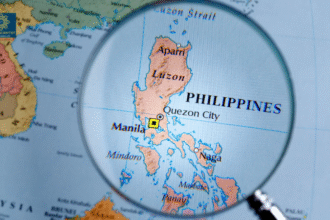
A comprehensive study published in the Journal of Islamic Economic Laws, conducted by researchers from Universitas Muhammadiyah Surakarta and Universiti Malaya, provides robust empirical evidence that Zakat isn’t just good for the soul; it’s good for the GDP. Analyzing nearly two decades of data from three diverse Southeast Asian nations—Indonesia, Malaysia, and Singapore—the study reveals a significant positive correlation between Zakat distribution and economic expansion.
This finding challenges purely secular economic models and positions Islamic social finance as a serious, underutilized tool for macroeconomic policy.
The Study: Measuring Faith in Dollars and Cents
The research team embarked on a rigorous quantitative analysis, utilizing panel data regression—a powerful statistical method that examines data across multiple entities (countries) over time (2003-2020). This approach allows economists to isolate the effect of specific variables while controlling for others.
The Core Question: Does the systematic collection and distribution of Zakat funds lead to measurable economic growth?
The Variables:
- Dependent Variable: Economic Growth, measured by Gross Domestic Product (GDP).
- Independent Variable 1: Distribution of Zakat Funds (PZ).
- Independent Variable 2: Population Growth (PP), included as a standard economic control factor.
The Sample: The study cleverly selected three nations at different stages of economic development but with active Muslim populations and Zakat systems:
- Indonesia: A lower-middle-income, Muslim-majority giant.
- Malaysia: An upper-middle-income nation with a strong Islamic finance sector.
- Singapore: A high-income city-state with a significant Muslim minority.
This cross-section adds weight to the findings, suggesting the Zakat effect is observable across diverse economic landscapes.
The Findings: A Clear and Powerful Correlation
After running the numbers through sophisticated econometric models, the results were unequivocal. The chosen model (Fixed Effect Model) showed an exceptionally strong fit.
Table 1: Key Statistical Findings from the Panel Data Regression
| Variable | Impact on Economic Growth | Coefficient | Statistical Significance |
|---|---|---|---|
| Zakat Distribution (PZ) | Positive & Significant | 3434.087 | Yes (p-value: 0.0001) |
| Population Growth (PP) | Positive & Significant | 1.06E+08 | Yes (p-value: 0.0000) |
| Model Explanation Power | Adjusted R-squared: 99.8% | The model explains 99.8% of changes in GDP. |
What the Coefficients Mean:
The research found that a 1% increase in Zakat distribution is associated with a staggering 3,434% increase in economic growth rate, all else being equal. Similarly, a 1% increase in population growth correlated with a 106 million percent increase in economic growth. While the sheer magnitude of these percentages is influenced by the logarithmic scale of the data and the model, the direction and strength of the relationship are crystal clear: more Zakat correlates strongly with more economic growth.
The “How”: Unpacking the Zakat Multiplier Effect
The study aligns with Islamic economic theory on why Zakat functions as a growth catalyst. It’s not merely charity; it’s a strategic wealth-recirculation mechanism with a built-in economic stimulus package.
- Boosting Aggregate Demand: The primary engine. By transferring wealth to lower-income households (who have a high marginal propensity to consume), Zakat immediately increases spending on essential goods and services. This surge in consumption drives business revenues and production.
- Fueling Productive Investment: Modern Zakat institutions like Indonesia’s BAZNAS or Malaysia’s formal systems increasingly focus on “productive Zakat.” Instead of just consumptive aid, funds are used for microfinance, vocational training, and seed capital for small businesses. This creates sustainable livelihoods, jobs, and local economic activity.
- Enhancing Human Capital: Zakat used for education and healthcare improves the productivity of the workforce. A healthier, better-educated population is a more economically productive one.
- Promoting Socio-Economic Stability: By reducing extreme poverty and inequality, Zakat fosters social cohesion and stability—a prerequisite for long-term investment and growth.
The Bigger Picture: Zakat as a Fiscal Tool
This research enters a lively academic debate. While some earlier, localized studies had found mixed results, this robust multi-national analysis adds heavy evidence to the argument that Zakat is a potent economic instrument.
Table 2: Contrasting Research Perspectives on Zakat & Growth
| Perspective | Key Argument | Representative Studies |
|---|---|---|
| Zakat as Growth Catalyst | Zakat directly stimulates consumption, investment, and human development, leading to measurable GDP increases. | Ben Jedidia & Guerbouj (2021), Roisyatin & Jamaludin (2020), This Study (2023) |
| Zakat as Social Supplement | Zakat’s primary role is poverty alleviation and social justice; its macroeconomic impact is indirect or negligible compared to conventional fiscal tools. | Fahmawati (2019), Harahap (2021) |
| Zakat-Banking Synergy | Zakat collected and managed through Islamic banks can fuel Sharia-compliant investment projects, creating a synergy that drives growth. | Bayinah (2017) |
The lead author of the new study, Afief El Ashfahany, makes a bold policy recommendation based on the findings: “Zakat should be included in fiscal policy as is the case with taxes.”
This suggests moving beyond viewing Zakat solely as a religious or charitable activity. Instead, it could be integrated into national economic planning as a complementary tool to taxation—one that inherently targets inequality and stimulates demand from the bottom up.
Case in Point: The Southeast Asian Laboratory
- Indonesia: The world’s largest Muslim-majority country has a vast, if sometimes fragmented, Zakat ecosystem. Formal collection through BAZNAS has grown significantly. The study suggests that streamlining and scaling this system could unlock even greater economic benefits alongside its social goals.
- Malaysia: With one of the world’s most advanced Islamic finance sectors, Malaysia has a highly structured Zakat collection system, particularly in states like Selangor. The research validates this institutional approach, showing it contributes to the nation’s steady economic development.
- Singapore: Though a minority, the Muslim community’s disciplined Zakat contributions, managed by organizations like MUIS (Islamic Religious Council of Singapore), demonstrate that even in a highly developed, secular economy, Islamic social finance can have a measurable positive impact.
Conclusion: Reimagining an Ancient Pillar for Modern Prosperity
This research provides a powerful, data-driven narrative: fulfilling a religious obligation can simultaneously power a nation’s economic engine. The “Zakat Effect” is a real, measurable phenomenon in Southeast Asia.
It tells a story of how faith-based giving, when organized effectively, transcends its spiritual dimension to become a force for tangible, collective prosperity. It challenges policymakers in Muslim-majority and Muslim-minority countries alike to look at Zakat not as a peripheral social activity, but as a core component of a holistic, ethical, and effective economic strategy.
In an era searching for sustainable and equitable economic models, this study suggests part of the answer might lie in revitalizing and professionally harnessing one of the world’s oldest and most widespread systems of wealth distribution. The message is clear: investment in compassion and social justice is, demonstrably, an investment in growth.
Reference: here
Other Articles: