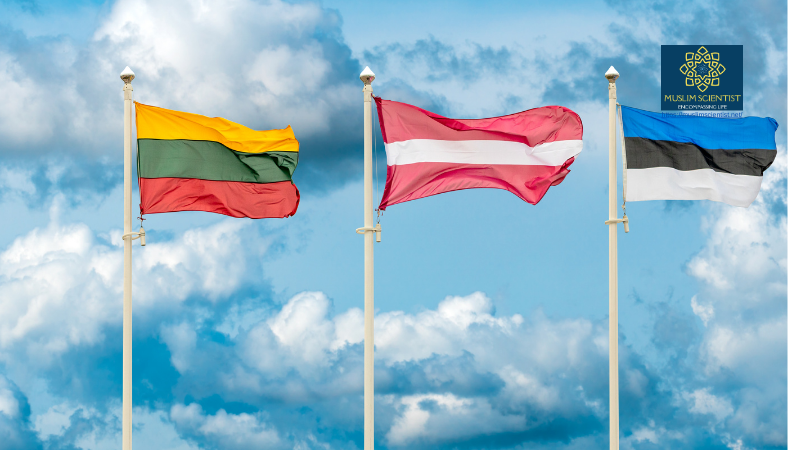
In a corner of Europe often overlooked, a quiet revolution is unfolding. In the post-Soviet Baltic states of Lithuania, Latvia, and Estonia—societies historically defined by Christianity, then atheistic communism, and now a cautious European identity—a small but significant group of women is finding profound empowerment in an unexpected place: Islam.
A qualitative study from Vytautas Magnus University challenges the pervasive Western narrative that pious Muslim women, especially in minority settings, are passive victims of a patriarchal religion needing liberation. Through in-depth interviews with 15 devout Baltic Muslim women—primarily converts—the research reveals a complex tapestry of agency, deliberate choice, and personal fulfillment rooted in faith. These women are not finding their primary agency in secular human rights frameworks or feminist emancipation, but within Islam itself, which provides them with meaning, guidance, and a powerful sense of self in societies still navigating their own post-communist identities.
Navigating a Unique Social Landscape
The Baltic context is crucial. These are not multicultural Western European states with long histories of immigration. They are societies with a “patriarchal renaissance,” where attitudes toward gender, sexuality, and religious minorities like Muslims can be more conservative than in Western Europe. Here, the idea of human rights is relatively new, coinciding with the increased visibility of Islam after the Soviet collapse in 1990.
Table 1: The Baltic Context – A Unique Stage
| Aspect | Baltic Reality | Impact on Muslim Women |
|---|---|---|
| Historical Religion | Overwhelmingly Christian (Catholic, Lutheran, Orthodox). | Islam is a distinct minority, making conversion a deliberate, counter-cultural choice. |
| Soviet Legacy | 50 years of enforced atheism and suppressed feminism. | Creates a spiritual vacuum and a search for meaning post-1990. |
| Gender Attitudes | “Patriarchal renaissance”; conservative on gender/LGBT+ issues. | Societal values sometimes align with conservative religious views, reducing internal conflict on some topics. |
| View of Muslims | Often seen as a threat to national security and Christian culture. | Women face potential discrimination, making their choice of faith even more agentive. |
Islam as a Source of Rational Guidance, Not Oppression
Contrary to the stereotype of faith as a blind, emotional leap, these women overwhelmingly described their conversion to Islam as a gradual, rational, and deliberate process. They spoke of studying, comparing, and intellectually engaging with theology. One woman, Ilze (51), contrasted her emotional acceptance of Christianity with her conversion to Islam: “It was a more rational decision because I just sat down and really looked at what I believed and what I didn’t believe.”
For them, Islam provides a clear, comprehensive “code of conduct” for life. It offers answers and structure in societies still experiencing turbulent political, economic, and cultural change. They describe the transformation in terms of peace, clarity, and harmony: it “opened their eyes,” “put everything into place.”
Agency in Life’s Domains: Family, Career, and Community
The study dismantles the simplistic binary of “religious submission” versus “secular freedom.” It shows how these women exercise sophisticated agency across all aspects of their lives:
- In Marriage & Family: They actively seek “good Muslim husbands” based on character, morality, and observance—viewing marriage as a rational choice, not just a romantic one. They find empowerment in the clear roles and responsibilities Islam prescribes, seeing them as a framework for mutual respect and a strong family unit, which is highly valued in Baltic society.
- In Career & Self-Realization: Most are highly educated. They see professional life as an important sphere for personal autonomy and self-realization, often planning to build careers once their children are older. They negotiate between the secular Baltic value of female employment (the Soviet “two-shift” model) and their religious priorities, making conscious choices about balancing work and family.
- In Sisterhood & Community: The Muslim female community is a powerhouse of support. It’s a space for religious study, emotional bonding, practical help, and intellectual debate. This “sisterhood,” as one woman called it, acts as a vital safety net and source of solidarity in societies where such female-centric communities are rare.
Table 2: Where Baltic Muslim Women Find Agency
| Domain of Life | Source of Agency & Empowerment | Key Insight |
|---|---|---|
| Faith & Identity | Rational Choice: Deliberate conversion after study. Guidance: Islam provides a clear moral & life framework. Meaning: Offers peace, structure, and purpose post-communism. | Faith is an active, intellectual pursuit, not passive inheritance. |
| Marriage & Family | Deliberate Spouse Selection: Based on piety and character. Clear Roles: Prescribed family roles provide structure and expected mutual respect. Protection: Down-to-earth view of marriage as a safeguard. | Agency lies in choosing and navigating the structure, not rejecting structure itself. |
| Career & Personal Growth | Educational Achievement: High level of university education. Negotiated Balance: Conscious choice to sequence career and family. Space for Autonomy: Career seen as a sphere for self-realization. | Piety does not preclude professional ambition or personal development. |
| Community & Belonging | Pious Sisterhood: Source of theological learning, emotional support, and practical help. Safety Net: Provides belonging and counters potential isolation. | Community is a chosen family and a platform for growth. |
A Nuanced View on Human Rights
The women’s perspectives on issues like divorce, contraception, and gender-based violence are often pragmatic and rooted in their understanding of Islamic teaching. They overwhelmingly reject violence against women, offering nuanced interpretations of scripture. On LGBT+ rights, their views tend to be conservative, aligning with both their religious teachings and the prevailing conservatism of broader Baltic society. This highlights a key finding: their agency is not about adopting liberal Western secular values wholesale, but about interpreting and living their faith authentically in their specific context.
Redefining the Secular and the Religious
The stories of these Baltic Muslim women fundamentally challenge the tired dichotomy that pits “secular” (progressive, free) against “religious” (backward, oppressive). They demonstrate that agency—the capacity to act meaningfully—can be found in piety, in chosen submission to divine will, in the nurturing of family, and in the bonds of a faithful community.
They are not seeking to be “saved” by a secular feminist narrative. Instead, they are building lives of purpose, clarity, and community on their own terms. In the dynamic, often uncertain landscape of post-Soviet Europe, they have found in Islam not a cage, but a compass—and with it, the profound agency to navigate their own path.
Reference: here
Other Articles: