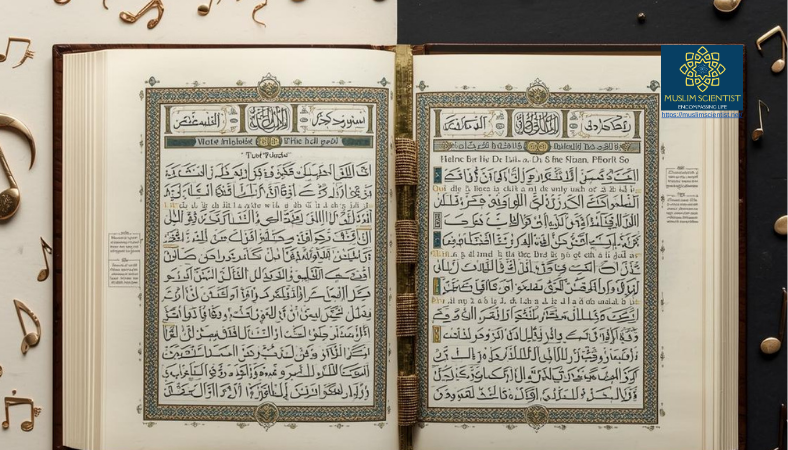
In a world where stress has become a global epidemic, affecting students, workers, and families alike, a new scientific study offers a beacon of hope. The research provides strong evidence that two accessible, low-cost tools—listening to relaxing music and reciting holy verses—can significantly lower the body’s primary stress hormone.
A randomized controlled trial published in the reputable journal Current Psychology (Springer) investigated the effects of listening to music versus listening to the recitation of Surah Al-Rahman (a chapter from the Holy Quran) on medical students in Pakistan. Medical students are known to experience extraordinarily high levels of stress, making them an ideal group for such research.
The findings are clear and encouraging: both methods work, but one showed a statistically significant edge. This article breaks down the science in simple terms, explains why this matters for everyone, and presents the encouraging data in an easy-to-understand format.
The Science of Stress: It’s in Your Saliva
To understand why this study is important, we first need to understand how scientists measure stress. It’s not just about feeling overwhelmed; stress has a physical signature. When you are stressed, your body releases a hormone called cortisol. Think of cortisol as the body’s built-in alarm system. It’s essential for survival, but when the alarm is ringing constantly due to chronic stress, it can lead to serious health problems like anxiety, depression, heart disease, and poor sleep.
Scientists can measure cortisol levels in saliva. This gives them a direct, biological snapshot of a person’s stress level. The study, led by researchers Shemaila Saleem and Tamkeen Saleem, used this exact method to get objective data, alongside a standard psychological questionnaire (the Depression Anxiety Stress Scale, or DASS) to measure how stressed the students felt.
How the Study Worked: A Fair Test
To get reliable results, the researchers designed a rigorous experiment.
- The Participants: 60 medical students were recruited.
- The Groups: They were randomly split into two equal groups of 30.
- Group 1 (Experimental): Listened to the recitation of Surah Al-Rahman.
- Group 2 (Control): Listened to general relaxation music.
- The Process: Before and after listening, each student’s stress level was measured in two ways: 1) by testing their saliva for cortisol, and 2) by having them fill out the stress questionnaire.
This setup allowed the researchers to compare not only the before-and-after effect for each group, but also to compare the effectiveness of the Quranic verses versus the music.
The Results: What the Data Revealed
The results were striking. Both groups experienced a significant drop in stress, proving that auditory relaxation is a powerful tool. However, the group that listened to the Quranic verses experienced a greater reduction in stress compared to the music group.
Let’s look at the key findings in two simple tables.
Table 1: The Drop in Stress Levels (Before vs. After)
This table shows the change within each group. Both methods were successful.
| Measurement | Group | Before Listening | After Listening | Result |
|---|---|---|---|---|
| Cortisol Level (biological stress) | Quran Group | Higher Level | Significantly Lower | ✅ Stress hormone decreased |
| Music Group | Higher Level | Significantly Lower | ✅ Stress hormone decreased | |
| Stress Scale Score (felt stress) | Quran Group | Higher Score | Significantly Lower | ✅ Felt less stressed |
| Music Group | Higher Score | Significantly Lower | ✅ Felt less stressed |
Table 2: The Winning Comparison (Quran vs. Music)
This table compares the two methods against each other. It shows which one was more powerful.
| Measurement | Comparison | Key Finding |
|---|---|---|
| Reduction in Cortisol | Quran Group vs. Music Group | Quran was statistically more effective at lowering the stress hormone. |
| Reduction in Stress Scores | Quran Group vs. Music Group | Quran was statistically more effective at reducing feelings of stress. |
| Influence of Gender or Habit | Both Groups | Results were the same for men and women, and it didn’t matter if they regularly listened to music or the Quran. The effect was universal. |
In simple terms, both listening to relaxing music and listening to the Quran significantly reduced stress, but the Quranic recitation was found to be significantly more powerful.
Why Is This So Important?
This research is a big deal for several reasons, touching on science, health, and spirituality.
- It Validates Ancient Wisdom with Modern Science: For centuries, people have turned to prayer, scripture, and music for comfort. This study provides biological proof that these practices have a real, measurable effect on our bodies. It shows that spiritual and artistic practices are not just “nice” but are powerful tools for physical health.
- It Offers Accessible, Low-Cost Solutions: You don’t need expensive therapy or medication to start managing stress. Almost everyone has access to music or a recording of a holy text. This makes stress management available to people regardless of their economic situation.
- It Highlights a Specific, Powerful Tool: While music is clearly effective, the study suggests that the specific rhythm, sound, and spiritual significance of Surah Al-Rahman had a deeper impact. The Surah, whose name means “The Most Merciful,” focuses on the blessings of God, which may provide a unique sense of peace and security for listeners.
- It Speaks to a Universal Problem: Stress doesn’t discriminate. It affects students, parents, office workers, and the elderly. This study offers a simple strategy that anyone, anywhere, can add to their daily routine.
What This Means for You
You don’t have to be a medical student or even religious to benefit from this. The principle is clear: what we listen to has a profound effect on our biology and our mood.
- For Everyone: If you’re feeling overwhelmed, try this experiment on yourself. Set aside 15-20 minutes in a quiet place. Listen to your favorite calming music or, if you are open to it, a recitation from a spiritual text that is meaningful to you. Pay attention to how your body feels afterward.
- For Students: In the high-pressure environment of exams and grades, this is a study technique you can use. A short listening break could be more effective at resetting your brain than scrolling through social media.
- For Healthcare and Wellness: This study adds to the growing field of mind-body medicine. It suggests that doctors and mental health professionals could consider recommending spiritual or musical listening as a complementary therapy for stress management.
The study also noted that there were no differences based on prior experience with music or the Quran. This means you don’t need to be an expert or a regular listener to feel the benefits. The effect is immediate and accessible to all.
A Simple Prescription for a Stressed World
This research from Current Psychology offers a powerful and hopeful message. In our search for complex solutions to modern problems like stress, we are reminded that profound healing can sometimes be found in simple, ancient practices. Whether it’s the universal language of music or the spiritual resonance of holy verses, taking a moment to listen can be a direct line to a calmer, healthier state of being. The next time you feel the weight of the world on your shoulders, consider putting on your headphones. The cure for your stress might just be a listen away.
Reference: here
Other Articles: