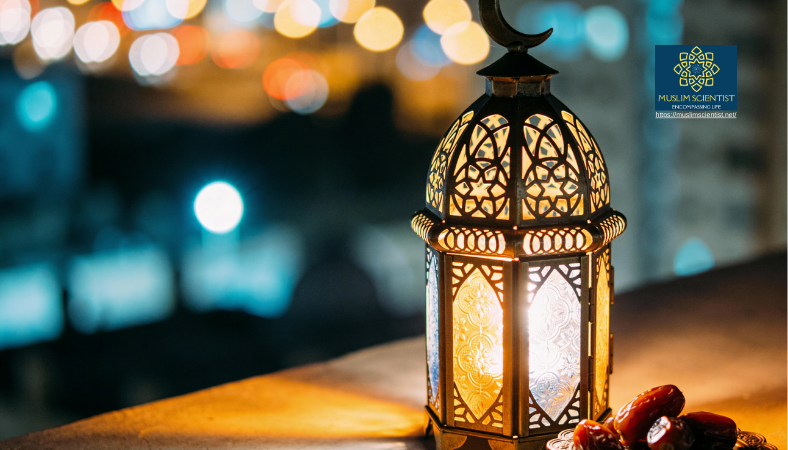
Ramadan is not only a month of spiritual reflection, but also does something far more profound: it actively builds and strengthens social cohesion within Muslim communities through the powerful combination of collective worship and generosity.
A study examined 600 Muslims across Yogyakarta and West Sumatra provinces, uncovering the mechanisms through which Ramadan transforms individual religious observance into powerful community bonds. The research provides the first empirical evidence of how fasting rituals directly contribute to what sociologists call “social cohesion” — the glue that holds communities together.
The Science Behind Ramadan’s Social Magic
What happens inside Muslim communities during Ramadan that makes them more united? The study identifies two critical factors working together: mechanical solidarity and generosity.
Mechanical solidarity, a concept introduced by pioneering sociologist Émile Durkheim, refers to the bonds that develop when people share similar values, beliefs, and practices. During Ramadan, this solidarity manifests as collective consciousness — the shared awareness that “we are all fasting together” — and cooperation spirit — the willingness to help one another.
But here’s what makes the Indonesian study unique: researchers discovered that generosity acts as a powerful amplifier, transforming basic solidarity into lasting social cohesion.
“The relationship between mechanical solidarity and social cohesion becomes significantly stronger when mediated by generosity,” the authors explain. In plain language: when Muslims give to others during Ramadan — through alms (sedekah) and Islamic charity (infaq) — the bonds of community grow exponentially stronger.
What the Numbers Tell Us
The statistical analysis reveals compelling patterns that demonstrate Ramadan’s impact on Indonesian Muslim communities.
Table 1: How Ramadan Strengthens Different Aspects of Community Life
| Aspect of Social Cohesion | Key Finding | Statistical Significance |
|---|---|---|
| Moral Feeling | Strengthened by collective consciousness and generosity | p < 0.001 |
| Social Harmony | Directly enhanced by collective worship | p < 0.001 |
| Tolerance | Increased through cooperation spirit | p < 0.001 |
| Sense of Belonging | Strengthened when giving becomes routine | p < 0.01 |
*Note: p-values below 0.05 indicate statistically significant results*
The research team used sophisticated path analysis through SmartPLS software, revealing that collective consciousness directly influences moral feeling and social harmony. Meanwhile, the spirit of cooperation significantly impacts tolerance and sense of belonging.
But perhaps most encouraging is what happens when generosity enters the equation.
Table 2: Generosity as a Community-Building Amplifier
| Path of Influence | Effect Size | Impact on Community |
|---|---|---|
| Collective Consciousness → Alms → Social Cohesion | Strong | Shared beliefs lead to giving, which unites communities |
| Cooperation Spirit → Infaq → Social Cohesion | Moderate | Working together inspires charitable giving |
| Direct Giving → Moral Feeling | Significant | Individual generosity shapes personal ethics |
| Giving → Social Harmony | Robust | Charitable acts create peaceful coexistence |
Why This Matters Beyond Indonesia
The findings from Yogyakarta and West Sumatra carry implications for Muslim communities worldwide and for understanding how religious practices contribute to social stability in an increasingly fragmented world.
“Social cohesion is defined as a process of valuing, expressing, and promoting love, trust, admiration, peace, harmony, respect, generosity and equity upon other people,” the study notes, citing scholar Sharma. During Ramadan, this process accelerates dramatically.
The research identified five key dimensions of social cohesion that strengthen during the holy month:
- Moral feeling — the internal compass guiding ethical behavior
- Tolerance — respect for differences in thought and background
- Sense of belonging — feeling part of something larger than oneself
- Social harmony — peaceful coexistence with others
- Sense of security — feeling safe within one’s community
All five dimensions showed measurable improvement during Ramadan, with generosity serving as the critical bridge between individual observance and community benefit.
The Generosity Factor: More Than Just Charity
What makes Islamic generosity unique during Ramadan? The study distinguishes between two forms:
Alms (sedekah) — voluntary charity given to those in need, motivated by compassion and religious duty.
Infaq (infaq) — spending from one’s resources for specific purposes that benefit the community.
Both forms of giving spike dramatically during Ramadan, creating what researchers call a “virtuous cycle” of community strengthening. When people give, they feel more connected. When they feel more connected, they give more. The month-long duration of Ramadan allows this cycle to deepen and create lasting change.
“Generosity activities supported mechanical solidarity in strengthening social cohesion among Muslims in Yogyakarta and West Sumatra,” the study concludes.
Real-World Implications
For community leaders, policymakers, and religious figures, these findings offer practical insights:
For mosque leaders: Creating structured opportunities for charitable giving during Ramadan can multiply the social benefits of fasting. When congregants give together, they bond together.
For educators: Teaching children about both the spiritual and social dimensions of Ramadan charity can help build the next generation’s commitment to community.
For policymakers: Supporting religious charitable institutions strengthens not just individual welfare but entire communities’ social fabric.
For philanthropists: Understanding that Ramadan giving creates social cohesion as well as material support suggests strategic opportunities for maximizing impact.
What Makes Indonesian Ramadan Unique
The study’s location in Yogyakarta and West Sumatra offers fascinating insights into how local culture shapes religious practice. Both provinces are known for strong religious and cultural traditions, making them ideal laboratories for understanding Ramadan’s social effects.
In Yogyakarta, the study found that traditional practices like ruwahan (pre-Ramadan ancestral rituals), tarawih (night prayers), and tadarus (Qur’an recitation) create multiple opportunities for community bonding. In West Sumatra, with its strong Minangkabau Islamic traditions, the communal aspects of breaking fast together and sharing food reinforce social ties.
Yet despite local variations, the underlying pattern remained consistent: Ramadan strengthens communities through the combination of shared ritual and mutual giving.
Beyond the Spiritual: Ramadan’s Measurable Social Impact
The study challenges previous research that focused narrowly on Ramadan’s spiritual dimensions. While acknowledging the month’s religious significance — the belief that “the gates of heaven are wide open, forgiveness is abundant, prayers are granted, and goodness is multiplied” — the researchers demonstrate that these beliefs translate into measurable social outcomes.
This matters because it shows that religious observance isn’t separate from social well-being. Instead, the two reinforce each other. Strong religious commitment during Ramadan produces stronger communities. Stronger communities, in turn, support individual religious practice.
The Bigger Picture: Religious Ritual and Social Health
The Indonesian study joins a growing body of research examining how religious practices contribute to social capital — the networks, norms, and trust that enable communities to function effectively.
Previous studies have examined Ramadan’s effects on economic behavior, tourism, and individual piety. But this research is among the first to systematically analyze how the month’s rituals create lasting social bonds.
“The elaboration on the factors accelerating social cohesion is an important issue for social and religious studies,” the authors note. “It is useful for transforming the dimensions of Islamic rituals into social impacts and determining harmony between religious communities in the future.”
What This Means for Non-Muslims
While the study focuses on Muslim communities, its implications extend to anyone interested in how communities build and maintain cohesion. The basic pattern — shared rituals plus mutual giving equals stronger communities — likely operates in many religious and cultural contexts.
Christmas charity drives, Passover gatherings where families welcome strangers, Diwali celebrations where communities share food and light — similar dynamics may be at work wherever people gather and give together.
The study suggests that the combination of shared experience and generosity creates uniquely powerful opportunities for community building. This insight could inform everything from urban planning to educational programming to corporate team-building.
Looking Forward: Building on the Findings
The researchers acknowledge limitations — the study focused on two Indonesian provinces and examined a single religious tradition. But they express hope that future research will expand these findings.
Future studies could examine whether similar patterns appear in Muslim communities in different countries, whether the effects persist beyond Ramadan, and how different forms of charitable giving compare in their community-building effects.
“This can be re-examined by involving a wider population, which is useful for testing the consistency of the model,” the authors suggest. “At the same time, it becomes a policy foundation to strengthen the schemes of generosity as an instrument to identify the quality of social life of Muslims.”
Reference: here
Other Articles: