You take a pill for your headache. You receive a vaccine. You use an insulin pen for diabetes. In most cases, you never think about where the ingredients in these medicines come from. But for the world’s 2.4 billion Muslims, that question matters deeply.
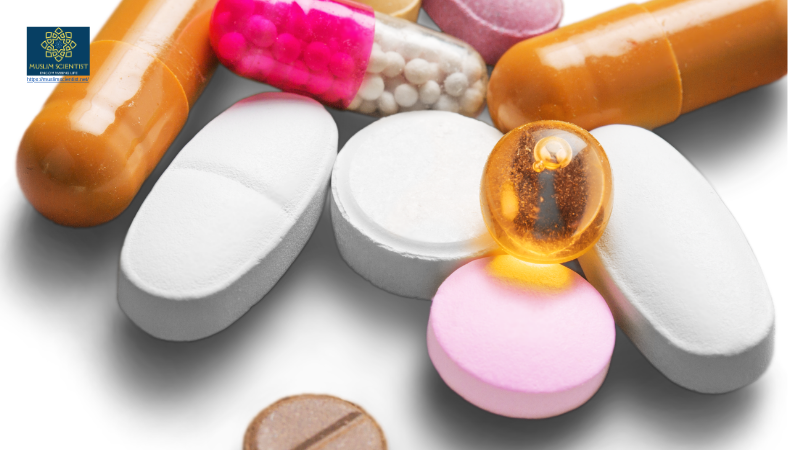
Many common medications—from capsules and tablets to blood thinners and insulin—contain ingredients derived from pigs (porcine sources). Porcine gelatin is used in capsule shells. Porcine heparin is used as a blood thinner. Porcine insulin has been used for decades to treat diabetes. Even some vaccines use porcine gelatin as a stabilizer.
Islamic law explicitly prohibits the consumption of pork and its derivatives. The Qur’an states: “Forbidden to you are dead meat, blood, the flesh of swine…” (Qur’an 5:3). This prohibition applies to medicines and pharmaceuticals just as it applies to food. The result is a profound dilemma for observant Muslims: What do you do when the medicine you need contains a prohibited ingredient?
A comprehensive new review titled “Towards halal pharmaceutical: Exploring alternatives to animal-based ingredients,” provides answers. The paper, authored by researchers from Indonesian and Malaysian universities, examines the current state of halal pharmaceuticals, identifies the challenges, and maps out a promising future of alternatives.
The Scale of the Problem: How Common Are Porcine Ingredients?
You might be surprised to learn how many common medications contain porcine-derived ingredients:
- Gelatin is derived from pig skin, bones, and tendons. It is used as a gelling agent in soft and hard capsules, as a stabilizer in vaccines, and as a coating for tablets. The review notes that gelatin is prized for its “high level of machinability, showing its ability to withstand mechanical processes without requiring additional ingredients or machinery.”
- Heparin is a blood thinner extracted from the intestinal mucosa of pigs. The review reports that “a staggering 100 metric tons equivalent to 1.5 billion doses of heparin, are used globally each year, necessitating tissue from approximately 700 million pigs.” For many surgical patients and those with blood clots, there is no viable alternative.
- Insulin derived from pigs (porcine insulin) is structurally similar to human insulin and has been used as replacement therapy for patients with diabetes. While synthetic human insulin is now available, porcine insulin is still used in some parts of the world.
- Collagen from pigs is used in wound dressings, tissue engineering, and injectable fillers. It is prized because “porcine collagen is similar in structure to human collagen.”
- Magnesium stearate, a common lubricant in tablets, can be derived from animal fats, including pigs.
- Lactose (a filler in tablets) can be processed using rennet, which may come from animal sources.
- Enzymes such as trypsin and pancreatin, used for digestive disorders, are often porcine-derived.
Common Porcine-Derived Ingredients in Pharmaceuticals
| Ingredient | Source | Common Uses | Scale of Use |
|---|---|---|---|
| Gelatin | Pig skin, bones, tendons | Capsule shells, vaccine stabilizers, tablet coatings | Widely used; cost-effective with high machinability |
| Heparin | Pig intestinal mucosa | Blood thinner (anticoagulant) | 1.5 billion doses/year; 700 million pigs/year |
| Insulin | Pig pancreas | Diabetes treatment | Historically standard; synthetic alternatives exist |
| Collagen | Pig skin, tissues | Wound dressings, tissue engineering, fillers | Common in medical and cosmetic products |
| Magnesium Stearate | Animal fats (including pigs) | Tablet lubricant | Ubiquitous in tablet manufacturing |
| Trypsin/Pancreatin | Pig pancreas | Digestive enzyme supplements | Used for pancreatic insufficiency |
The Islamic Framework: Prohibition with Exceptions
The review carefully explains the Islamic legal framework governing pharmaceuticals. The prohibition of pork is explicit in the Qur’an. However, Islamic jurisprudence recognizes the principle of darurah (necessity). When a person’s life is at risk, or when there is a genuine medical need, prohibited substances may become permissible.
The review outlines specific conditions for applying darurah in pharmaceuticals:
- The situation must be life-threatening, or the medicine must be essential for preventing severe harm.
- There must be no readily available halal alternative that is equally effective.
- A qualified Muslim doctor must recommend the use.
- There must be reasonable certainty that the medicine will be effective.
This framework provides guidance for Muslims navigating difficult medical decisions. However, the review emphasizes that the default should always be to seek halal alternatives when they exist.
The Challenge of Substitution: Why Not Just Switch?
If porcine ingredients are a problem, why don’t pharmaceutical companies simply switch to alternatives? The review identifies several significant challenges:
1. Cost-Effectiveness: Gelatin is cheap. The review notes that “the raw materials for first-generation Hydroxypropyl Methyl Cellulose (HPMC) hard capsules incur approximately four times the cost of gelatin, and the manufacturing of HPMC capsules is significantly more expensive.”
2. Machinability: Gelatin is easy to work with. It “exhibits a high level of machinability, showing its ability to withstand mechanical processes without requiring additional ingredients or machinery.” HPMC, in contrast, has “lower machinability.”
3. Mechanical Resistance: Capsules must withstand mechanical stress during manufacturing and shipping. “In terms of mechanical resistance, gelatin surpasses HPMC by a significant margin.”
4. Oxygen Permeability: Some active ingredients are sensitive to oxygen. Gelatin provides superior protection against oxygen penetration. HPMC allows more oxygen to pass through, potentially degrading sensitive drugs.
5. Scalability: Producing alternative excipients at large scale without compromising quality is difficult and requires rigorous selection of raw materials, process optimization, and stringent quality control.
These technical challenges explain why porcine gelatin remains the industry standard despite decades of effort to find alternatives.
Challenges in Replacing Porcine Gelatin with Plant-Based Alternatives
| Property | Porcine Gelatin | Plant-Based Alternative (e.g., HPMC) | Challenge |
|---|---|---|---|
| Cost | Low | ~4x higher | Economic barrier |
| Machinability | High | Lower; requires machine adaptation | Manufacturing complexity |
| Mechanical Resistance | Excellent | Significantly lower | Risk of capsule defects |
| Oxygen Permeability | Low | Higher; allows oxygen penetration | May degrade oxygen-sensitive drugs |
| Water Permeability | Moderate | Variable (inconclusive) | Stability concerns |
| Scalability | Well-established | Developing | Production capacity limitations |
The Promise of Alternatives: Halal Substitutes on the Horizon
Despite these challenges, the review presents an exciting array of alternatives already available or in development:
Plant-Based Excipients:
The review highlights several plant-based alternatives that are 100% halal:
- Agar-agar: A vegetable gelling extract from red algae, used as a vegetarian alternative to gelatin. It is identified by the E406 code in ingredients lists.
- Carrageenan: A polysaccharide extract from red algae used as a thickener, gelling agent, and emulsifier (E407). The review notes that “it is a powerful gelling agent capable of jelling more than a litre of water with just a teaspoon.”
- Pectin: A plant-based substance abundant in apples, quinces, citrus seeds, and zest (E440).
- Xanthan gum: A polysaccharide produced by bacterial fermentation (Xanthomonas campestris), used as a thickener and stabilizer (E415).
- Cellulose gum: Derived from plant cellulose, used as a thickener and stabilizer (E466).
- Hydroxypropyl Methyl Cellulose (HPMC): A plant-based polymer used for capsule shells and tablet coatings.
Plant-Based Proteins:
Soy protein, pea protein, and rice protein are being explored as alternatives to animal-derived proteins. The review notes that “pea protein has shown promising potential as a plant-based ingredient with functional properties similar to animal-derived gelatin.” Soy protein has been researched “as a potential alternative to gelatin for soft gel capsule manufacturing.”
Marine Sources:
Collagen extracted from fish is a promising alternative to porcine collagen. The review notes that fish collagen is already used “in medical treatments, including its use in collagen dressings for wound healing in dentistry and surgery.” Marine gelatin is considered halal, though its production remains limited.
Synthetic Excipients:
Synthetic excipients such as polyvinylpyrrolidone (PVP), polyvinyl alcohol (PVA), and polyethylene glycol (PEG) are fully halal-compliant because they are not derived from animals. These are already used in many pharmaceutical formulations.
Biotechnology and Recombinant DNA Technology:
Perhaps the most exciting developments come from biotechnology:
- Recombinant insulin produced by genetically modified bacteria is now widely available and is considered halal because it does not come from pigs. The review notes that “synthetic insulin and heparin have supplanted their animal-derived counterparts due to concerns related to immune reactions.”
- Recombinant collagen-like proteins produced by bacteria offer a sustainable, halal alternative to animal collagen. The review states that “scientific research has shown that bacteria-based collagen can be produced rapidly and in significant quantities, potentially rendering it a more cost-effective option compared to animal-derived products.”
- Microbial fermentation using bacteria, yeast, or fungi can produce proteins, enzymes, and even vaccine components. The review emphasizes that “cell-based systems, such as induced pluripotent stem cells (iPSCs) and mesenchymal stem cells (MSCs), have shown considerable potential.”
Detection and Certification: Ensuring Halal Integrity
The review also discusses the importance of detection methods to prevent contamination with porcine ingredients. Techniques include:
- DNA-based methods (PCR): Highly sensitive and specific, capable of detecting trace amounts of porcine DNA. One study detected porcine DNA in heparin sodium at concentrations as low as 0.01%.
- Liquid chromatography-tandem mass spectrometry (LC-MS/MS): Can detect pork and beef DNA at concentrations of 0.005-0.1%.
- Immunoassay methods (ELISA, lateral flow immunoassay): Useful for rapid detection of porcine-specific proteins.
The review notes that “the availability of a comprehensive catalog detailing halal and non-halal medications should also be easily accessible to both healthcare providers and recipients.” A halal directory would help patients make informed decisions.
The Role of Healthcare Providers
The review highlights a critical gap: many pharmacists and doctors are unaware of halal medication issues. One study cited found that “pharmacists remain unaware of halal medications or alternative options for patients with dietary restrictions.”
The authors argue that healthcare providers must:
- Be well-informed about available halal alternatives.
- Inquire about patients’ religious beliefs and dietary restrictions during medication reconciliation.
- Communicate effectively with patients to respect their autonomy and preferences.
- Have accessible resources for locating and using halal pharmaceuticals.
The review emphasizes that “informed consent takes on a legal dimension” when patients are not aware of non-halal ingredients in their medications.
A Future of Choice and Respect
The review concludes with an optimistic vision. The shift toward halal pharmaceuticals is driven by:
- Increasing consumer demand from the world’s 2.4 billion Muslims.
- Growing awareness among healthcare professionals.
- Advances in biotechnology that make alternatives more feasible.
- Regulatory pressure in Muslim-majority countries.
The authors call for collaboration among “research teams, producers, Islamic scholars, and the Muslim community” to develop, test, and commercialize halal alternatives.
The review ends with a powerful reminder: patients have the fundamental right to make informed decisions about their medications. Access to medicines in accordance with one’s beliefs is a basic right. The pharmaceutical industry has an ethical obligation to respect that right.