An academic study challenges centuries-old stereotypes by applying modern statistical analysis to the life of Prophet Muhammad, revealing a surprising portrait far more focused on peacemaking than warfare.
For centuries, the figure of Prophet Muhammad has been caught between two powerful and opposing narratives. To over a billion Muslims, he is the revered “Mercy to the worlds,” a model of patience, compassion, and social justice. In parts of the Western imagination, however, a persistent stereotype casts him as a “warmonger” or “Prophet of the sword,” a caricature often weaponized to justify Islamophobia and extremist agendas.
A new, data-driven study published in the academic journal Religions cuts through this noise, offering a fact-based recalibration of history. Titled “What Changed in Medina: The Place of Peace and War in the Life of Prophet Muhammad,” the research from Charles Sturt University conducts a meticulous, chronological analysis of his 23-year mission. By quantifying time, actions, and outcomes, it presents an evidence-based narrative that is both surprising and profoundly clarifying.
The central finding is stark: the period of Prophet Muhammad’s life dedicated to defensive warfare was a brief, context-driven anomaly within a much longer lifetime committed to peaceful preaching, community-building, and strategic non-violence. This isn’t a matter of theological opinion but a statistical reality drawn from classical Islamic historical sources.
From Mecca to Medina: A Shift in Strategy, Not Principle
The study’s analysis hinges on the clear division of the Prophet’s mission: 13 years in Mecca, followed by 10 years in Medina after his migration (Hijrah).
In Mecca, the small Muslim community possessed no political power and faced severe persecution—boycotts, torture, and social ostracization. The Prophet’s directive here was unequivocal and well-documented: non-violent perseverance. The research highlights his strategic peacemaking, such as establishing a secret learning center (Dar al-Arqam) and sending vulnerable followers to safety in Abyssinia. His mission was purely persuasive, enduring aggression without retaliation.
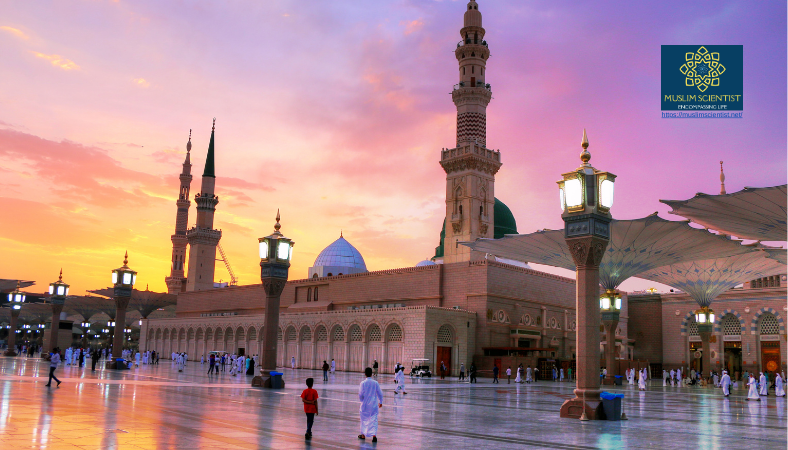
The shift came in Medina. The Prophet arrived not just as a spiritual leader, but as the political head of a new, multi-religious city-state, governed by the groundbreaking Medina Charter. This constitution established rights and security for all tribes, Muslim and non-Muslim alike. However, this nascent state faced immediate existential threats, primarily from the powerful Meccan Quraysh who sought to crush it.
As the study’s author notes, “The Prophet in Medina was not only responsible for his messengership… but he was also the leader of a newly established city-state.” Defensive warfare became a tragic necessity for communal survival, not a tool for conversion or conquest.
The Data of a Life: Quantifying Peace and Conflict
This is where the study moves from narrative to numbers. By analyzing classical biographies (sīrah), it builds a statistical profile of the Medinan period that directly challenges the “warmonger” myth.
Table 1: A Statistical Breakdown of the Medinan Period (10 Years)
| Aspect | Statistical Finding | What It Reveals |
|---|---|---|
| Total Military Campaigns | Approximately 80 reported expeditions and battles. | The number includes many small patrols (sariyyah) and shows a state on constant high alert. |
| Time Spent in Active Warfare | Less than 6 months total across the entire decade. | Over 95% of the Medinan period was spent in states of peace, truce, or normal civic life. |
| Scale of Major Battles | Key battles (Badr, Uhud, the Trench) involved forces in the hundreds, not armies of thousands. | Conflicts were limited in scale, closer to large skirmishes by the standards of the era. |
| Recorded Battlefield Deaths | An estimated ~250 combatant deaths on all sides across all battles. | Puts into perspective the limited scope of violence compared to the era’s norms of tribal warfare. |
The data is compelling. To spend over 90% of one’s time in a state of peace, while under constant threat, points not to a zeal for war but to a relentless pursuit of stability. The famous Treaty of Hudaybiyyah, a 10-year truce signed with the Meccans on terms that seemed unfavorable to Muslims, is highlighted as the pinnacle of this commitment. It was a strategic masterstroke that secured peace and led to a massive increase in converts, proving the power of his peaceful diplomacy.
A Legacy of Coexistence and Restraint
The study further dismantles stereotypes by examining the conduct and outcomes of conflicts.
Table 2: Principles and Outcomes of Engagement
| Principle / Event | Manifestation in the Prophetic Example | Contradiction to “Warmonger” Trope |
|---|---|---|
| The Goal of War | Strictly defensive: to protect the community and ensure freedom of worship. | No wars were initiated for territorial expansion, plunder, or forced conversion. |
| Rules of Engagement | Established ethical codes: no harm to women, children, monks, or civilians; no destruction of crops or property. | Introduced humanitarian limits to warfare unprecedented in 7th-century Arabia. |
| The Conquest of Mecca | Achieved without battle in 630 CE. General amnesty declared: “Go, for you are free.” | The ultimate victory over his former persecutors was a bloodless act of mercy and reconciliation. |
| Final Testament | In his farewell sermon, he emphasized the inviolability of life, property, and the equality of all people. | His final message cemented a legacy of civil rights and peace, not perpetual war. |
The bloodless conquest of Mecca stands as one of history’s most remarkable acts of statesmanship. After years of conflict, the Prophet returned to his birthplace not for vengeance but for reconciliation, issuing a universal pardon. This act alone is irreconcilable with the violent caricature.
Why This Research Matters Today
This study is more than historical recalibration; it is a critical intervention in modern discourse.
- Counters Extremist Narratives: Terrorist groups like ISIS rely on a distorted, ahistorical version of the Prophet’s life to legitimize brutality. This data-driven analysis provides a powerful, scholarly rebuttal that undermines their foundational myths.
- Challenges Islamophobia: The “Prophet of the sword” trope is a core tenet of anti-Islam rhetoric. By clearly demonstrating that his life was statistically dominated by peace and his wars were limited and defensive, the research disarms a potent source of bigotry.
- Empowers Muslim Voices: It provides Muslims, especially youth, with a clear, evidence-based framework to articulate their faith’s commitment to peace, rooted in their own historical tradition.
- Offers a Model for Analysis: It demonstrates how applying modern historical and sociological methods to religious biography can yield fresh, objective insights that bridge divides.
Conclusion: Reclaiming a Narrative with Facts
The life of Prophet Muhammad, like all foundational historical figures, is complex. This research does not deny the reality of the battles fought in Medina. Instead, it insists they be understood in their full context: as a brief, defensive chapter in a much longer story of building a peaceful, just, and pluralistic society.
The numbers speak clearly. A mission spanning 8,395 days saw less than 180 days of armed conflict. A legacy that includes a pioneering constitution of rights and a bloodless victory is not one of a warmonger. By shifting the focus from polemic to data, this study encourages a move beyond simplistic, polarized views toward a more nuanced and truthful understanding—one where peace isn’t just an ideal, but the demonstrable, overwhelming norm of a profound historical life.
Reference: here
Other Articles: