In the relentless pursuit of better performance, athletes often focus on intense training, strict diets, and cutting-edge gear. But a fascinating new study reveals that one of the most powerful performance-enhancing tools is also the simplest and most accessible: a short nap.
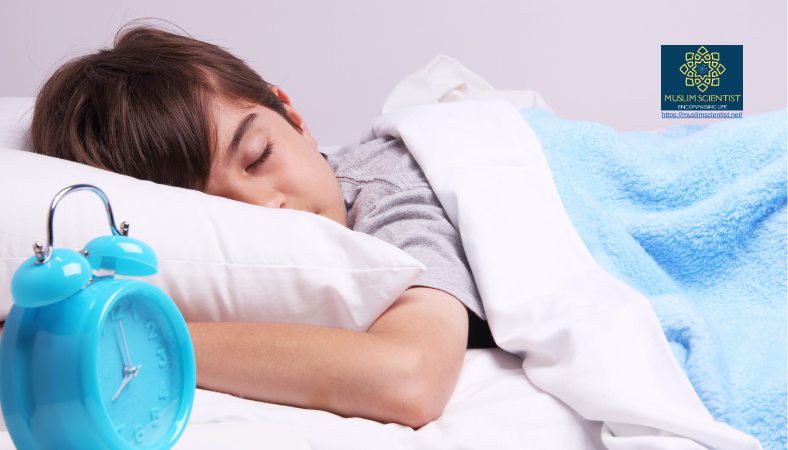
Research has delivered encouraging news for athletes, particularly those observing Ramadan. The study provides strong evidence that a 30-minute daytime nap can significantly improve anaerobic sprint performance, helping athletes run faster and more powerfully.
This finding is especially important for the millions of Muslim athletes around the world who fast from dawn to sunset during Ramadan. The holy month brings changes to sleep patterns and energy intake, often leading to fatigue. This study shows that a strategic nap can be a game-changer.
The Challenge: Ramadan, Sleep, and Athletic Performance
For any athlete, sleep is the body’s primary recovery time. It’s when muscles repair, energy stores are replenished, and the mind resets. During Ramadan, the schedule shifts. The pre-dawn meal (Suhoor) means waking up early, and the late-night meal (Iftar) can push bedtime later. This can lead to:
- Reduced total sleep time.
- Disrupted sleep quality.
- Increased daytime fatigue.
- Potential declines in physical and cognitive performance.
Previous research has shown that during Ramadan, athletes may experience decreased performance in sprints, agility tests, and endurance exercises. The question has always been: what can athletes do to counteract this? This new study points directly to a practical, drug-free, and cost-free answer.
How the Study Worked: A Rigorous Experiment
To get reliable answers, researchers designed a careful experiment.
- The Participants: 10 physically active male kickboxers, who were all fasting during Ramadan.
- The Test: The Running-Based Anaerobic Sprint Test (RAST) . This is a demanding test that measures anaerobic power—the ability to exert maximum effort in short bursts. It involves six 35-meter maximum sprints, with only 10 seconds of rest between each. The test measures key performance indicators like maximum power, minimum power, average power, and the fatigue index (how quickly power declines).
- The Conditions: Each athlete was tested under four different conditions:
- During Ramadan, with NO nap.
- During Ramadan, after a 30-minute nap.
- After Ramadan (about three weeks later), with NO nap.
- After Ramadan, after a 30-minute nap.
- The Nap: The nap was a 30-minute opportunity to sleep in a dark, quiet room in the early afternoon (starting at 2:00 PM). A Fitbit device was used to confirm they actually slept.
This setup allowed the researchers to compare the effects of the nap during the challenging period of Ramadan and during a normal period, providing a complete picture of its benefits.
The Results: Clear and Encouraging Data
The results were remarkably consistent. Napping for just 30 minutes led to significantly better sprint performance in every single measure. The benefits were clear both during Ramadan and in the period after.
Let’s break down the key findings into two simple tables.
Table 1: The Power of a Nap (Comparing Nap vs. No-Nap, Regardless of Time Period)
This table shows the overall effect of taking a 30-minute nap, combining the data from both the Ramadan and post-Ramadan periods. It clearly shows that a nap makes you more powerful and helps you sustain that power.
| Performance Measure | Without a Nap | After a 30-Minute Nap | What It Means for You |
|---|---|---|---|
| Maximum Power | Lower | Significantly Higher | You can sprint faster at your best. |
| Minimum Power | Lower | Significantly Higher | Even your slowest sprint is faster. |
| Average Power | Lower | Significantly Higher | Your overall performance across all sprints is better. |
| Fatigue Index | Higher | Significantly Lower | You tire less quickly and maintain your speed better. |
Table 2: The Nap Advantage During and After Ramadan
This table shows that the nap provided a powerful boost in both scenarios. While performance was naturally a bit lower during Ramadan due to fasting and sleep changes, the 30-minute nap improved performance in both periods.
| Condition | Key Finding on Nap Effect |
|---|---|
| During Ramadan (DR) | Taking a nap significantly improved all measures of sprint performance compared to not napping. |
| After Ramadan (AR) | Taking a nap significantly improved all measures of sprint performance compared to not napping. |
| Overall | The study found that both the nap itself and the time period (Ramadan vs. after) had a statistically significant impact on performance. In short, a nap helps you perform better, no matter when you take it. |
In simple terms: If you want to run faster, jump higher, and perform better in short, intense activities, take a 30-minute nap beforehand. This is true even if you are fasting during Ramadan.
Why Is This a Big Deal?
This research is important for athletes, coaches, and anyone interested in peak performance for several reasons.
- It Provides a Simple, Legal “Boost”: In a world where some look for performance-enhancing shortcuts, this study highlights a natural, healthy, and highly effective strategy. It’s a tool that costs nothing and has no negative side effects.
- It Offers a Specific Solution for Ramadan: For the millions of Muslim athletes observing Ramadan, this is incredibly practical advice. It provides a scientifically backed way to mitigate the fatigue associated with fasting and maintain a high level of performance in training and competition.
- It’s Not Just for Elite Athletes: While this study was on kickboxers, the principle applies to anyone involved in sports that require short bursts of energy—soccer, basketball, tennis, sprinting, martial arts. It can even benefit anyone who wants a physical boost in their daily activities.
- It Underscores the Power of Sleep: This study adds to the mountain of evidence showing that sleep is not a luxury, but a fundamental pillar of health and performance. Even a short nap can have a measurable, positive impact.
Practical Takeaways for Athletes and Coaches
So, how can you use this information?
- Schedule Your Nap: Plan for a 20-30 minute nap in the early afternoon, ideally between 1:00 PM and 3:00 PM. This aligns with the body’s natural post-lunch dip in alertness.
- Create the Right Environment: Make it count. Find a dark, quiet, and cool place to lie down. Use an eye mask and earplugs if needed.
- Time It Right: This study tested performance about three hours after the nap (the test was at 5:00 PM after a 2:00 PM nap). Find what window works best for your training or competition schedule.
- For Athletes Observing Ramadan: This strategy is especially valuable. If you can find time in the afternoon to take a short nap before your evening training session or match, the evidence suggests it will significantly boost your power and reduce your fatigue.
A Simple Prescription for Better Performance
This research offers a powerful and hopeful message. In the complex world of sports science, sometimes the most effective interventions are the simplest. A 30-minute nap is a potent, accessible, and scientifically proven strategy to enhance anaerobic performance. For athletes facing the unique challenges of Ramadan, it is a practical tool to help them continue to excel. So, the next time you’re looking for an edge, consider skipping the extra caffeine and lying down for a short rest. Your performance might just thank you.
Reference: here
Other Articles: