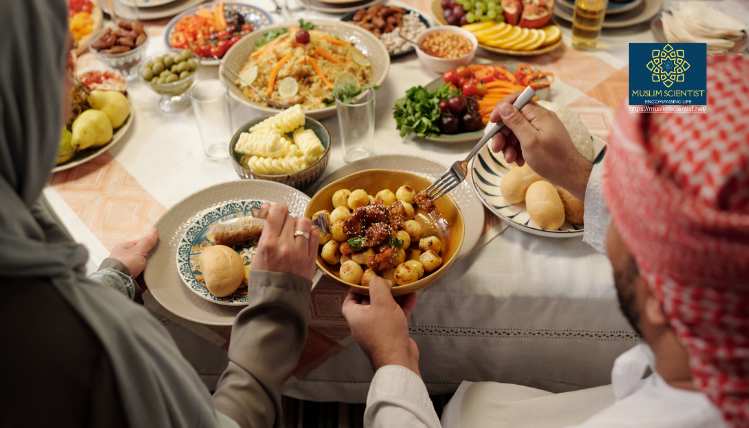
In the heart of British Muslim communities, a quiet but profound conversation is taking place around the dinner table. It’s a conversation about faith, family, and the future of food.
For generations, meat has been more than just a source of protein. It is a blessing from God, a centerpiece of celebration, a symbol of generosity, and a thread connecting families to their heritage. But as the world grapples with the twin crises of climate change and rising rates of chronic disease, a new study reveals that British Muslims are navigating a complex and deeply personal path—one that seeks to honor ancient religious teachings while embracing a more plant-forward future.
Published in the journal Appetite, this qualitative research from the University of Manchester offers an intimate look into the hearts and minds of 15 British Muslims from Greater Manchester. Their stories reveal not just what they eat, but why—uncovering a rich tapestry of beliefs, values, and social pressures that shape their plates.
The Meat Paradox at the Heart of the Community
British Muslims consume more meat than the average British person, accounting for 20% of all lamb consumption in England alone, despite making up only about 6.5% of the population. This pattern, the study notes, is linked to disproportionate health risks within the community, including higher rates of cardiovascular disease, diabetes, and obesity.
But reducing meat consumption is not a simple matter of willpower. For the participants in this study, it touches upon the very core of their religious and cultural identity.
One of the most powerful themes to emerge was the perception of meat as a God-given ‘blessing’ . This is rooted in the Islamic tradition of Qurbani, the ritual sacrifice during Eid al-Adha, where meat is distributed to family, friends, and the poor as an act of devotion and charity. For many, this spiritual significance extends to everyday meals. “You realize how privileged and blessed you are to have access to meat,” said Sadia, a 43-year-old participant.
This deep reverence creates a significant barrier to reducing meat intake. For Rehana, a 36-year-old vegetarian, choosing to abstain was met with subtle criticism. “Why are you not eating it? God has given this to you,” she recalled being told. “There were almost undertones like I was being ungrateful.”
Some participants expressed the sentiment that forbidding meat for oneself could be seen as making the halal (permissible) into haram (forbidden)—a spiritual misstep. This highlights a profound inner conflict: how can one give up something that is not only permissible but considered a divine blessing?
Finding a Path in the Prophetic Example
Yet, within the same religious framework, participants also found a powerful facilitator for change. Many spoke of the ‘Sunnah’ of moderation—the example set by the Prophet Muhammad (PBUH), who reportedly did not eat meat daily and advised that it be treated as a delicacy, not a staple.
“There is a Sunnah of the prophetic diet where they didn’t actually use to eat meat at all… it wasn’t meant to be a staple,” explained Samira, a 21-year-old participant.
This presents a compelling paradox: modern, meat-centric diets often practiced within the community stand in contrast to the prophetic ideal of moderation. Participants recognized this disconnect, attributing it to the modern reality of food being cheap, abundant, and always accessible.
“If you go back to prophetic times, they only had meat on special occasions like Eid. Are we too far gone because it’s just accessible?” reflected Mariya, a 44-year-old mother.
This acknowledgment opens a door. As Adam, a 55-year-old participant, put it: “Meat is provided by Allah for us to consume, don’t over consume it, don’t go mad… All the vegetables or the lentils… just moderate your diet.” This idea of balance—reducing meat and increasing plant-based whole foods—emerged as a culturally and religiously acceptable middle ground.
Key Influences on Dietary Choices Among British Muslims
| Influence Category | Barrier to Reducing Meat | Facilitator for Plant-Based Eating |
|---|---|---|
| Reflective Motivation (Beliefs & Values) | Meat seen as a God-given “blessing”; avoiding it may be seen as ungrateful or making halal into haram. | Prophetic example (Sunnah) of moderation; Islamic duty to be “custodians of the earth” and protect the body. |
| Social Opportunity (Norms & Culture) | Meat is central to hospitality; serving it is a symbol of status and generosity. Plant-based diets are seen as “outsider” (white/Western) practice. | Diverse social circles; younger generations’ openness; potential for religious leaders to champion sustainability. |
| Psychological Capability (Knowledge) | Belief that meat is nutritionally superior and “necessary”; skepticism of processed plant-based alternatives. | Growing awareness of health risks from excess meat consumption; recognition of whole-food plant-based options as healthy. |
| Physical Opportunity (Access) | Widespread availability and convenience of halal meat; family meals are often meat-centric. | N/A |
Beyond Religion: Status, Health, and Social Belonging
The study revealed that the value of meat extends far beyond religious texts, intertwining with socioeconomic history and social status.
For many participants from immigrant families, meat was once a luxury. Ahmed, a 22-year-old of Yemeni heritage, shared a family story from a time of famine: “Whenever guests would come, someone would shout across the house ‘hide the chicken’ because we didn’t want to share… It just shows how precious chicken was to us. Maybe that’s why my family consumes so much meat now.”
This shift from scarcity to abundance transformed meat into a powerful symbol of economic stability and generosity. Serving meat at a gathering is a way to show respect and provide the “best” for guests. Serving a purely plant-based meal could be misinterpreted as a sign of poverty or, worse, an insult to one’s guests. This social pressure creates a formidable barrier, especially in communal settings like weddings, family dinners, and during Ramadan.
The study also found that plant-based diets are often perceived as an “outsider” practice, associated with white or Western culture. “They see it as an outsider factor rather than an insider factor,” said Amirah, a 19-year-old participant. “We don’t really see it in our own cultures.” This perception of plant-based eating as being culturally alien further cements meat as central to Muslim identity and social belonging.
Opportunities for Culturally Appropriate Interventions
| Identified Need | Proposed Strategy | Potential Impact |
|---|---|---|
| Re-frame the narrative | Shift focus from “avoiding meat” to “embracing the Sunnah of moderation.” | Aligns dietary change with core religious values, reducing feelings of guilt or cultural alienation. |
| Leverage religious leadership | Engage imams and community leaders to discuss Islamic principles of environmental stewardship and ethical consumption. | Increases psychological capability and legitimizes plant-based choices as a valid, religiously grounded practice. |
| Promote whole foods, not processed alternatives | Educate on the health benefits of lentils, beans, and vegetables, rather than relying on ultra-processed meat substitutes. | Addresses the perception that plant-based eating is “unnatural” or unhealthy. |
| Support intergenerational dialogue | Create spaces for younger and older generations to discuss the balance between tradition and modern health/environmental realities. | Facilitates social opportunity by making plant-based meals a family and community practice, not an individual deviation. |
The Call for Custodianship and a Way Forward
Despite these powerful barriers, the study also found a strong foundation for change rooted in Islamic teachings of environmental stewardship. Participants spoke of the Islamic duty to be “custodians of the earth” —a principle that aligns perfectly with the goals of reducing meat consumption for planetary health.
There was, however, a recognized gap in knowledge and discourse. “I do know decreasing meat is good for the environment… And I do need to educate myself more on that,” said Amirah, a sentiment echoed by others. Participants highlighted the potential role of religious leaders and mosques in bridging this gap, fostering conversations about sustainability and the ethics of modern, large-scale farming—even within the halal industry.
Some participants questioned whether mass-produced halal meat could truly uphold the high ethical standards of Islamic slaughter, which demands a humane, low-stress process. This skepticism represents a crack in the armor of blind acceptance, a space where conscience and consumption can begin to align more closely.
A Health-Conscious Community Ready for Change
Perhaps the most encouraging finding is that personal health remains a powerful motivator. The Islamic obligation to look after one’s body was mentioned frequently. While participants believed meat to be a “natural” and necessary source of protein, they were also aware of the health risks of overconsumption.
One participant noted that a health scare in the family would be “the prompt or the trigger; it wouldn’t be climate change.” This suggests that while environmental concerns are valued, health messaging—framed within an Islamic context of caring for the body—may be the most effective entry point for encouraging dietary shifts.
Crucially, younger participants showed greater openness, influenced by diverse social circles and a willingness to try plant-based options when eating with friends. This signals a generational shift and highlights the power of inclusive, peer-led change.
Conclusion: Honoring Tradition While Embracing Moderation
This study is a vital first step in understanding how to support British Muslims in making dietary changes that are good for both their health and the planet. The path forward is not about rejecting tradition but about reconnecting with its deepest, most balanced principles.
The answer isn’t to label meat as “bad” or to demand a complete abandonment of cultural practices. Instead, it lies in what one participant called “swinging the balance”—re-centering the prophetic example of moderation, rediscovering the joy of plant-based whole foods, and finding new ways to practice generosity and hospitality without relying solely on meat.
For the British Muslim community, and for all of us seeking a more sustainable and healthy future, this research offers a hopeful message: The wisdom for change is already embedded in the faith and traditions we cherish. It’s a matter of bringing it back to the table.
Reference: here
Other Articles: