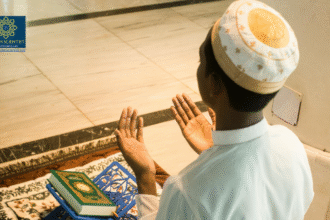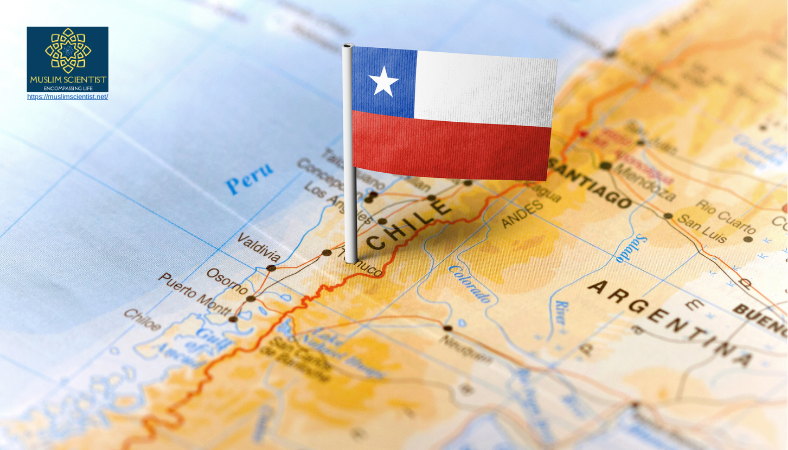
In a country where over two-thirds of the population identifies as Christian, a small but vibrant community of approximately 4,000 Muslims is quietly redefining faith, identity, and integration. Far from the global headlines of conflict and Islamophobia, their daily lives tell a story of spiritual seeking, cultural negotiation, and surprising harmony.
A doctoral dissertation from the University of Chile’s Faculty of Social Sciences has turned the microphone over to this seldom-heard community. Titled “Musulmanes/as en Chile. Vida cotidiana y subjetividad en quienes profesan el islam” (Muslims in Chile: Daily Life and Subjectivity of Those Who Profess Islam), the research offers an intimate, human-centric look at what it means to be Muslim in a Latin American nation with little historical connection to the Islamic world.
The author conducted in-depth, biographical interviews with 18 Muslims (12 men and 6 women) aged 25 to 80, alongside participant observation in the mosques of Santiago and Viña del Mar. The central question was simple yet profound: “Who are they, and what is the daily life of Muslims in Chile like?”
The findings challenge widespread assumptions. While stereotypes and ignorance persist, the study reveals that systematic, violent Islamophobia is largely absent. Instead, the community navigates a landscape of curiosity, occasional awkward jokes, and a cherished—sometimes surprising—religious freedom that some contrast favorably with experiences in majority-Muslim countries.
A Mosaic of Journeys to Faith
The Muslim community in Chile is not monolithic. The research identifies three primary groups, each with distinct narratives and paths to their faith.
Table 1: Pathways to Islam in Chile – A Community Profile
| Group | Origin | Primary Pathway to Islam | Key Adaptation Strategy |
|---|---|---|---|
| Converts (11 interviewees) | Non-Muslim Chilean families | Intellectual curiosity, spiritual search, social justice ideals, travel experiences. | Self-guided learning online, gradual family negotiation, private worship practices. |
| “Native” / Heritage Muslims (7 interviewees) | Descendants of Arab migrants (19th-20th century) | Reconnecting with family heritage, rediscovering a dormant identity. | Community leadership, educating younger generations, modeling a moderate, integrated Islam. |
| Recent Immigrants | From Muslim-majority nations | Seeking economic opportunity and stability. | Entrepreneurship (restaurants, shops), integrating while maintaining religious practice. |
For converts like Claudia, a young professional, the journey began with intellectual curiosity. “I was ignorant, like most Chileans,” she admits. News about the Middle East sparked questions, leading her down an internet rabbit hole and eventually to the doors of the As-Salam Mosque in Santiago. For others like Karim, a young man from southern Chile, Islam offered a compelling message of social justice and brotherhood that resonated deeply, leading him to convert in his teens—entirely through online study before he had ever met another Muslim.
For heritage Muslims like octogenarian Mohammed Rumié, faith is intertwined with family history. His ancestors were among the first Arab Muslims to arrive in Chile in the late 1800s. His story, passed down orally, speaks of a lineage that helped establish one of the country’s first Islamic schools. For him, being Muslim is an act of cultural and familial continuity.
Daily Life: Navigating Curiosity, Not Hatred
The study’s most counterintuitive finding may be the nature of the challenges faced. Participants overwhelmingly rejected the label “Islamophobia” to describe their experience in Chile. Instead, they described an environment of profound ignorance mixed with generally benign curiosity.
The most common vehicle for prejudice is the “talla chilena”—the uniquely Chilean brand of teasing or banter.
- Men with beards or traditional clothing reported being called “Osama Bin Laden” in the street.
- Women wearing the hijab heard comments like, “Liberate yourself, girl,” based on the assumption they are oppressed.
- Questions like “Where did you leave your camels?” still surface.
However, most interviewees framed these not as malice, but as a byproduct of a society with little direct exposure to Islam. “The perception of Islam here is as something distant and exotic,” explained Yaqub, a convert and philosophy teacher. “When media clichés are invoked, it’s usually in jest.”
Positive, welcoming interactions are equally common. Muhammad, a Muslim in Viña del Mar, shared that bus drivers often refuse to charge him fare when he wears traditional clothing as a gesture of respect. Many immigrants, particularly from the Middle East, noted they feel freer to practice their faith openly in Chile than in their home countries, where visible religiosity can attract state suspicion.
The Distinct Burden on Muslim Women
The research highlights a clear gender disparity. Muslim women, whether converts or immigrants, bear a double burden of “racialization.” Their visible faith marks them as “the other,” and their hijab is frequently misinterpreted.
Vanessa, an academic and activist, explained this leads to a “presumption of incompetence” in professional settings and the unfair expectation that they must constantly explain or condemn global events. The choice to wear the hijab, described by many women as a personal spiritual decision and a shield against unwanted male attention, is often viewed by outsiders solely as a symbol of submission.
Islam as a “Form-of-Life”: An Ethic of Resistance and Peace
Perhaps the most powerful insight from the study is how participants define Islam itself. For them, it is not merely a set of rituals but a comprehensive “forma-de-vida” (form-of-life)—an all-encompassing ethical framework that guides every action.
This Islamic “form-of-life” is experienced as a positive, grounding force in modern Chilean society.
- For Danny, a former leftist militant in his youth, Islam’s emphasis on social justice seamlessly aligns with his political ideals. “It’s about changing society to a just one, where wealth is shared,” he says.
- For Claudia, who works in a public hospital, Islam is an ethic of care that drives her to treat every patient with dignity and to reject the materialism she sees in society. “It has made me purer of heart,” she reflects.
- For Ibrahim, a convert, Islam provided a logical ethical structure that even helped heal his strained relationship with his father.
In a country often described as highly individualistic and neoliberal, this structured, community-oriented “form-of-life” is framed by some as a gentle form of resistance—a conscious choice to live differently.
Table 2: Contributions & Strategies of Chile’s Muslim Community
| Area of Contribution | Real-World Example | Impact on Chilean Society |
|---|---|---|
| Economy & Cuisine | Halal restaurants, grocery stores, and the national Halal certification industry. | Enriches national cuisine, creates export opportunities for Chilean products. |
| Interfaith Dialogue | Opening mosques for public visits, dialogue sessions after world events like 9/11. | Builds bridges, demystifies Islam through direct human contact. |
| Social Integration | Engagement in business, academia, and local politics (e.g., the Sabag family in Cabrero). | Demonstrates that Muslim and Chilean identities are compatible and additive. |
| Spiritual Landscape | Offering a meaningful spiritual alternative for Chileans seeking purpose beyond consumerism. | Adds to the nation’s diversity of thought and spiritual practice. |
The Digital Mosque: Internet as a Double-Edged Sword
The internet has been transformative, especially for converts. It serves as the primary gateway to knowledge about Islam, a platform to find community, and a space for religious learning. Claudia, Milka, and Karim all began their journeys online.
However, this digital path is a double-edged sword. The risk of encountering fundamentalist or distorted interpretations of Islam without the guidance of a local, moderate community is significant. The study notes that some Chilean mosques are now actively working to provide reliable online resources and mentorship to counter this, guiding new converts through their formative period.
The Body and Faith: Discipline and Freedom
The research delves into the physicality of Islamic practice. Rituals like the Ramadan fast, five daily prayers, and dietary restrictions are not seen as burdens but as disciplines that unite body and spirit.
Participants like Ibrahim enthusiastically listed the health benefits of fasting. Saed, an immigrant from Iraq, described a profound, physically-felt spiritual experience that led him back to faith. For women, the hijab can be a tool to reclaim bodily autonomy, shifting focus from physical appearance to character.
The Chilean context allows for a unique negotiation of these bodily practices. While a young convert like Karim was once forbidden from graduating high school for growing a beard (a rule later overturned), others choose to shave to avoid constant explanations. “It’s exhausting to have to explain yourself constantly,” said Fuad, a Shiite community member.
Conclusion: Toward a Mosaic of Recognition
The dissertation concludes that Muslims in Chile are not a foreign element but an integral and resilient part of the nation’s evolving social fabric. They are entrepreneurs, teachers, activists, and neighbors. Their greatest challenge is not overt hatred but achieving authentic recognition—to be seen and accepted in the full complexity of their identities, where being Muslim and Chilean are harmonious and mutually enriching.
This study is a vital reminder to look beyond global stereotypes. In the quiet stories of Muslims in Chile, we find a narrative not of clash, but of search, belonging, and the quiet, daily work of building a pluralistic society. It is a story less about Islam in Chile, and more about the Chile that is patiently, and sometimes awkwardly, being born—one based not on sameness, but on the dignified recognition of difference.
Reference: here
Other Articles: