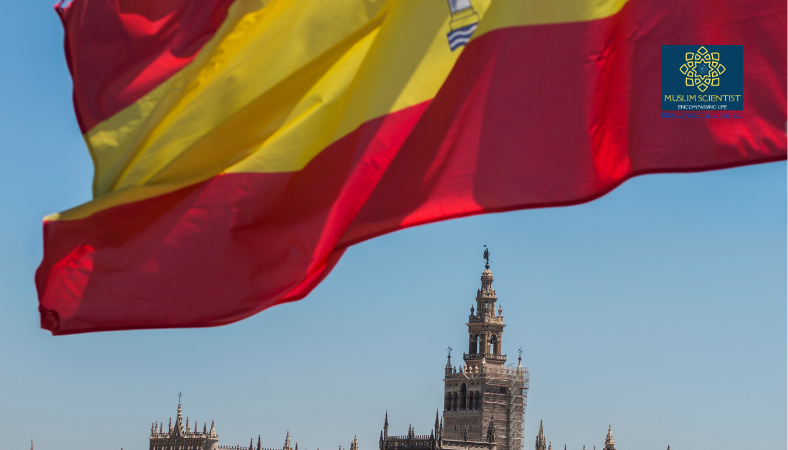
In the heart of Cordoba, the magnificent Mosque-Cathedral stands as a silent stone chronicle of Spain’s complex relationship with Islam. For centuries, Al-Andalus was a flourishing center of Islamic civilization. Today, a new chapter is being written not in stone, but in law. Spain, confronting its historical legacy and modern demographics, has constructed one of Europe’s most structured legal frameworks for integrating its Muslim minority—a story of ambition, challenge, and cautious coexistence.
The modern Muslim presence in Spain is relatively recent. While the North African enclaves of Ceuta and Melilla have longstanding Muslim populations, the broader influx began in the late 1960s with Middle Eastern students. The 1970s saw a wave of Spanish left-wing converts, often drawn to Sufism or orthodox Sunnism, passionately seeking to reconnect with the nation’s “lost” Islamic heritage. “For them, Islam is part of the Spanish identity,” notes Joaquin Mantecón of the University of Zaragoza. This creates a unique Spanish Islam where converts feel they are rediscovering roots, not adopting a foreign faith.
However, the demographic landscape shifted. The largest groups now are economic migrants from Morocco, Sub-Saharan Africa, and Pakistan, often facing greater socioeconomic hurdles. They tend to cluster in Madrid, Catalonia, Murcia, and Valencia. The question for the Spanish state became: how to foster the integration of this diverse community within a secular democracy?
The answer was a pioneering Cooperation Agreement, signed in 1992 between the state and the newly formed Comisión Islámica de España (CIE). This agreement moved Islam from a faith merely tolerated under general religious freedom laws to a religion with “notoriously well-established” status, granting it specific rights and privileges akin in many ways to those of the Catholic Church.
The Pillars of the Agreement: Rights and Realities
The Agreement is remarkably comprehensive, covering nearly every aspect of public religious life:
- Places of Worship: It grants mosques and oratories inviolable status, protecting them from arbitrary demolition. Yet, reality lags behind the law. True mosques are few—notable ones in Madrid, Valencia, and Granada—while most communities worship in rented apartments, garages, or converted shops.
- Cemeteries: Muslim communities have the right to plots in municipal cemeteries for burial according to Islamic rites (without coffins, in simple biers). This has sometimes sparked local disputes over which community controls the space.
- Religious Festivals & Work: Muslim workers can request time off on Friday afternoons for prayers and adjustments during Ramadan, though these require employer agreement and lost hours must be made up.
- Islamic Education: Perhaps the most significant achievement. The state guarantees Islamic religious education in public schools if at least ten students request it, and agrees to pay the teachers’ salaries. This is a powerful tool for fostering a sense of belonging in second-generation youth.
- Economic & Tax Benefits: Islamic communities enjoy extensive tax exemptions on properties, donations, and activities, mirroring benefits for non-profit and religious entities.
- Halal Food & Pastoral Care: The agreement regulates ritual slaughter and aims to provide Halal food in public institutions like schools, hospitals, and prisons. It also guarantees pastoral care for Muslims in the armed forces, hospitals, and prisons.
The Institutional Hurdle: A House Divided
The Agreement’s greatest weakness stems from its chosen partner: the CIE. Created as an umbrella body, it is a federation of two often-rival federations: UCIDE (Union of Islamic Communities of Spain), led largely by immigrant-born Muslims with links to the Muslim Brotherhood network, and FEERI (Spanish Federation of Islamic Religious Entities), dominated by Spanish converts and historically supported by various nations like Saudi Arabia, Libya, and Morocco.
The CIE’s governance requires consensus between these two blocs. “Unless agreement is reached between the two Federations, no decision can be taken,” Mantecón explains. This has led to paralysis on critical issues, such as approving a unified list of religious education teachers, stalling the implementation of the very laws designed to help the community.
Tables: A Snapshot of Spanish Islam (c. 2003 Analysis)
Table 1: Geographic Distribution & Integration Profile
| Group | Primary Regions in Spain | Typical Profile & Integration Notes |
|---|---|---|
| Middle Eastern Origins | Nationwide | Early arrivals (1960s-70s). Often professionals, high citizenship rate, high integration, frequent intermarriage. |
| Spanish Converts | Andalusia (Seville, Granada, Cordoba) | Politically left-wing origins. Driven by cultural rediscovery of Al-Andalus. Active in religious communities (FEERI). |
| Maghreb (Moroccan) | Madrid, Catalonia, Valencia, Murcia | Largest migrant group. Often low-skilled labor. Faces significant socioeconomic integration challenges. |
| Pakistani | Concentrated in Catalonia | Close-knit community networks. Engagement in commerce and trade. |
| Sub-Saharan African | Scattered, some concentrations in the south | Diverse origins (e.g., Senegal). Often facing complex legal and social integration paths. |
Table 2: Key Provisions of the 1992 Cooperation Agreement
| Provision Area | Key Right Granted | Status / Challenge |
|---|---|---|
| Religious Education | State-paid teachers if ≥10 pupils request it. | Stalled. Blocked by CIE internal disagreement on teacher lists. |
| Places of Worship | Legal inviolability; right to establish mosques. | Partial. Few purpose-built mosques; most are modest oratories. |
| Cemeteries | Right to plots for Islamic burial rites. | Implemented, with disputes. Occasional conflicts over control between communities. |
| Halal Food | Adaptation in public centers (schools, prisons). | Developing. Market-driven availability growing; official Halal trademark not yet registered by CIE. |
| Tax Benefits | Exemptions on property, donations, activities. | Fully Implemented. Extensive benefits equal to other non-profits. |
| Pastoral Care | Access for imams in military, hospitals, prisons. | Implemented, procedurally complex. Requires multiple authorizations. |
The Path Forward: Unity for Progress
The Spanish model is bold in its intent. It doesn’t shy away from formally recognizing Islam’s role and providing concrete tools for integration. However, its effectiveness is hamstrung by the very internal diversity it seeks to accommodate.
As Mantecón concludes, for the Agreement to fulfill its promise, Spanish Muslims must resolve the “problem of the structure of the CIE.” The state can grant rights, but it needs a coherent partner. “Islam in Spain cannot be built on conflict between Muslims,” he argues. The federations have their roles, but neither alone represents the whole mosaic.
The hope is that a reformed, more unified representative body can breathe life into the Agreement—ensuring that religious education flourishes, pastoral care is streamlined, and communities can build their mosques with dignity. Spain’s legal blueprint is there. It now requires the collective will to build upon it, bridging the gap between a storied past and a shared future.
Reference: here
Other Articles: