In the ancient city of Ur, where the ziggurat rose against the Mesopotamian sky, a young man is said to have gazed at the heavens and embarked on a spiritual journey that would alter the course of human religious consciousness. The Quran preserves this moment with remarkable precision: Abraham’s sequential observation of a planet, the moon, and the sun—each a deity in the pantheon of his time—and his reasoned rejection of them as gods. This narrative, found in Surah Al-An’am (6:76-79), is far more than a theological parable. It is a sophisticated philosophical argument embedded in a precise historical and astronomical context that modern scholarship has only recently begun to fully appreciate.
This article delves deeply into the layers of meaning in Abraham’s celestial quest, connecting the Quranic account to archaeological discoveries from Ur and Harran, cuneiform astronomical texts, the religious traditions of ancient Mesopotamia, and the astronomical realities of the night sky. It explores how this narrative represents not only a spiritual awakening but also a revolutionary epistemological shift—from the worship of created phenomena to the recognition of a transcendent Creator.
Part I: The Quranic Text and Its Philosophical Structure
The Verses in Context
The Quran recounts Abraham’s spiritual journey in a sequence of three observations, each building toward a logical conclusion:
“When the night covered him over, he saw a star. He said: ‘This is my Lord.’ But when it set, he said: ‘I love not those that set.’ When he saw the moon rising, he said: ‘This is my Lord.’ But when it set, he said: ‘Unless my Lord guides me, I shall surely be among the people who went astray.’ When he saw the sun rising, he said: ‘This is my Lord. This is greater.’ But when it set, he said: ‘O my people! I am free from what you associate with Allah. Indeed, I have turned my face toward He who created the heavens and the earth, a monotheist, and I am not among those who associate partners with Him.’” (Surah Al-An’am 6:76-79)
Philosophical Analysis
This passage is a masterclass in logical reasoning about the divine. It employs a form of argumentation known in philosophy as the argument from contingency. Each celestial body is observed, considered as a possible lord, and then rejected upon the observation of its setting—its finitude, its dependence, its temporality. The structure follows a clear pattern:
| Step | Observation | Proposition | Refutation | Conclusion |
|---|---|---|---|---|
| 1 | Planet (Venus) rises | “This is my Lord” | It sets (finite) | “I love not those that set” |
| 2 | Moon rises | “This is my Lord” | It sets (dependent) | “Unless my Lord guides me…” |
| 3 | Sun rises | “This is my Lord, this is greater” | It sets (temporal) | “I turn my face to the Creator” |
The progression is deliberate: from the smallest (planet), to the larger (moon), to the greatest (sun). Each is more magnificent than the last, yet each shares the same fatal flaw—impermanence. The argument demonstrates that whatever is subject to change, to arising and passing away, cannot be the ultimate, unchanging ground of existence. The Creator must transcend the very categories of creation.
This philosophical structure aligns with what later became known as the cosmological argument for God’s existence, refined by thinkers such as Aristotle, Al-Ghazali, Aquinas, and contemporary philosophers. The Quran places this argument in the mouth of Abraham, presenting it not as abstract speculation but as the culmination of a personal spiritual quest.
Part II: The Historical and Archaeological Context
Abraham’s Homeland: The City of Ur
Abraham (Ibrahim) is traditionally placed in the city of Ur, in southern Mesopotamia (modern-day Tell al-Muqayyar, Iraq), during the period of the Third Dynasty of Ur (c. 2112–2004 BCE) or the subsequent Old Babylonian period (c. 2000–1600 BCE). Archaeological excavations at Ur, beginning with Sir Leonard Woolley’s famous work in the 1920s and 1930s, have revealed a sophisticated urban civilization with advanced astronomical knowledge and a complex religious system centered on celestial deities.
The Great Ziggurat of Ur: The most prominent structure at Ur was the ziggurat dedicated to Nanna, the moon god. This massive stepped pyramid, still partially standing today, measured approximately 64 by 46 meters at its base and rose to a height of over 30 meters. It was the religious and administrative heart of the city. Cuneiform texts describe it as the “house of the great light” (e₂-gal-mah), a structure where the moon god was believed to descend and reside.
Cuneiform Astronomical Texts: Thousands of clay tablets from Ur and other Mesopotamian cities contain detailed astronomical observations. The Enuma Anu Enlil, a series of tablets compiled over centuries, contains omens based on celestial phenomena. The planets, moon, and sun were meticulously tracked because they were believed to convey messages from the gods.
| Celestial Body | Sumerian Name | Akkadian Name | Deity | Role |
|---|---|---|---|---|
| Venus (Morning/Evening Star) | Inanna | Ishtar | Goddess of love, war, fertility | The most prominent goddess; her movements were tracked to predict outcomes of battles and harvests |
| Moon | Nanna | Sin | Moon god | Patron of Ur; associated with wisdom, time measurement, and oracles |
| Sun | Utu | Shamash | Sun god | God of justice, law, and truth; his rising and setting marked the rhythm of legal and religious life |
Harran: The Continuation of Celestial Worship
After leaving Ur, Abraham’s migration took him to Harran (in modern-day Şanlıurfa Province, Turkey). Harran became a major center of moon worship and, later, of Sabian culture—a star-worshipping tradition that persisted into the Islamic period.
The Sabians of Harran: The Sabians (often distinguished from the Mandaean Sabians mentioned in the Quran) were a Hellenized Mesopotamian community that maintained ancient Babylonian astronomical traditions. They revered celestial bodies as intermediaries between humanity and the divine. Their temple in Harran, described by the 10th-century Muslim scholar Al-Mas‘udi, was oriented toward the moon and planets. The Sabians claimed descent from Abraham and preserved extensive astronomical knowledge, including planetary tables and star catalogs.
Archaeological Evidence: Excavations at Harran have uncovered temple ruins, inscriptions, and artifacts indicating continuous occupation from the third millennium BCE through the medieval period. The city’s famous moon temple, dedicated to Sin, was still functioning when the Islamic conquest reached the region. The historian Al-Tabari records that the people of Harran initially resisted conversion to Islam because they wished to maintain their ancestral religious traditions.
Part III: The Astronomical Reality – What Abraham Would Have Seen
To fully appreciate the narrative, we must understand what Abraham would have observed in the night sky over Ur or Harran, and why the sequence of celestial bodies is astronomically significant.
The Celestial Bodies and Their Mesopotamian Deities
| Celestial Body | Sumerian Name | Akkadian Name | Role in Mesopotamian Religion | Primary Cult Center | Archaeological Evidence |
|---|---|---|---|---|---|
| Venus (Morning/Evening Star) | Inanna | Ishtar | Goddess of love, war, fertility; the most prominent goddess in the pantheon; her movements were used for divination of battles and harvests | Uruk, but venerated throughout Mesopotamia | Thousands of tablets with omens based on Venus’s appearances; hymns and prayers to Ishtar; temple records |
| Moon | Nanna | Sin | Patron deity of Ur; god of wisdom, time, and oracles; the calendar was based on lunar months | Ur (primary), Harran (later) | Great Ziggurat of Ur; cuneiform lunar omens; royal inscriptions claiming favor from Nanna; temple at Harran |
| Sun | Utu | Shamash | God of justice, law, and truth; his rising and setting marked legal and religious rhythms; associated with divine judgment | Sippar, Larsa | Sun tablet of Shamash from Sippar (British Museum); law codes invoking Shamash; daily offering records |
Venus: The Morning and Evening Star
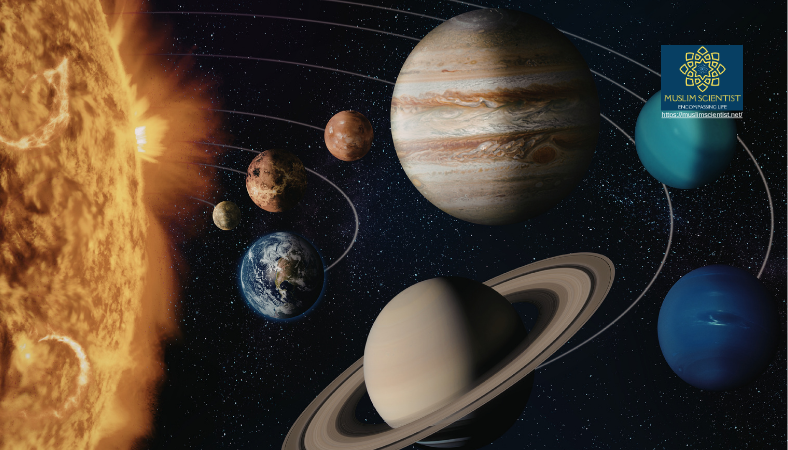
Venus is the brightest natural object in the night sky after the moon. Its brilliance makes it an obvious object of worship and contemplation. In Mesopotamia, Venus was associated with Inanna/Ishtar, the most important goddess in the pantheon. Her movements were carefully tracked because they were believed to portend significant events.
Astronomically, Venus undergoes a cycle of appearances: it appears as the “morning star” for approximately 263 days, then disappears for about 50 days, then appears as the “evening star” for another 263 days. This cycle of rising, setting, and disappearing would have been observed and recorded by Mesopotamian priests. Abraham’s observation of a kawkab (star/planet) rising and then setting reflects this phenomenon.
The Moon: The Patron of Ur
The moon’s phases are even more dramatic: it waxes, reaches fullness, and then wanes into darkness before reappearing. For the people of Ur, the moon was not merely a celestial object but the city’s divine patron. The Great Ziggurat was oriented toward lunar events, and the calendar—central to religious festivals, agricultural cycles, and legal contracts—was based on lunar months.
Abraham’s observation of the moon rising and setting would have been seen by his contemporaries as a direct engagement with the most sacred deity of their city. His conclusion that the moon is not a god but a created sign would have been revolutionary and deeply provocative.
The Sun: The Supreme Visible Deity
The sun, Utu/Shamash, was the god of justice and law. Its daily journey across the sky—rising in the east, reaching its zenith, and setting in the west—symbolized order, judgment, and the cycle of life. Among the celestial bodies, the sun is the most powerful and seemingly eternal. Abraham’s statement “This is greater” acknowledges this perception. Yet even the sun sets, revealing its created nature.
Astronomical Precision of the Sequence
The Quran’s sequence—planet, moon, sun—follows the order of increasing brightness and perceived importance. But it also reflects an astronomical reality: these bodies are observed in sequence over the course of a night and the following day. The star (Venus) would have been visible after sunset; the moon would rise later in the night; the sun would follow in the morning. The narrative captures the experience of a single night of spiritual searching.
| Time | Observation | Astronomical Reality |
|---|---|---|
| Evening twilight | Venus (as evening star) becomes visible | Brightest “star” in the sky after sunset |
| Night | Moon rises (depending on its phase) | The largest and most prominent celestial object at night |
| Dawn/Morning | Sun rises | The most powerful and essential celestial body for life |
Part IV: The Religious and Philosophical Revolution
Mesopotamian Celestial Religion
The religious system of ancient Mesopotamia was fundamentally astral. The gods were identified with celestial bodies, and their movements were interpreted as divine actions. The Enuma Elish, the Babylonian creation epic, describes how the god Marduk created the heavenly bodies and assigned them as “images” of the gods. The sun, moon, and planets were not symbols of deities; they were the deities in their visible form.
This worldview was totalizing. It informed every aspect of life: kingship was legitimized by divine favor expressed through celestial signs; agriculture was timed according to lunar and solar cycles; personal fate was read from planetary omens. To question this system was to challenge the very foundations of society.
Abraham’s Revolutionary Epistemology
Abraham’s celestial quest represents a radical epistemological break. He uses the very phenomena that his people worship as evidence against their divinity. The argument is empirical: observe, reason, conclude. The setting of the celestial bodies reveals their contingency. They are not eternal, not self-sufficient, not worthy of worship.
This method—moving from observable signs to the transcendent Creator—became foundational in Islamic theology. It is the basis for the argument from design and the cosmological argument that would be developed by later Muslim philosophers such as Al-Farabi, Ibn Sina (Avicenna), and Ibn Rushd (Averroes).
The Significance of “Setting”
The repeated emphasis on the celestial bodies setting is crucial. In Mesopotamian religion, the setting of a celestial body was often interpreted as its descent into the underworld or its temporary absence, but it was never seen as evidence of its non-divinity. Abraham’s insight is that anything that disappears, that is subject to change, cannot be the eternal, unchanging God. This distinction between the Necessary Being and contingent beings would become central to Islamic philosophy.
Part V: Scholarly and Archaeological Corroborations
Cuneiform Evidence
Cuneiform tablets from Ur, Nippur, and Babylon provide extensive documentation of Mesopotamian celestial religion. The Mul.Apin tablets (c. 1000 BCE, but preserving older traditions) list celestial bodies and their divine associations. Venus is explicitly identified with Ishtar; the moon with Sin; the sun with Shamash.
Archaeological Sites and Their Relevance to Abraham’s Narrative
| Site | Location | Period of Abraham (c. 2000–1800 BCE) | Key Archaeological Discoveries | Connection to Abraham’s Story |
|---|---|---|---|---|
| Ur (Tell al-Muqayyar) | Southern Iraq | Third Dynasty of Ur / Old Babylonian period | Great Ziggurat of Nanna; Royal Cemetery; thousands of cuneiform tablets (administrative, astronomical, literary); residential neighborhoods | Traditional birthplace of Abraham; ziggurat dedicated to moon god; Abraham’s rejection of moon worship directly challenges Ur’s patron deity |
| Harran (Şanlıurfa Province) | Southeastern Turkey | Active as a cult center from early Bronze Age through medieval period | Temple ruins; Sabian astronomical texts (preserved in later Islamic sources); inscriptions; city walls and structures from various periods | Abraham’s migration destination; center of moon worship and later Sabian star-worshipping tradition; claimed Abrahamic heritage |
| Sippar (Abu Habba) | Central Iraq | Old Babylonian period | Temple of Shamash; Sun Tablet of Nabu-apla-iddina; extensive cuneiform library | Center of sun worship; illustrates the importance of sun deity that Abraham rejects |
| Uruk (Warka) | Southern Iraq | Early Dynastic through Old Babylonian periods | Temple of Inanna; cuneiform tablets with astronomical observations; literary texts including hymns to Inanna | Primary cult center of Venus/Ishtar; demonstrates the centrality of the planet Venus in Mesopotamian religion |
These tablets also record the ritual practices associated with each deity. The moon was honored with monthly festivals; the sun with daily offerings; Venus with specific prayers for victory and love. Abraham’s rejection of these deities would have been a rejection of the entire ritual and social order built around them.
Archaeological Context of Ur
The archaeological site of Ur reveals a city built around celestial worship. The ziggurat dominates the landscape. Royal tombs contained artifacts related to moon worship. Cuneiform records indicate that kings justified their rule by claiming divine favor from Nanna (the moon god) and his consort Ningal.
Sir Leonard Woolley’s excavations uncovered thousands of cuneiform tablets, including astronomical texts, temple records, and legal documents dated according to lunar months. The city’s economy was organized around temple festivals and offerings. This was not a peripheral or optional belief system; it was the central organizing principle of society.
| Archaeological Finding | Location | Significance |
|---|---|---|
| Great Ziggurat of Ur | Ur (Tell al-Muqayyar) | Dedicated to moon god Nanna; visible for miles; the spiritual and administrative center of the city |
| Cuneiform astronomical tablets (Mul.Apin) | Nineveh, Ashurbanipal’s library (preserving older traditions) | Document the identification of celestial bodies with deities; used for divination and calendar regulation |
| Royal inscriptions | Ur, Babylon | Kings claimed legitimacy through devotion to moon, sun, and planetary deities |
| Temple records | Ur, Nippur | Detail offerings, festivals, and rituals organized around celestial events |
The Sabian Legacy
The Sabians of Harran represent a fascinating continuity of Mesopotamian celestial religion into the Islamic period. The 10th-century scholar Al-Biruni, in his Chronology of Ancient Nations, describes their beliefs and practices in detail. They maintained temples oriented toward celestial bodies, celebrated festivals based on planetary movements, and preserved extensive astronomical knowledge.
The Quran’s reference to Sabians (in Surah Al-Baqarah 2:62 and other verses) is distinct from the Harranian group, but the existence of a star-worshipping community in Harran that claimed Abrahamic origins provides historical context for understanding the persistence of celestial religion in the very region associated with Abraham’s migration.
Part VI: Deeper Theological and Philosophical Implications
Tawhid: The Uniqueness of God
The story of Abraham’s celestial quest is foundational for the Islamic concept of tawhid (the oneness of God). It demonstrates that monotheism is not simply a rejection of many gods in favor of one, but a recognition that the Creator is fundamentally different from creation. The celestial bodies, despite their magnificence, are creatures. The Creator is beyond all categories of creatureliness—beyond time, beyond change, beyond setting.
Natural Theology in the Quran
This passage is a classic example of natural theology: the use of reason and observation of nature to arrive at knowledge of God. The Quran repeatedly calls upon readers to reflect on the heavens, the earth, the alternation of night and day, the rain, the plants—all as ayat (signs) pointing to the Creator. Abraham’s method exemplifies this approach: he does not receive a revelation in this moment; he reasons his way to faith.
The Role of Skepticism and Certainty
Abraham’s statement “Unless my Lord guides me, I shall surely be among the people who went astray” acknowledges the limitations of human reason alone. While observation and logic lead him to reject false objects of worship, he recognizes that ultimate guidance comes from God. This balance between intellectual effort and divine grace is a nuanced theological position.
The Pedagogical Purpose
Islamic scholars have noted that the story is pedagogical. Abraham’s statements—“This is my Lord”—are not expressions of actual belief but hypothetical assertions designed to lead his people through a process of reasoning. He speaks in their language, using their terms, to guide them to a conclusion that transcends their worldview.
Part VII: Comparative Perspectives
The Biblical Narrative
The Bible does not contain a parallel account of Abraham searching among celestial bodies. Genesis 12:1 simply records God’s call to Abraham to leave his country. The Quranic account adds a detailed intellectual journey that precedes the call. This difference highlights the Quran’s emphasis on Abraham as a seeker who arrived at monotheism through reasoning before receiving direct revelation.
Parallels in Other Ancient Traditions
Similar narratives of celestial searching appear in other traditions. In Greek philosophy, the pre-Socratic philosophers observed the heavens and sought to understand the underlying principles of the cosmos. In Hindu tradition, the Upanishads contain reflections on the sun and moon as manifestations of the ultimate reality (Brahman). However, the Quran’s account is unique in embedding this philosophical journey within a prophetic biography and presenting it as a model for all seekers.
Conclusion
The story of Abraham’s celestial quest is one of the most philosophically rich and historically grounded narratives in the Quran. Its details—the planet (Venus), the moon, the sun—correspond precisely to the major celestial deities of ancient Mesopotamia, as confirmed by archaeological discoveries and cuneiform texts. The sequence of observations reflects astronomical realities and a deliberate pedagogical method.
For the believer, the story is a profound lesson in tawhid, demonstrating that true faith is grounded in reason and reflection upon the signs of creation. For the historian and scholar, it is a remarkable case of a sacred text accurately preserving the religious and cultural context of its prophetic figures—a context that modern archaeology has only recently illuminated.
Abraham’s journey from the ziggurat of Ur to the recognition of the Creator of the heavens and earth is a journey that continues to inspire seekers of truth. His words—“I have turned my face toward He who created the heavens and the earth”—remain a timeless expression of monotheistic faith.
Reference: here
Other Articles: