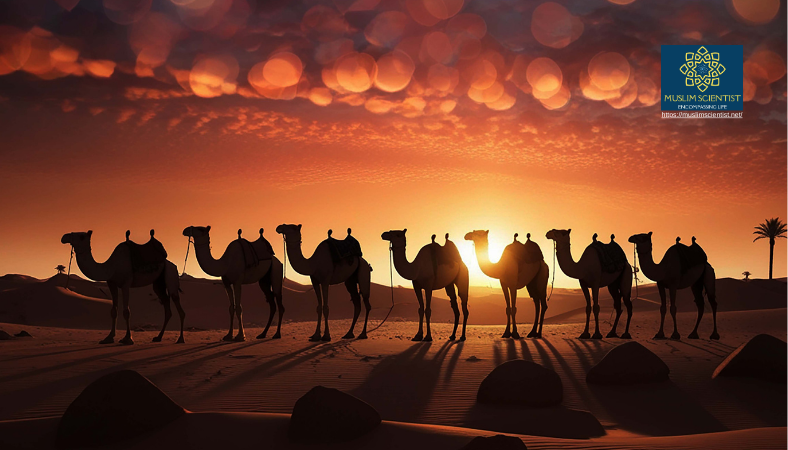
In the vast, unforgiving silence of the desert, an icon of endurance moves with serene grace. The camel, often romanticized as the “Ship of the Desert,” is far more than a beast of burden. Research and ancient scripture are converging to reveal this creature as a biological marvel—a divinely inspired design offering profound solutions for modern challenges in food security, medicine, and climate resilience.
A recent perspective article in the International Journal of Camel Science synthesizes decades of scientific findings with spiritual insights, painting the camel not as an animal of the past, but as a critical asset for our future. “Will they not look at the camels, how they are created?” asks the Quran in Surah Al-Ghashiya (Verse 17). Science is now providing the detailed answer to that reflective question, and it is nothing short of astonishing.
A Biological Masterpiece Built for Extremes
The camel’s physiology is a masterclass in evolutionary adaptation, interpreted by millions as a sign of divine craftsmanship. In environments where temperatures swing from scorching days to freezing nights, its thick, insulating coat provides perfect protection. Its legendary ability to survive without water is not due to a hump-stored reservoir, but a symphony of specialized systems.
- The Ultimate Hydration System: A camel can drink up to 130 liters of water in minutes, a third of its body weight. Its unique kidneys produce highly concentrated urine, and its nasal passages recycle moisture from exhaled air, minimizing water loss.
- The Built-In Coolant: A specialized “air-conditioning” system protects its brain from overheating. Even its red blood cells are oval-shaped, preventing them from bursting when the animal rehydrates rapidly after severe dehydration.
- The All-Terrain Vehicle: Broad, padded toes prevent sinking into sand, and transparent eyelids allow vision during fierce sandstorms while long eyelashes act as natural dust shields.
These aren’t just curiosities; they are blueprints for survival in a world facing increasing desertification and water scarcity. “Camels can live in some of the bleakest corners of the planet,” the research states, “where other large animals are unable to live due to shortage of food and water.”
Camel Milk: The “White Gold” of Functional Food
While the camel’s exterior is built for survival, its most celebrated gift to humanity comes from within: its milk. Long revered in Islamic tradition as a healing food, modern science is validating its exceptional properties.
Camel milk is emerging as a powerful functional food, particularly for those who cannot tolerate cow’s milk. It lacks common allergenic proteins and contains insulin-like molecules that pass through the stomach intact, offering a potential dietary aid for managing blood sugar levels. Research highlights its role in boosting immunity, aiding neurodevelopment, and showing promise in managing conditions like autism.
Its therapeutic power is amplified by a rich cocktail of natural antibiotics—lysozymes, lactoferrin, and immunoglobulins—which give it a longer shelf life and potent antimicrobial effects. The paper notes its historical and continued use in treating skin diseases, hepatitis, and liver disorders.
Table 1: The Superior Profile of Camel Milk
| Nutrient/Property | Key Benefit | Comparison to Cow’s Milk |
|---|---|---|
| Protein Structure | Hypoallergenic, lacks A1 casein | Often contains allergenic proteins |
| Insulin-like Molecules | May help regulate blood sugar | Negligible amounts |
| Vitamin C Content | 3-5 times higher | Boosts immunity significantly |
| Natural Antibiotics | High in lactoferrin, lysozymes | Lower concentrations |
| Fat Content | Healthier fatty acid profile | Higher in saturated fats |
| Lactose | May be better tolerated by some | Standard lactose content |
An Economic Powerhouse and Climate-Resilient Livestock
Beyond milk, the camel is a versatile socio-economic pillar for millions in arid regions. It provides meat, leather, hair for textiles, and wool prized for blankets and carpets. In countries like Pakistan, camel riding and dancing are significant tourist attractions, providing vital income for small households.
Most critically, the camel is a champion of climate resilience. As a drought-resistant animal that thrives on sparse, thorny vegetation other livestock reject, it represents a sustainable solution for meat and milk production in marginal lands. “Considering the global warming concept,” the authors state, “the camel is the only animal which can alleviate our work and other food problems… regarding hot and harsh environment survival.”
Table 2: The Multifaceted Value of the Camel
| Domain | Contribution | Impact |
|---|---|---|
| Nutrition & Health | Milk (functional food), Meat (lean protein) | Addresses lactose intolerance, diabetes, food security |
| Economic Livelihood | Transportation, tourism, hair/wool, leather | Income for desert communities, cultural heritage |
| Agricultural Labor | Draught power (can pull 300kg loads) | “Ship of the Desert” for transport and plowing |
| Climate Resilience | Thrives on minimal water & low-quality forage | Sustainable livestock option for arid zones |
| Cultural & Spiritual | Mentioned in Quran & Hadith, Eid al-Adha sacrifice | Deep religious significance and ethical sourcing |
A Divine Design for a Challenging Future
The research concludes by weaving together the scientific and the spiritual. The camel’s perfect construction for its environment is seen as a “miracle,” a tangible sign of creation. A Hadith from Tirmidhi beautifully parallels its gentle nature with the ideal believer: “gentle and kindly like a tractable camel.”
In an era of climate uncertainty and growing health challenges, the camel stands as a testament to nature’s ingenuity. It is not merely an animal of antiquity but a key to a more resilient and healthy future. By looking closely at the camel—as both science and scripture urge us to do—we find inspiration, sustenance, and a powerful partner for navigating the challenges ahead. The miracle isn’t just in its past creation; it’s in its present potential.
Reference: here
Other Articles: