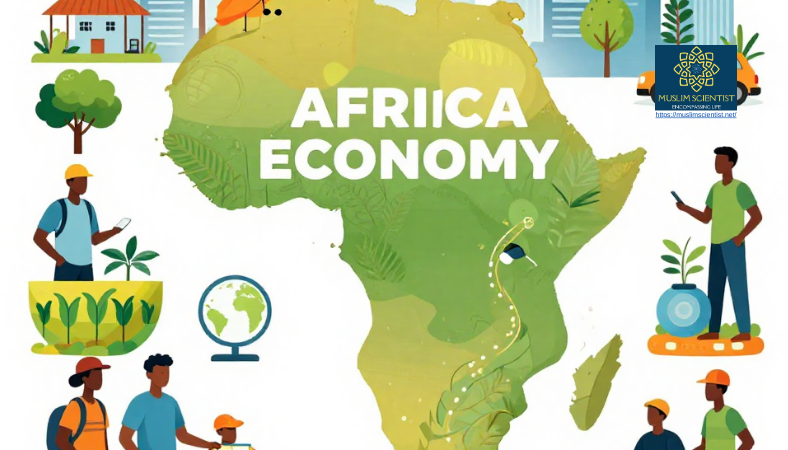
Africa stands on the brink of an economic transformation. Projections suggest that in the coming years, seven out of the world’s ten fastest-growing economies will be African. But to turn this potential into reality, a critical ingredient is needed: inclusive and ethical funding. Enter Islamic Finance – a system rooted in fairness, risk-sharing, and prohibition of interest – which is poised to play a pivotal role in bridging the continent’s funding gap and bringing millions into the formal financial fold.
With over 50% of Africa’s population being Muslim, a significant portion remains voluntarily excluded from conventional, interest-based banking. Islamic finance offers a Shariah-compliant alternative, not just for Muslims, but for anyone seeking equitable, asset-backed financial products. Yet, despite its perfect fit, Islamic finance in Africa is still in its infancy, capturing less than 10% of the global Islamic banking presence.
So, how can Africa accelerate this growth? The answer may lie 6,000 miles away, in Malaysia – the globally recognized hub of Islamic finance. A recent study unpacks Malaysia’s four-decade journey, offering a masterclass for African nations on how to build a world-class Islamic financial ecosystem from the ground up.
The Malaysian Blueprint: From Zero to Global Hub
Malaysia’s success wasn’t an accident. It was a meticulously orchestrated effort that evolved through three distinct phases:
- The Familiarisation Phase (1983-1992): Starting cautiously with the establishment of Bank Islam Malaysia, this period focused on building public trust and proving the model’s viability.
- The Mainstream Acceptance Phase (1993-2001): Islamic finance shed its “novelty” tag. Assets grew at a stunning 15% annually, attracting both Muslim and non-Muslim customers. Conventional banks began offering Islamic “windows.”
- The Competitive Advantage Phase (2002-Present): Islamic finance moved beyond banking into capital markets, with Sukuk (Islamic bonds) and Takaful (insurance) becoming key players. It transformed into a strategic economic tool for national growth.
The cornerstone of this success? Unprecedented collaboration between all stakeholders: the government, financial institutions, educational bodies, and the public—both Muslim and non-Muslim.
What Africa Can Learn: A Stakeholder Roadmap
The Malaysian experience provides clear lessons for each group involved in Africa’s financial future.
1. For Governments: Be the Architect
African governments must move from passive observers to active architects. Key actions include:
- Choosing the Right Model: Decide on the implementation style—Islamic windows, a dual system, or a full-fledged Islamic banking sector.
- Creating the Legal Framework: Establish dedicated laws and a strong, independent Shariah supervisory board, ideally under the central bank.
- Providing Smart Incentives: Offer initial tax relief, protective entry barriers, and tailored regulations to help Islamic institutions find their footing.
- Building Infrastructure: Develop supporting market infrastructure like Islamic interbank markets and separate clearing systems to ensure integrity.
2. For Financial Institutions: Build with Integrity
Banks and financial firms must look beyond short-term profit. Their role is to:
- Develop truly Shariah-based products, not just compliant ones.
- Craft compelling marketing to educate and convert customers from conventional systems.
- Invest in research and partner with universities to innovate and build local expertise.
3. For the Public (Muslim & Non-Muslim): Be the Engine
The community’s uptake is the ultimate driver of success.
- For Muslims: Patronage should be driven by the system’s ethical principles and long-term societal benefits, providing the initial critical mass needed for sustainability.
- For Non-Muslims: Embrace Islamic finance as a viable, ethical alternative. Its focus on equity and asset-backing aligns with universal values of fair dealing.
4. For Educational Institutions: Bridge the Knowledge Gap
Academia must solve the human capital crisis. This means:
- Introducing specialized Islamic Finance degrees and courses.
- Involving industry experts in curriculum design.
- Promoting research and industrial attachments to create practice-ready graduates.
The African Landscape: Seeds of Growth
While the sector is young, promising strides are being made across the continent:
- Nigeria: Launched its first full-fledged Islamic bank, Jaiz Bank, in 2012.
- South Africa: A pioneer in Sub-Saharan Africa, it issued a Sovereign Sukuk in 2014, becoming a leader in Islamic capital market products.
- Kenya: Revised its Banking Act to accommodate Islamic finance, leading to the growth of dedicated banks and windows.
- Mauritius: Is actively positioning itself as a regional Islamic finance hub, amending laws and attracting international players.
Table 1: Snapshot of Islamic Finance Growth in Select African Nations
| Country | Key Milestone | Current Focus |
|---|---|---|
| Nigeria | First full Islamic bank (2012) | Expanding beyond northern regions |
| South Africa | Sovereign Sukuk Issuance (2014) | Islamic fund management & capital markets |
| Kenya | Banking Act Amendment (2010) | Retail Islamic banking & products |
| Mauritius | Hub strategy & legal reforms | Investment funds & international services |
| Sudan | Full system Islamization (1977) | Operating a pure Islamic banking system |
Table 2: The Three-Phase Malaysian Development Model for Africa
| Phase | Timeline (Example) | Goal | Key Action |
|---|---|---|---|
| 1. Foundation & Trust | Years 1-10 | Build public confidence | Launch pilot Islamic banks; Enact enabling laws |
| 2. Growth & Inclusion | Years 11-20 | Achieve mainstream adoption | Encourage Islamic windows; Integrate with national systems |
| 3. Innovation & Leadership | Years 21+ | Become a competitive advantage | Develop capital markets (Sukuk); Export expertise |
Conclusion: A Collective Journey to Prosperity
Islamic finance is more than a banking niche; it’s a tool for inclusive growth, ethical investment, and financial resilience. For Africa, the path is clear: learn from global pioneers like Malaysia, foster unwavering collaboration between all sectors of society, and build with patience and integrity.
The potential is immense. By harnessing this ethical financial system, Africa can not only bridge its funding gap but also create a more equitable and prosperous economic future for all its people. The journey has begun—and it requires all hands on deck.
Reference: here
Other Articles: