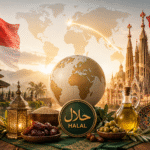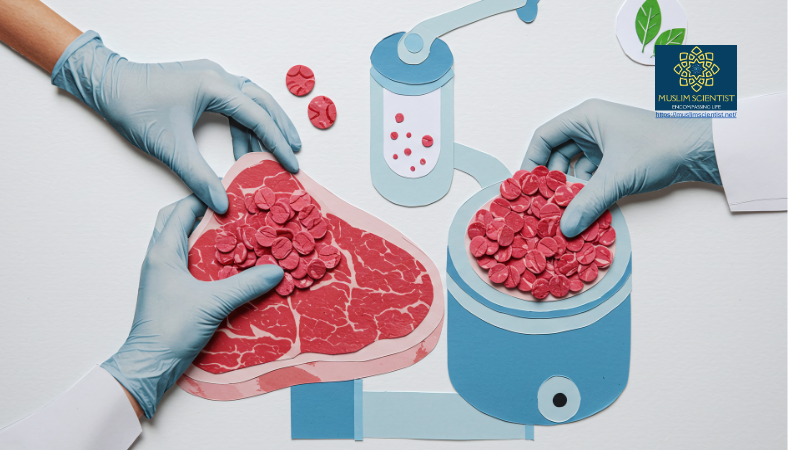
The cultivated meat industry, hailed as a future food solution, is overlooking one of its largest potential markets: the world’s nearly 2 billion Muslims. A perspective in Frontiers in Nutrition highlights this as a critical untapped opportunity. With the global Halal food market soaring, understanding Islamic dietary law is not just respectful—it’s essential for the commercial success and global impact of this nascent industry.
The article argues that for cultivated meat to fulfill its promise of sustainability and food security, it must address the needs of the fastest-growing religious demographic on the planet. The Muslim population is projected to reach 2.8 billion by 2050, making up 30% of humanity. Concurrently, meat consumption in key Muslim-majority nations is rising, driven by economic growth.
This convergence creates a pivotal moment. Can a technology born in secular Silicon Valley labs be adapted to meet the precise requirements of Islamic Halal certification? The answer will determine whether cultivated meat remains a niche product or becomes a truly global food source.
📈 The Rising Demand in Muslim-Majority Nations
Economic development is transforming diets across Asia and Africa, home to the largest Muslim populations. As incomes rise, so does the consumption of animal protein. This trend presents a dual challenge: meeting growing demand while mitigating the environmental impact of traditional livestock farming.
The following table projects the increase in meat consumption in some of the world’s most populous Muslim countries:
| Country (Projected Top 10 by Muslim Population in 2030) | Projected % Increase in Meat Consumption (2023-2030) |
|---|---|
| India | +17% |
| Pakistan | +10% |
| Indonesia | +4% |
| Nigeria | -2% (decrease) |
| Egypt | +8% |
| Turkey | +4% |
| Iran | +3% |
*Source: OECD-FAO Agricultural Outlook 2022-2031 (Data for Bangladesh, Afghanistan, and Iraq not available).*
This growing demand underscores the immense market potential. The global Halal food market was valued at $1.27 trillion in 2021 and is forecast to reach $1.67 trillion by 2025. For context, the global Kosher market is under $20 billion. This makes the Muslim consumer not just significant, but central to the future of food.
⚖️ The Halal Hurdle: Key Challenges for Cultivated Meat
For cultivated meat to be considered Halal (permissible), it must comply with Islamic dietary law. The article identifies several non-negotiable theological and technical hurdles that producers must clear:
- The Source of Cells: This is the most significant issue. Cells must be sourced from a permissible animal (e.g., chicken, cow, lamb) that was slaughtered according to Islamic rites (Zabihah). Harvesting cells from a live animal would render the product Haram (forbidden), as Islamic law prohibits consuming parts taken from live creatures.
- The Growth Medium: Traditionally, cells are grown in a nutrient soup called fetal bovine serum (FBS), derived from the blood of unborn calves. Blood is explicitly forbidden (Haram) in Islam. The industry’s shift to animal-free, plant-based growth media is therefore not just an ethical win for vegans but a prerequisite for Halal eligibility.
- The Concept of Tayyib: Halal encompasses more than just permissibility; it includes the idea of tayyib—wholesome, pure, and safe. The production process must be hygienic, uncontaminated, and the final product must be deemed safe and healthy for consumption.
- “Playing God” Concerns: Some scholars debate whether radically altering the creation of meat in a lab contravenes Islamic principles of natural law. A clear, scholarly consensus is still evolving.
✅ The Path to Certification: A Framework for Acceptance
Despite the challenges, the path forward is becoming clearer. Islamic scholars and certification bodies are actively engaging with the science. A framework for Halal cultivated meat is emerging, based on a few core principles:
| Key Requirement for Halal Certification | Explanation & Industry Implication |
|---|---|
| Permissible Animal Source | Starter cells must come from a chicken, cow, sheep, etc., not from pork or other forbidden animals. |
| Islamic Slaughter of Source Animal | The animal from which the initial cell biopsy is taken must be slaughtered by a Muslim following Zabihah protocols. This requires building new supply chains. |
| Animal-Free, Serum-Free Growth Medium | The nutrient broth must be entirely plant-based or synthetic to avoid forbidden blood products like FBS. |
| Absolute Prevention of Cross-Contamination | Production facilities and equipment must never come into contact with Haram substances like pork or alcohol. |
| Safety & Wholesomeness (Tayyib) | The final product must be proven safe, clean, and nutritious, meeting general food safety and Islamic purity standards. |
Progress is already underway. In 2022, the Assembly of Muslim Jurists of America (AMJA) issued a preliminary opinion stating cultivated meat is permissible by default, provided key Halal conditions are met. In 2023, Israel’s Chief Rabbi ruled that a specific cultivated steak could be Kosher, setting a precedent for Abrahamic faiths. Major Muslim-majority investors, like the United Arab Emirates, are also pouring funds into food tech, signaling serious commercial interest.
🔮 Strategic Imperatives for a Global Future
The article concludes that for the cultivated meat industry to be globally relevant, it must strategically engage with the Halal opportunity. This is not merely a regulatory step but a fundamental rethink of product development and marketing.
- Proactive Religious Engagement: Companies must work with Halal certification bodies and Islamic scholars from the earliest R&D stages, not after the product is developed. Co-creation builds trust and ensures compliance.
- Prioritize Muslim-Majority Markets: While the West is a launchpad, long-term strategy should focus on high-growth markets in Asia and Africa, where demand is rising and food security concerns are acute.
- Communicate Aligned Values: Marketing should connect cultivated meat’s benefits—reducing environmental harm, ensuring food security, and promoting animal welfare—with Islamic principles of stewardship (Khalifah), compassion for creatures, and purity (tayyib).
The question is no longer if cultivated meat can be Halal, but how and when. The companies that invest in understanding and respecting these religious requirements will be the ones to unlock a market worth trillions and feed the future.
Reference: here
Other Articles: