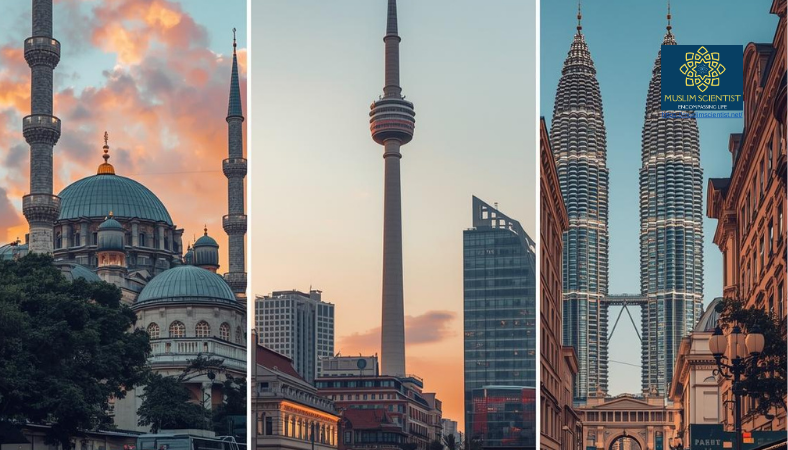
A study across Istanbul, Berlin, and Kuala Lumpur reveals that a student’s understanding of halal is deeply influenced by their city’s culture, policies, and social fabric—not just their theological training.
What does it mean to eat “halal”? For Muslims worldwide, it’s a divine injunction—a commitment to consuming what is permissible under Islamic law. But a fascinating new study reveals that the practical understanding, daily practice, and even the emotional experience of halal are profoundly shaped by geography. It’s not just about faith; it’s about the society where that faith is lived.
Researchers surveyed 210 Islamic theology students—future scholars, imams, and community leaders—in three iconic cities: the historical crossroads of Istanbul, the multicultural European hub of Berlin, and the global halal capital of Kuala Lumpur. The findings, published in the journal Religions, paint a compelling picture of how culture, state policy, and market structure actively sculpt religious perception.
The most striking revelation? While all students shared a deep religious commitment, their awareness, habits, and motivations around halal food varied dramatically. Kuala Lumpur emerged as a consistent leader across nearly all measures, demonstrating the power of a holistic, state-supported “halal ecosystem.”
Beyond the Textbook: When Society Teaches Theology
One might assume that students immersed in Islamic studies would have uniform, high-level knowledge of halal principles. The research confirms they do have strong religious commitment. However, their Halal Literacy—knowledge of certification, labels, and production processes—and their Halal Awareness showed significant gaps outside of Malaysia.
“Students in Kuala Lumpur demonstrated significantly higher levels of halal food awareness and halal literacy compared to their counterparts in Istanbul and Berlin,” the study notes. This isn’t a reflection of personal piety but of environment. Malaysia has pioneered a world-class, government-backed halal certification system (JAKIM) and runs extensive public awareness campaigns. Halal is part of the national identity and economic strategy.
In contrast, students in Berlin, navigating a secular, individualistic society with a less centralized halal market, reported lower scores in awareness and the influence of social norms. Their halal practice is often a more personal, deliberate choice amidst a broader array of options. Istanbul students, while showing strong religious motivation, fell between the two, suggesting robust personal faith but less systemic, societal reinforcement compared to Malaysia.
Table 1: The Halal Perception Gap: How Three Cities Compare
| Psychological & Behavioral Factor | Kuala Lumpur | Istanbul | Berlin | Key Insight |
|---|---|---|---|---|
| Halal Awareness & Literacy | Highest | Moderate | Lowest | State policy & public campaigns boost knowledge. |
| Subjective Norms (Social Pressure) | Highest | Moderate | Lowest | Collectivist culture strongly reinforces halal as a social norm. |
| Hedonic Motivation (Enjoyment) | Highest | Moderate | Lowest | Halal is linked to pleasure & spiritual satisfaction, not just obligation. |
| Habit (Routine Consumption) | Highest | Moderate | Lower | Halal is a seamless, ingrained part of daily life. |
| Religious Commitment | Highest | High | Moderate | Personal piety is high everywhere, but strongest in KL. |
| Perceived Control (Ease of Access) | High | Moderate | Lower | Well-regulated market makes finding halal easy. |
The Power of the Collective: Social Norms vs. Individual Choice
The study measured Subjective Norms—the perceived pressure from one’s social circle. Here, the difference was most dramatic. Kuala Lumpur scored vastly higher than both Istanbul and Berlin.
“This reflects the more pronounced role of collectivist cultural structures in Asian societies, where social expectations shape individual behavior to a greater extent,” the author explains. In such an environment, choosing halal isn’t just a personal religious act; it’s a social expectation, reinforced by family, peers, and community. This creates a powerful, self-perpetuating cycle of practice.
In Berlin, halal consumption is more of an individual journey. With weaker collective norms, the decision rests more squarely on personal conviction and the practicalities of access and price.
From Obligation to Joy: The “Hedonic Motivation” of Halal
Perhaps the most encouraging finding is on Hedonic Motivation—the pleasure and spiritual satisfaction derived from consuming halal food. Again, Kuala Lumpur led significantly.
This suggests a profound shift: in contexts where halal is fully integrated, it transcends mere compliance. It becomes a positive source of joy, identity, and well-being. The food is not just “permissible”; it’s trusted, ethical, healthy, and enjoyable—aligning with global trends in conscious consumption. This frames halal as an attractive, holistic lifestyle choice rather than a restrictive religious rule.
The Ripple Effect: Theology Students as Future Multipliers
This research holds significance far beyond academic circles. These theology students are not just consumers; they are future multipliers of religious and cultural understanding.
“As future religious leaders, educators, and community figures, they are positioned to transmit theological knowledge into everyday practices,” the study emphasizes. Their perceptions, shaped by their environment, will influence how they guide their future communities. A student trained in Kuala Lumpur’s ecosystem may emphasize systematic certification and social responsibility. A graduate from Berlin might focus on navigating faith within pluralistic, secular societies.
Table 2: Practical Implications: Lessons from the Three-City Study
| Stakeholder | Key Takeaway & Opportunity |
|---|---|
| Policy Makers | Invest in Halal Ecosystems. Malaysia’s model shows that clear certification, standards, and public awareness build consumer trust and can drive economic growth in the global halal market. |
| Educational Institutions | Curriculum Development. Theology and other faculties should integrate practical “halal literacy”—understanding certifications, ethics, and global supply chains—into their programs. |
| Food Industry & Retailers | Understand Local Context. In Berlin, transparency and accessibility are key. In Kuala Lumpur, the standard is expected. In Istanbul, there’s a gap between personal faith and systemic trust that brands can fill. |
| Global Muslim Consumers | Your experience is shaped by your context. The journey towards mindful halal consumption is a blend of personal faith, community, and the structures around you. |
| Interfaith & Multicultural Societies | Halal is multifaceted. It’s a religious practice, a cultural marker, an ethical choice, and a health standard. Understanding this complexity fosters better dialogue. |
Conclusion: A Tapestry of Faith and Culture
This study moves the conversation beyond a binary of “halal vs. haram.” It reveals a vibrant tapestry where divine law is woven with the threads of local culture, state policy, and market economics. It shows that fostering a deep, joyful, and informed halal practice requires more than individual piety; it benefits from supportive social structures and transparent systems.
The findings are ultimately empowering. They highlight that the global Muslim community’s relationship with halal is diverse, adaptive, and deeply intelligent—responding to both the eternal compass of faith and the immediate realities of the world in which they live. For anyone interested in the future of faith, food, and culture, the message is clear: to understand halal, you must look beyond the plate, to the city, and the society that surrounds it.
Reference: here
Other Articles: