For millions of Muslims around the world, ensuring that food is halal is not just a preference—it is a religious obligation. But in the modern food industry, one of the most common preservatives is ethanol (alcohol). From bread to baked goods, sauces to snacks, ethanol is widely used to prevent microbial growth and extend shelf life.
This creates a serious problem for Muslim consumers. Even if a product contains no pork or other obvious haram ingredients, the presence of ethanol—even in small amounts—can render it impermissible.
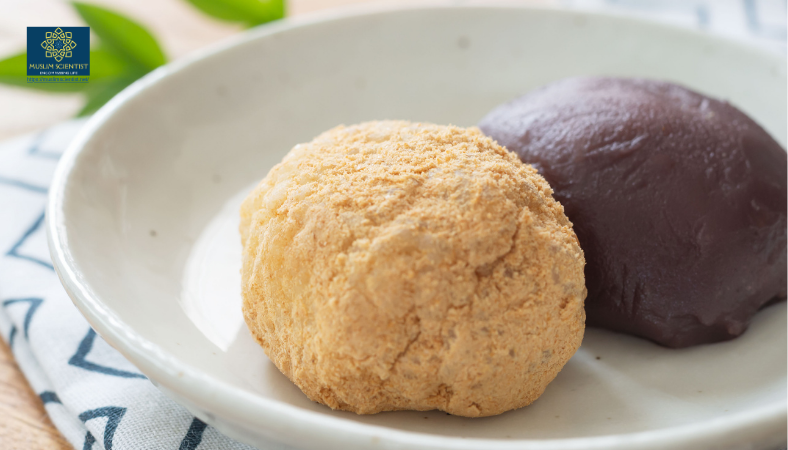
Researchers from the Korea Food Research Institute and Jeonbuk National University have demonstrated that a natural mixture of citrus extracts and organic acids can effectively preserve rice cakes without using ethanol. The mixture, called MCO (a combination of bitter orange extract, ascorbic acid, lactic acid, and citric acid), not only kept the rice cakes safe from harmful bacteria but also maintained their color, texture, and taste—without leaving any alcoholic odor or aftertaste.
This research is not just about rice cakes. It is about the future of halal food processing worldwide.
The Problem: Ethanol is Everywhere
Ethanol is the most common volatile compound used in food processing. It serves as a solvent for flavorings and colorants, and as a preservative to kill bacteria and mold. For many processed foods—particularly baked goods, rice cakes, and bread products—ethanol is sprayed on the surface or used as a dipping solution before packaging.
The study notes that “ethanol is widely used as a preservative for commercial rice cakes (tteok)” in Korea. The typical method involves spraying or briefly soaking the rice cake in ethanol before packaging.
But Islamic law is clear. The Qur’an prohibits intoxicants. While there is some scholarly debate about the permissibility of trace amounts of ethanol that are naturally present in fermented foods (like bread or fruit), the consensus is that ethanol added as an ingredient or preservative is haram. The study cites that “ethanol is considered haram for Muslims because it causes intoxication.”
This puts Muslim consumers in a difficult position. Rice cakes and similar products might be perfectly halal in every other way—but the ethanol preservative makes them forbidden.
The Solution: MCO—A Natural, Halal Alternative
The researchers tested four different preservative solutions on rice cakes:
- Distilled water (control group, no preservative)
- 70% ethanol (the current industry standard)
- 1% grapefruit seed extract (GSE) (a known natural antimicrobial)
- 1% MCO (a mixture of 72% bitter orange extract, 1% ascorbic acid, 1% lactic acid, 2% citric acid, and 24% distilled water)
The rice cakes were soaked in each solution for one minute, then dried, vacuum-sealed, and stored at refrigerator temperature (4°C) for 35 days. The researchers then measured microbial growth, color changes, texture (hardness), and consumer acceptance.
The results were remarkable.
Total Plate Count (TPC) After 28 Days of Storage
| Treatment | Total Plate Count (log CFU/g) | Effectiveness |
|---|---|---|
| Distilled Water (Control) | 6.22 ± 0.21 | Least effective (high bacterial growth) |
| Ethanol (70%) | 4.05 ± 1.31 | Effective initially, but less effective over time |
| Grapefruit Seed Extract (1%) | 6.70 ± 0.55 | Not effective (similar to control) |
| MCO (1%) | 3.65 ± 0.09 | Most effective (lowest bacterial count) |
While ethanol had an immediate antimicrobial effect (the ethanol-treated rice cake had the lowest bacterial count on day 0), the MCO-treated rice cake had the lowest bacterial count after 28 days of storage—just 3.65 log CFU/g compared to 4.05 for ethanol and over 6 for the control and GSE groups.
In other words, MCO was the most effective preservative over the full shelf life of the product.
Mold and Yeast: A Challenge for MCO
The study also measured mold and yeast counts. Interestingly, ethanol was the most effective at preventing mold and yeast growth. At 28 days, the ethanol-treated rice cake had only 0.83 log CFU/g of mold and yeast, while the MCO-treated rice cake had 4.19 log CFU/g.
However, the researchers note that the vacuum-sealed packaging was not perfectly anaerobic—some air could leak through the outer layer of the film. They suggest that “multiple layers, thicker packaging, or modified atmosphere packaging could be used to ensure full restriction of oxygen.”
Despite this, the MCO-treated rice cake’s mold and yeast count (4.19 log CFU/g) was still within the acceptable range established by the Korean Food Standard Codex (less than 4.7 log CFU/g). So, while MCO is not as effective as ethanol against mold and yeast, it still meets safety standards.
Color and Texture: No Compromises
One concern with any new preservative is whether it changes the appearance or texture of the food. The study measured color changes using a colorimeter, tracking lightness (L), redness (a), and yellowness (b*).
Color Changes After 28 Days (ΔE – Total Color Difference)
| Treatment | ΔE (28 days) | Significant Change? |
|---|---|---|
| Distilled Water | 28.12 | No significant difference from control |
| Ethanol (70%) | 30.53 | No significant difference from control |
| Grapefruit Seed Extract | 28.98 | No significant difference from control |
| MCO (1%) | 29.52 | No significant difference from control |
The total color difference values (ΔE) indicated that the colors of all treated rice cake samples were not significantly different from the control. In other words, none of the preservative solutions affected the color of the rice cake.
Similarly, the texture (hardness) of the rice cakes was maintained for 28 days in all samples. The MCO-treated rice cake actually had slightly lower hardness (4.14 N) than the ethanol-treated rice cake (5.11 N), meaning it remained softer and more desirable.
Consumer Acceptance: The Alcoholic Odor Problem
Perhaps the most important finding relates to consumer acceptance. The researchers conducted sensory evaluations with 43 trained panelists at two time points: day 8 and day 35.
The results were striking. The ethanol-treated rice cake scored significantly lower than all other samples for overall liking, flavor liking, and hardness liking at both time points.
Why? Even after the rice cake was boiled for 2 minutes before serving, panelists could still smell a strong alcoholic odor. The study notes that “some of the panelists could still smell a strong alcoholic odor, and this may have led to the decrease in overall liking and flavor liking.”
One panelist commented that the ethanol-treated rice cake had a “unique aroma” that was off-putting. In total, 16.27% of participants specifically mentioned the alcoholic odor as a negative attribute.
In contrast, the MCO-treated rice cake scored similarly to the control and GSE-treated samples. No negative aromas or tastes were detected. The researchers note that “MCO preservatives may not negatively affect consumer acceptance of the treated products.”
Ethanol Content: Meeting Halal Standards
The study also measured the actual ethanol content remaining in the rice cakes after treatment. Only the ethanol-treated rice cake contained detectable ethanol: 0.71 ± 1.76 mg/g.
The researchers compared this to the permissible ethanol levels established by two major halal certification bodies:
- JAKIM (Malaysia): Less than 0.5% remaining in the final product
- MUIS (Singapore): Less than 0.1% remaining in the final product (stricter)
The ethanol-treated rice cake contained approximately 0.071% ethanol (0.71 mg/g). This would be permissible under JAKIM standards (0.5% threshold) but not under the stricter MUIS standards (0.1% threshold). More importantly, the study notes that “Muslims tend not to buy food with an alcohol odor, even if it meets the halal regulations.”
The MCO-treated rice cake contained no detectable ethanol and would be fully halal under both certification standards.
Why MCO Works: The Science of Organic Acids
The study explains the antimicrobial mechanism of organic acids. When organic acids (like citric acid and lactic acid) enter microbial cells, they become ionized inside the cell membrane. This forces the cell to use energy to maintain its internal pH, damaging the cell membrane, interfering with enzyme activity, and ultimately leading to cell death.
The mixture of organic acids with different pKa values (a measure of acid strength) is particularly effective. The study notes that “the use of a mixture of organic acids with different pKa values could be more advantageous than a single organic acid alone for food preservation.”
Bitter orange extract (Citrus aurantium) also has well-documented antimicrobial properties. Previous studies have confirmed its efficacy against both gram-positive and gram-negative bacteria.
Implications for the Global Halal Food Industry
This research has significant implications for the global halal food industry, which is growing rapidly. According to the study, the halal food market is “steadily increasing” as Muslim consumers demand products that comply with Islamic law.
For food manufacturers, the study offers a practical, effective, and natural alternative to ethanol. MCO is classified as a GRAS (Generally Recognized As Safe) food additive in Korea and other countries. It is derived from natural sources (citrus fruits and organic acids) and does not raise any halal concerns.
For Muslim consumers, the study provides reassurance. It is possible to produce processed foods that are both safe and halal—without relying on ethanol. The MCO preservative did not affect the color, texture, or taste of the rice cakes, and it left no alcoholic odor or aftertaste.
For halal certification bodies, the study offers a new standard. MCO-treated products can be certified as halal with confidence, knowing that they meet both safety and religious requirements.
Limitations and Future Research
The study has some limitations. First, it focused only on rice cakes (tteok). Further research is needed to test MCO on other processed foods, such as bread, cakes, sauces, and ready-to-eat meals.
Second, the study only measured total plate counts and mold and yeast counts. It did not test for specific pathogens like Salmonella, Staphylococcus aureus, or Bacillus cereus. Future research should include tests against these target toxigenic strains.
Third, the MCO-treated rice cake had higher mold and yeast counts than the ethanol-treated sample. While still within acceptable limits, this suggests that MCO may require improved packaging (e.g., modified atmosphere packaging) to fully control mold and yeast growth.
A Final Word of Hope
This study is a testament to the power of science to serve faith. By developing a natural, effective, and halal alternative to ethanol, researchers have solved a significant problem for Muslim consumers and the halal food industry.
The authors conclude: “MCO preservatives could be a useful alternative for use in the halal food industry.” This is not just a scientific conclusion; it is a message of hope for the millions of Muslims who want to eat food that is both safe and pleasing to Allah.
As the global halal food market continues to grow, innovations like MCO will become increasingly important. The future of halal food is not about accepting compromises. It is about finding better solutions—solutions that honor both science and faith.
Reference: here
Other Articles: