For decades, Central Asia has been viewed through a specific lens: oil, gas, authoritarian stability, and Russia’s backyard. A new report, however, suggests the region is about to be seen as something else entirely—the next frontier of the $3 trillion global Islamic finance industry.
The report, The Future of Islamic Finance in Central Asia, jointly released by the Islamic Development Bank Institute (IsDBI) and the Eurasian Development Bank (EDB), projects that Islamic banking assets in the five Central Asian republics could surge from a modest 699millionin2023to∗∗699millionin2023to∗∗2.5 billion by 2028**, reaching $6.3 billion by 2033.
This is not a speculative forecast. It is grounded in data: 82 million people, 85% of them Muslim, living in an economy that has grown at 6.2% annually for two decades.
The Current Landscape: Small but Significant
Today, the Islamic finance footprint in Central Asia is modest. Eighteen Islamic banks operate across the region. The asset base of $699 million represents just 0.01% of the global total. But as Dr. Muhammad Al Jasser, president of the Islamic Development Bank, notes in the report, Central Asian countries are at a “critical stage” in developing their financial systems.
Islamic Finance Assets in Central Asia – Current and Projected
| Year | Islamic Banking Assets | Sukuk Market Size | Key Developments |
|---|---|---|---|
| 2023 (actual) | $699 million | Negligible | 0.01% of global assets |
| 2028 (projected) | $2.5 billion | $2.05 billion | 4x growth from 2023 |
| 2033 (projected) | $6.3 billion | $5.6 billion | 9x growth from 2023 |
Source: IsDBI & EDB Report, The Future of Islamic Finance in Central Asia (2025)
The region already hosts a diverse range of Islamic financial institutions:
- Fully-fledged Islamic banks
- Islamic windows within conventional banks
- Takaful operators (Islamic insurance)
- Microfinance institutions
- Leasing and investment companies
- Islamic fintech firms
However, the report notes that Islamic capital markets—particularly sukuk (Islamic bonds)—still lag significantly behind. This represents both a weakness and an opportunity. If developed, a sukuk market could fund infrastructure projects across the region without relying on conventional interest-based debt.
Regional Leaders: Who Is Ahead?
The history of Islamic finance in Central Asia dates to the 1990s, when countries joined the Islamic Development Bank Group. The Kyrgyz Republic was the first mover, establishing Islamic finance components early on.
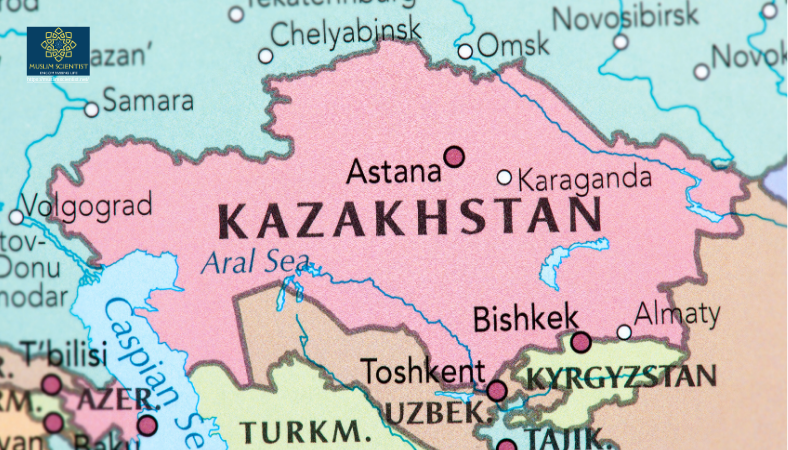
Today, every Central Asian country except Turkmenistan has some form of Islamic finance infrastructure. Kazakhstan and the Kyrgyz Republic have made the most progress in developing legal and regulatory frameworks. According to the 2024 Islamic Finance Development Report, Kazakhstan currently ranks 19th globally—ahead of many Muslim-majority countries with larger populations.
Central Asian Countries – Islamic Finance Status (2025)
| Country | Muslim Population | Islamic Finance Status | Global Ranking (2024) |
|---|---|---|---|
| Kazakhstan | ~70% | Full legal framework; Islamic windows and banks | 19th |
| Uzbekistan | ~96% | New law passed March 2026; 10 institutions preparing | Emerging |
| Kyrgyz Republic | ~90% | First mover; established banks and windows | Top 30 |
| Tajikistan | ~96% | Limited framework; some microfinance | Developing |
| Turkmenistan | ~93% | No formal framework; not active | N/A |
Sources: Various, including IsDBI/EDB report
The report projects that Kazakhstan will continue to lead regional growth, followed by Uzbekistan and Turkmenistan. Uzbekistan’s recent passage of a comprehensive Islamic finance law (March 2026, effective June 2026) is a game-changer, as previously analyzed. Turkmenistan remains the outlier, with no formal Islamic finance framework.
The Macroeconomic Case: Why Central Asia?
The report’s growth projections are anchored in strong macroeconomic fundamentals that distinguish Central Asia from other emerging markets.
The numbers that matter:
- Population: 82 million as of 2024, a 40% increase since 2000, growing at 2% annually
- Combined GDP: $519 billion, growing at an average annual rate of 6.2% over two decades
- Trade turnover: Increased ninefold since 2000
- Foreign direct investment (FDI): Grew 17-fold since 2000
For context, the region’s 6.2% GDP growth outpaces both global averages and other developing regions. This is not a stagnant, resource-dependent economy. It is a dynamic, growing market with a young, increasingly urbanized population.
Why does this matter for Islamic finance?
Islamic finance requires real economic activity to back transactions (asset-backing). Central Asia’s rapid growth in trade, manufacturing, and infrastructure creates precisely the kind of real economy opportunities that Islamic finance needs. Conversely, conventional finance has often struggled in Central Asia due to religious aversion to interest (riba) among the Muslim-majority population.
Priority Investment Sectors
The report identifies five priority sectors for Islamic finance investment, all aligned with sustainable development goals:
- Energy: Including renewable energy projects (solar, wind, hydro) in Kazakhstan and Uzbekistan
- Transportation and logistics: Upgrading Silk Road corridors, rail links to China and Europe
- Manufacturing: Light industry, processing of agricultural goods, export-oriented production
- Food security: Halal food production, agricultural finance, storage infrastructure
- Social infrastructure: Hospitals, schools, affordable housing
These sectors share a common characteristic: they require long-term, patient capital. Islamic finance, with its emphasis on asset-backing and risk-sharing, is well-suited to provide such funding. Sukuk issuances could finance entire infrastructure corridors without the interest rate volatility that plagues conventional bond markets.
The Three Constraints Holding the Region Back
The report is not blindly optimistic. It identifies three major constraints that must be overcome for the projections to materialize:
1. Limited Public Awareness
Most Central Asians know that conventional interest-based banking is prohibited in Islam. But few understand that Sharia-compliant alternatives exist. A 2024 survey cited in the report found that less than 30% of respondents in Kazakhstan and Uzbekistan could name a single Islamic finance product (murabahah, ijara, etc.).
2. Shortage of Qualified Professionals
Islamic finance requires specialized skills: Sharia auditing, product structuring, liquidity management, and legal expertise in both conventional and Islamic contracts. Central Asia has a severe shortage of such professionals. Most banks rely on foreign consultants from Malaysia, the Gulf, or Pakistan—an expensive and unsustainable model.
3. Weak Legal and Regulatory Frameworks
While Kazakhstan and the Kyrgyz Republic have made progress, other countries (Tajikistan, Turkmenistan) lack basic enabling legislation. Even in leading countries, gaps remain: taxation of Islamic transactions (double taxation risk), bankruptcy treatment of Sharia-compliant contracts, and recognition of sukuk as collateral.
The report calls for harmonized regulation across the region, strategic public education campaigns, and significant investments in training programs for bankers, lawyers, and regulators.
The Role of External Partners
No Central Asian country can build an Islamic finance sector alone. The report explicitly urges greater collaboration with:
- Multilateral financial institutions: Islamic Development Bank, World Bank, Asian Development Bank
- Islamic banks from mature markets: Banks in Malaysia, UAE, Saudi Arabia, Qatar, and Kuwait
- Takaful operators: To develop Islamic insurance products
These partners can provide:
- Knowledge transfer: Training programs, seconded experts, curriculum development
- Product innovation: Tailoring Gulf and Southeast Asian products to Central Asian contexts
- Capacity building: Legal drafting support, regulatory advice, fintech expertise
- Liquidity support: Lines of credit for Islamic windows and microfinance institutions
Nikolai Podguzov, Chairman of the Eurasian Development Bank, emphasized that Islamic finance “could become an engine of inclusive growth and a catalyst for regional integration.” This is a striking statement from a bank traditionally focused on post-Soviet infrastructure. It suggests that Islamic finance is no longer viewed as a niche religious product but as a mainstream tool for development.
Kazakhstan: The Regional Hub
Kazakhstan is projected to lead the region, and for good reason. The country has:
- The most developed legal framework (laws on Islamic banking passed in 2009 and amended multiple times)
- The largest economy ($290 billion GDP, more than half of regional total)
- A government actively courting Gulf investment (Saudi PIF, UAE ADIA)
- Almaty as a regional financial center (Astana International Financial Centre, or AIFC, includes Islamic finance)
AIFC’s Islamic finance platform, launched in 2018, provides a common-law-based jurisdiction for Islamic contracts. This reduces legal uncertainty for Gulf investors accustomed to English common law.
The report projects that Kazakhstan will account for the largest share of the $6.3 billion in Islamic banking assets by 2033, followed by Uzbekistan and then Turkmenistan (assuming it eventually adopts enabling legislation).
Uzbekistan: The Dark Horse
Uzbekistan, as covered in our previous analysis, passed a comprehensive Islamic finance law in March 2026 (effective June 2026). The report was released before this law was passed, but its authors note that Uzbekistan’s “increasingly favorable regulations” position it for rapid growth.
With 36 million people (96% Muslim) and a young, growing population, Uzbekistan could surpass Kazakhstan in Islamic finance assets by the 2030s if it implements its new law effectively. The key variable: speed of licensing for Islamic windows and full-fledged Islamic banks.
The Sukuk Opportunity
The report’s projection of a $5.6 billion sukuk market by 2033 is particularly significant. Sukuk are Islamic bonds that pay returns from asset profits rather than interest. They are the primary tool for infrastructure financing in Islamic finance.
Currently, no Central Asian country has issued a sovereign sukuk. The first such issuance—likely by Kazakhstan or Uzbekistan—would be a landmark event. It would:
- Establish a benchmark yield curve for corporate sukuk
- Attract Gulf sovereign wealth funds as investors
- Demonstrate the region’s commitment to Islamic finance
- Fund specific infrastructure projects (roads, power plants, water treatment)
The report suggests that multilateral development banks could play a catalytic role by underwriting the first issuances or providing credit enhancements.
Challenges Beyond the Three Constraints
While the report focuses on three main constraints, other challenges loom:
Geopolitical risk: Central Asia sits between Russia, China, and Afghanistan. Russian opposition to Islamic finance (Moscow views it as a vector for Turkish or Gulf influence) could slow adoption. China’s Belt and Road Initiative funds infrastructure through conventional loans, not sukuk.
Regulatory competition: If each country develops its own rules, the region will remain fragmented. Harmonization is essential but politically difficult. Kazakhstan and Uzbekistan, as the two largest economies, will need to lead.
Human capital lag: Training professionals takes time. Even with aggressive programs, a decade may be needed to develop a critical mass of local Sharia scholars, auditors, and product structurers.
Conclusion: A Frontier Worth Watching
Central Asia is not the Gulf. It does not have petrodollar wealth or decades of Islamic finance experience. But it has something else: a young, growing, overwhelmingly Muslim population in a rapidly expanding economy. And it has political will—from Kazakhstan’s AIFC to Uzbekistan’s new law to the Kyrgyz Republic’s first-mover status.
The report’s projections—6.3billioninbankingassets,6.3billioninbankingassets,5.6 billion in sukuk by 2033—are ambitious but plausible. They represent a ninefold increase from 2023 levels. Achieving them will require harmonized regulation, massive investment in training, and successful partnerships with Gulf and Southeast Asian institutions.
But if Central Asia succeeds, it will not just create a new market for Islamic finance. It will demonstrate that Islamic finance can thrive outside the Gulf and Southeast Asia—in a post-Soviet context, under authoritarian governments, and in competition with Chinese and Russian capital.
Reference: here
Other Articles: