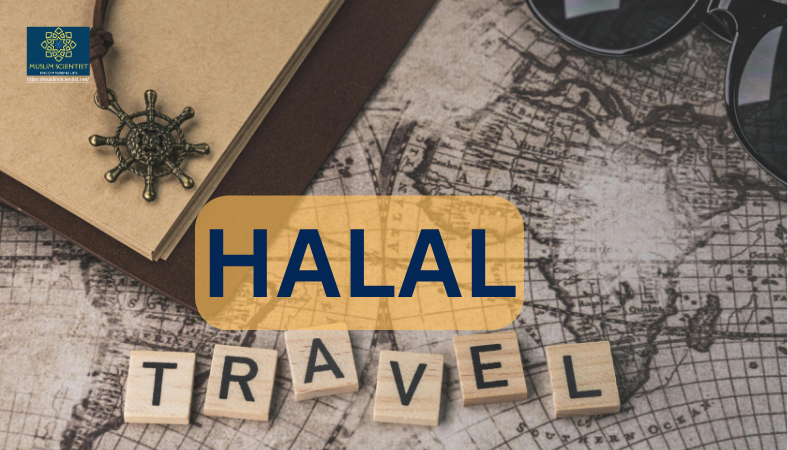
For the world’s 1.9 billion Muslims, travel is not just about leisure—it is about maintaining faith while exploring new horizons. But when a Muslim tourist considers visiting a non-Muslim country like Thailand, Japan, France, or the United Kingdom, a critical question arises: Will I be able to pray? Will I find halal food? Will my religious needs be respected?
A scientific study provides clear answers. Researchers from Taiwan and Thailand surveyed 387 Indonesian Muslim travelers to understand exactly what drives their intention to visit non-Muslim countries.
The findings are surprising, actionable, and essential reading for tourism boards, hoteliers, and policymakers in non-Muslim nations eager to attract the US$225 billion halal travel market.
The Core Finding: Trust Trumps Safety
The study used the “Stimulus-Organism-Response” (SOR) framework—a well-established psychological model—to understand how destination attributes influence Muslim travelers.
- Stimulus (S): Shariah-oriented attributes of a destination (tangible and intangible).
- Organism (O): The internal psychological state—specifically, Perceived Halal Safety and Muslim Trust.
- Response (R): The final outcome—Visit Intention.
The results revealed a fascinating and counterintuitive pattern.
Muslim Trust had a strong, significant positive effect on visit intention (β = 0.440, p < 0.001). It also served as a powerful mediator, meaning Shariah-compliant attributes work largely through trust to influence travel decisions.
Perceived Halal Safety, on the other hand, showed a small but significant negative direct effect on visit intention (β = −0.108, p < 0.05). It did not significantly mediate the relationship.
What does this mean in plain language?
Muslim tourists are not looking for guarantees of “safety” in a security sense. They are looking for trust—a deep, holistic confidence that a non-Muslim destination genuinely respects Islamic values and will reliably accommodate their religious practices. When a destination focuses too much on “safety” as a form of risk avoidance (e.g., “we will protect you from haram things”), it can paradoxically remind travelers of the risks and reduce their enthusiasm. But when a destination builds trust through visible, tangible, and consistent Shariah-compliant attributes, visit intention soars.
The Two Types of Shariah-Compliant Attributes (Stimulus)
| Attribute Type | What It Includes | Why It Matters |
|---|---|---|
| Tangible Attributes (Physical & Visible) | Halal-certified food, dedicated prayer facilities (musalla), ablution/wudu areas, absence of pork and alcohol on premises, appropriate toilet facilities | These are “costly signals” that prove a destination’s commitment. They are easily verifiable and provide immediate confidence. Performance was rated HIGH. |
| Intangible Attributes (Experiential & Service) | Culturally sensitive staff behavior, gender-segregated services (e.g., family-only pools), respectful religious atmosphere, Muslim-friendly media content, absence of inappropriate entertainment | These reflect the destination’s genuine attitude and cultural understanding. They are harder to verify but crucial for trust. Performance was rated MODERATE—a priority for improvement. |
The Importance-Performance Matrix: Where Should Destinations Invest?
One of the study’s most valuable contributions is the use of Importance-Performance Map Analysis (IPMA) . This tool simultaneously measures two things:
- Importance: How much does this factor influence visit intention? (Effect size)
- Performance: How well do non-Muslim destinations currently score on this factor? (Mean score)
The results, mapped into four quadrants, provide a clear action plan.
IPMA Quadrant Analysis for Non-Muslim Destinations
| Quadrant | Importance | Performance | What It Means | Which Attributes? |
|---|---|---|---|---|
| Keep Up the Good Work (Quadrant I) | High | High | These are your strengths. Maintain and protect them. | Tangible Attributes (Halal food, prayer rooms, ablution facilities) |
| Concentrate Here (Quadrant IV) | High | Moderate | URGENT PRIORITY. These are highly important but currently underperforming. Invest here for maximum impact. | Intangible Attributes (Staff cultural sensitivity, gender-segregated services, respectful atmosphere) |
| Possible Overkill (Quadrant II) | Low | High | You may be over-investing here. Reallocate resources. | (No specific attributes fell here in this study) |
| Low Priority (Quadrant III) | Low | Low | Not a priority for now. | (No specific attributes fell here in this study) |
The Key Takeaway for Destination Managers:
- Do not lose focus on tangible attributes. Halal food, prayer spaces, and ablution facilities are your foundation. You are already doing well here. Keep it up.
- Immediately invest in intangible attributes. Your staff’s behavior, the atmosphere of your hotels, and the availability of gender-segregated services (e.g., family-only pool times, women-only gym hours) are currently underperforming despite being highly important to Muslim travelers. This is your biggest opportunity for growth.
Why Trust Matters More Than Safety
The study’s finding that perceived halal safety had a negative direct effect on visit intention requires careful explanation. This does not mean safety is unimportant. Rather, the researchers suggest that:
- When a destination emphasizes “safety” as protection from religious violations, it may unintentionally prime risk awareness in the traveler’s mind.
- In contrast, trust focuses on positive expectations and confidence. It is an “enabling” mechanism rather than an “assurance” mechanism.
- For Indonesian Muslims traveling to nearby Thailand—a culturally familiar yet religiously different neighbor—trust in the destination’s goodwill and cultural sensitivity matters more than explicit safety guarantees.
Practical Recommendations for Non-Muslim Destinations
Based on the study’s robust findings, here is a six-point action plan for tourism authorities, hotel chains, and airlines in non-Muslim countries:
- Certify and Promote Tangible Attributes: Ensure halal certification is visible and credible. Map prayer facilities on your tourism app. Clearly label halal food options. These are your “entry tickets” to the Muslim travel market.
- Train Staff on Cultural Sensitivity (High Priority): Your staff must understand basic Islamic practices: that Muslim guests need time for five daily prayers, appreciate a greeting of “Assalamu’alaikum,” and value privacy (non-mahram interactions). This intangible attribute currently has high importance but low performance.
- Offer Gender-Segregated Services: Consider “family hours” at swimming pools (allowing modest swimwear), women-only gym sessions, and private family areas in restaurants. These are powerful trust-builders.
- Create a Muslim-Friendly Atmosphere: Reduce or eliminate the visibility of gambling, nightclubs, and non-halal entertainment in areas marketed to Muslim families. Ensure in-room media content does not violate Islamic norms.
- Build Trust Through Muslim Testimonials: Positive word-of-mouth from fellow Muslim travelers is one of the most powerful trust signals. Encourage and share reviews from verified Muslim guests on your website and social media.
- Use IPMA for Continuous Improvement: Regularly survey Muslim travelers not just on satisfaction but on both importance and performance of specific Shariah attributes. Allocate resources to close the gaps in Quadrant IV (high importance, low performance).
The Islamic Teaching Connection: Trust as the Foundation of Muslim Society
This scientific study, focused on travel behavior, inadvertently reveals a profound and beautiful truth about Islamic civilization: Trust (Amanah) is the bedrock of all social and economic transactions.
The Qur’an and Sunnah have long established principles that perfectly align with—and even transcend—the study’s findings.
1. The Command to Fulfill Trusts (Amanah):
Allah commands in the Qur’an:
“Indeed, Allah commands you to render trusts (Amanah) to whom they are due…” (Surah An-Nisa 4:58)
When a non-Muslim destination provides halal food and prayer facilities, they are fulfilling a trust. When a Muslim traveler trusts that a non-Muslim hotelier will respect their religious needs, they are operating on a principle that Allah has embedded in human nature. The study scientifically proves that this Amanah is the single most powerful driver of visit intention.
2. Trust Enables Travel (A ‘Rukhsah’ for Exploration):
Islam encourages travel for knowledge, trade, and reflection. Allah says:
“Say, ‘Travel through the land and observe how He began creation…'” (Surah Al-Ankabut 29:20)
But travel is only possible when there is trust. The Prophet Muhammad (PBUH) trusted a non-Muslim guide (Abdullah ibn Urayqit) to lead his migration (Hijrah) from Makkah to Madinah. This historic act demonstrates that Islam permits—and even encourages—placing trust in non-Muslims for practical matters when they are reliable and honest. The study confirms that modern Muslim tourists are following this prophetic tradition.
3. The Concept of ‘Amanah’ in Trade and Hospitality:
The Prophet (PBUH) said:
“The truthful, honest merchant is with the Prophets, the truthful, and the martyrs.” (Tirmidhi)
A non-Muslim hotel manager who ensures no alcohol is served in a “Muslim-friendly” section, or a restaurant owner who truthfully labels halal food, is practicing a universal virtue that Islam upholds. When the study found that “Muslim trust” is more important than “perceived safety,” it aligns with the Islamic emphasis on character and integrity (Akhlaq) over mere procedural compliance.
4. The ‘No Harm’ Principle:
The Prophet (PBUH) said:
“There should be neither harming nor reciprocating harm.” (Ibn Majah)
For Muslim tourists, the fear of “harm” is not just physical—it is spiritual. Will I be forced to see something haram? Will I be unable to pray? A destination that actively removes these sources of spiritual harm by providing gender-segregated spaces and halal food is fulfilling the prophetic command of “no harm.” The study shows that when this happens, trust—and visit intention—increases.
5. A Call to Muslim Travelers:
This study is also a reminder to Muslim tourists themselves. The Prophet (PBUH) said:
“The Muslim is the one from whose tongue and hand other Muslims are safe.” (Bukhari)
As you travel to non-Muslim countries, be ambassadors of this trust. Be patient with hosts who are learning. Be grateful for their efforts. And when you find a destination that respects your Amanah, reward them with your loyalty and positive word-of-mouth.
Conclusion for the Global Travel Industry:
The halal travel market is not a niche. It is the fastest-growing segment in global tourism. This study from Religions journal provides a clear, evidence-based roadmap for non-Muslim countries to attract this market.
The path is not complicated. It requires:
- Tangible investment in halal food and prayer facilities (you are already doing this well).
- Urgent focus on intangible attributes: staff training, cultural sensitivity, and gender-segregated services (this is your high-opportunity area).
- A philosophical shift from “guaranteeing safety” to “building trust.”
When you build trust, you are not just following a business strategy. You are honoring a universal human value that Islam has championed for 14 centuries. And the reward—as the science now proves—is a loyal, growing, and appreciative market of 1.9 billion potential guests.
Reference: here
Other Articles: