Introduction: The Weight That Won’t Let You Move
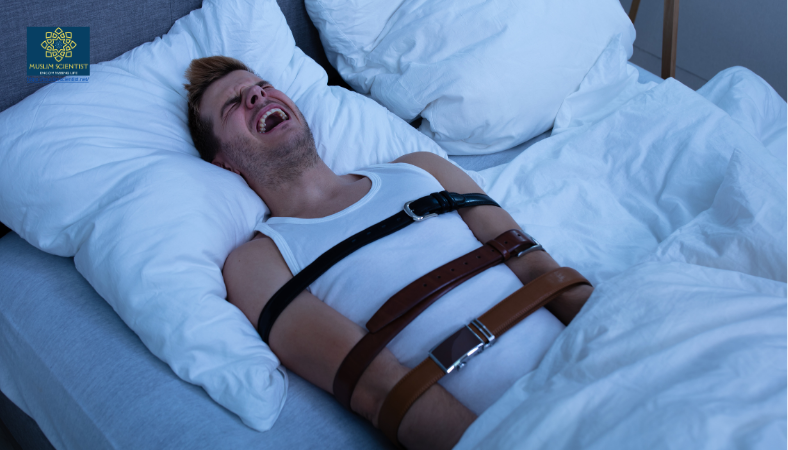
You wake up. Your eyes are open. You see your room clearly. But you cannot move a single muscle. You cannot scream. Something heavy sits on your chest. Then you see a shadow moving toward you.
This experience has a name in Turkish culture: Karabasan.
A 2021 study published in Transcultural Psychiatry interviewed 59 Turkish college students who experienced sleep paralysis. The findings reveal how deeply culture shapes this terrifying phenomenon. Most participants knew the Karabasan by name. Many used Islamic prayers to fight back. Some even consulted religious healers.
Let us explore what happens when neuroscience meets folk tradition.
What Exactly Is Sleep Paralysis?
Your brain has a built-in safety mechanism. During dream sleep (REM), it paralyzes your entire body. This prevents you from acting out your dreams and hurting yourself.
Normally, this paralysis disappears the moment you wake up. Sometimes, however, the timing goes wrong. You become conscious while your body remains locked. That is sleep paralysis.
During these episodes, dream imagery spills into waking awareness. You might see shadowy figures, hear footsteps, feel pressure on your chest, or sense an evil presence in the room. These hallucinations feel completely real.
Lifetime rates of sleep paralysis reach about 20% in Western countries. Among some cultural groups, the numbers climb much higher.
| Country/Population | Lifetime Sleep Paralysis Rate | Average Duration (Minutes) |
|---|---|---|
| Denmark (general) | ~20% | 4.2 minutes |
| Egypt (general) | ~30-40% | 5.2 minutes |
| Cambodian refugees | ~49% (past year) | 5.3 minutes |
| Turkey (this study) | Not measured | Not measured |
The Karabasan: Turkey’s Supernatural Intruder
When researchers asked participants whether they had heard a name for sleep paralysis, 88% (52 out of 59) mentioned “Karabasan.”
In Turkish, kara means “black” and basan comes from basmak meaning “to press” or “to overwhelm.” The Karabasan is a spirit-like creature from Turkish folk tradition. It supposedly attacks sleepers by pressing down on their chests, causing paralysis.
Interestingly, no clear definition exists of what the Karabasan actually looks like. Some participants described seeing a person they knew. Others saw an ugly human figure. A few saw a dark shadow. This ambiguity matches Islamic beliefs about the Jinn, who can also take human form.
A small number of participants (9%) also used the term “Jinn” alongside Karabasan. This overlap makes sense given Turkey’s predominantly Muslim population.
Table 1: Hallucinations During Sleep Paralysis in Turkey (N=59)
| Hallucination Type | Percentage | Number of Participants |
|---|---|---|
| Saw a shadow or being moving toward them | 53% | 31 |
| That being had ill intentions | 77% of those who saw it | 24 |
| Sensed an unseen evil presence | 25% | 15 |
| Heard unusual sounds or voices | 24% | 14 |
| Saw a being sit on their chest | 19% | 11 |
| Smelled a burning odor | 2% | 1 |
These hallucinations match what people report worldwide. The shadowy intruder and chest pressure appear across cultures. However, the interpretation of these sensations varies dramatically by location.
Only 17% Blamed the Supernatural (But Many More Secretly Did)
Here is a surprising finding. When asked directly about causation, only 17% of participants (10 out of 59) believed their sleep paralysis might be caused by the Karabasan.
This number seems low. But several factors explain it.
First, these were university students in Istanbul. Istanbul is a cosmopolitan city bridging Europe and Asia. Students learn in English and receive Western-style scientific education. They face pressure to appear rational.
Second, previous research shows a similar pattern in Egypt. Among Egyptian college students, only 11% admitted supernatural beliefs about sleep paralysis. Among the general Egyptian population, the number jumped to 71%. Education and urban living reduce supernatural reporting.
Third, the study found that 37% of participants (22 out of 59) actually used supernatural and religious methods to prevent future attacks. More people acted on supernatural beliefs than admitted believing in them.
This discrepancy suggests many participants felt embarrassed to confess their true beliefs. Actions speak louder than words.
The Dual Explanation: Science Meets Spirits
Among those who gave a cause for their sleep paralysis, 15% subscribed to a dual causal view. They believed the episode resulted from both supernatural forces (Karabasan) and natural factors (stress, fatigue, anxiety).
This dual thinking appears in many cultures. A person might say: “The stress caused my brain to malfunction, but the Karabasan took advantage of that vulnerable state.”
Such reasoning allows people to hold scientific and spiritual beliefs simultaneously. They do not see these explanations as contradictory. Instead, they view them as complementary layers of reality.
| Causal Explanation Given | Percentage of Those Giving a Cause |
|---|---|
| Stress only | 28% |
| Psychological factors (fear, anxiety, sadness) | 15% |
| Physiological factors (fatigue, overeating, thirst) | 15% |
| Sleep position (lying on back) | 13% |
| Karabasan alone or combined with natural factors | 25% |
| Combination of psychological + physiological | 5% |
Table 2: How Turkish Students Prevent Sleep Paralysis (Among 31 Who Took Action)
| Prevention Method | Percentage | Number |
|---|---|---|
| Dua (supplicating to God) | 61% | 19 |
| Physiological measures (avoid sleeping after dinner, changing position) | 39% | 12 |
| Reciting the Quran | 26% | 8 |
| Namaz (ritual prayer) | 19% | 6 |
| Psychological techniques (avoid thinking about SP, face fears) | 16% | 5 |
| Environmental changes (lights on, doors open) | 13% | 4 |
| Consulting a hodja (Islamic priest) | 6% | 2 |
| Carrying a musqa (talisman with Quranic verses) | 3% | 1 |
Note: Percentages add to more than 100% because participants used multiple methods.
Dua: The Most Popular Weapon Against Nightmares
Among the 31 participants who actively tried to prevent sleep paralysis, 61% used dua – supplicating to God. This often involves raising both hands with palms facing upward while making personal prayers.
Why is dua so popular? Because it costs nothing, requires no special equipment, and fits perfectly within Islamic practice. Many Muslims already make dua before sleeping. Adding a specific request for protection against Karabasan feels natural.
The second most common approach was reciting the Quran (26%). Some participants combined dua with Quran recitation for maximum spiritual protection.
A smaller number consulted a hodja (Islamic priest). These religious healers recommended:
- Dua (supplication)
- Carrying a musqa (talisman with Quranic verses worn around the neck)
- Reciting the azan (Islamic call to prayer)
- Reciting Esmaul Husna (Allah’s 99 holy names)
Notably, Turkish hodjas offered a wider range of remedies than Egyptian sheikhs, who primarily focused on Quran recitation and daily prayers.
Two Terrifying Case Studies
Case 1: Begum, age 21 (Spiritual Punishment)
Begum experienced sleep paralysis twice. She interprets these episodes as “Karabasan.” During one attack, she lay paralyzed on a couch while her family sat nearby. She desperately wanted to scream but could not produce any sound.
Begum believes her sleep paralysis happens because she neglects her religious duties, particularly namaz (ritual prayer) and dua. She views the attacks as spiritual punishment from Allah.
This belief creates a vicious cycle. During an episode, she feels guilt about her neglected prayers. That guilt increases her panic. The panic likely prolongs the paralysis. Her mother reinforces this interpretation by agreeing that neglecting prayer causes the attacks.
Case 2: Zeynep, age 23 (The Horrifying Karabasan)
Zeynep first heard about Karabasan from her grandmother at age seven. She has experienced five sleep paralysis episodes. Her last attack was particularly terrifying.
She woke up paralyzed and immediately feared the paralysis might become permanent. Then a dreadful woman appeared with a burned face and a foul burning odor. The creature spoke in a creepy gabbling voice. Zeynep feared that if the Karabasan touched her, she would also become a woman with a burned face.
Her parents advised her to see both a psychiatrist and a hodja. The hodja confirmed she had been attacked by a Jinn. He wrote a musqa (talisman) for her to wear around her neck. She also began praying and reciting the Quran before bed.
Why Cultural Beliefs Matter for Treatment
The study’s authors emphasize a crucial point. Turkey’s mental health services are largely modeled on Western approaches. These tend to be secular and biomedical. They often ignore or dismiss supernatural beliefs.
This is a mistake.
When a Turkish patient reports “Karabasan attacks,” a doctor who simply says “that is just sleep paralysis, nothing supernatural” will lose credibility. The patient may nod politely but will continue believing in Karabasan. Worse, they might stop seeking medical help altogether.
Effective treatment requires cultural competence. A good clinician acknowledges the patient’s experience. They might say: “Many people describe this experience. Some call it Karabasan. Scientists call it sleep paralysis. Both can be true – the experience is real regardless of the name. Here is what we know about reducing these episodes.”
This approach respects the patient’s worldview while offering evidence-based help.
Practical Takeaways for Sufferers
If you experience sleep paralysis, here is what works.
First, learn the science. Understanding that paralysis is a normal brain mechanism reduces fear. You are not dying. You are not possessed. Your body is just waking up out of order.
Second, focus on relaxation. The panic-hallucination model suggests that fear makes episodes worse. Trying to force movement against paralysis creates more chest pressure and strange sensations. Instead, focus on calming your breath. Remind yourself: “This will end in a few minutes.”
Third, improve sleep hygiene. Irregular sleep schedules, sleep deprivation, and sleeping on your back increase sleep paralysis risk. Maintain consistent bedtimes. Sleep on your side.
Fourth, address underlying anxiety. Stress, trauma, and anxiety disorders strongly correlate with frequent sleep paralysis. Treating the root cause often reduces the episodes.
Fifth, for Muslim patients, integrating religious practices can help. Dua, Quran recitation, and prayer reduce anxiety. They provide comfort. A therapist should not dismiss these tools. Instead, they can say: “These practices are valuable for your wellbeing. Let us also add these scientifically proven techniques.”
Conclusion: The Creature That Lives Between Worlds
The Karabasan is not real as a physical being. But the terror it represents is absolutely real. Thousands of Turks wake up paralyzed each year. They see shadows. They feel pressure. They fear death.
Culture gives a name to this primal fear. It provides a framework for understanding. It offers rituals for fighting back.
The 2021 study reveals something beautiful about human resilience. When faced with a terrifying, unexplainable experience, people do not just suffer passively. They create stories. They consult healers. They pray. They take action.
Science now understands sleep paralysis as a neurological glitch. But science alone does not comfort a terrified person at 3 AM. For many Turks, knowing the Karabasan’s name and having a dua ready makes all the difference.
The wisest approach combines both worlds. Understand the brain mechanism. Then use whatever cultural tools – prayer, talismans, family support – that genuinely reduce fear. The goal is not to win an argument about supernatural vs. scientific. The goal is to help people sleep peacefully through the night.
Reference: here
Other Articles: