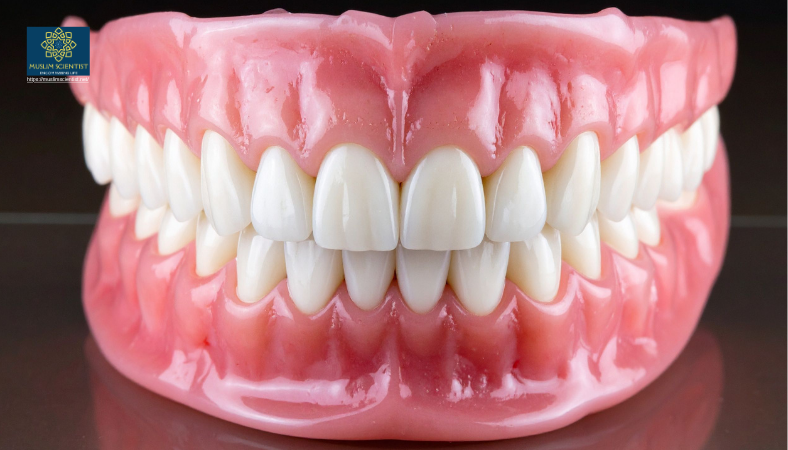
A research shows that Miswak extract kills nearly 96% of Candida albicans on digital dentures, offering a natural alternative to harsh chemicals.
For the millions of people worldwide who wear dentures, a familiar and frustrating problem often lurks beneath the pink acrylic: denture stomatitis. This chronic, painful inflammation of the mouth affects up to 70% of denture wearers, causing redness, soreness, and difficulty eating. Its primary culprit is a stubborn fungus called Candida albicans, which thrives on the warm, moist surfaces of dentures.
For decades, the standard solution has been chemical warfare: soaking dentures in sodium hypochlorite – better known as household bleach. While effective, bleach can irritate the mouth, leave a bad taste, and even damage denture materials over time.
But a study published in the journal BMC Oral Health offers a gentle, ancient, and surprisingly powerful alternative. Researchers from Damascus University have found that a simple water-based extract from the Miswak tree – a natural toothbrush used for over 7,000 years – can kill up to 96% of Candida albicans on modern, digitally fabricated dentures.
The study, titled “Antifungal efficacy of Miswak extracts versus sodium hypochlorite against Candida albicans on CAD-CAM denture base,” is one of the first to test this natural remedy on the latest generation of computer-designed dentures.
A Natural Pharmacy in a Stick
The Miswak (Salvadora persica) is no ordinary twig. For millennia, people across Africa, the Middle East, and Asia have chewed its fibrous ends to clean their teeth. The World Health Organization has even recommended its use for oral hygiene. But its power lies far deeper than simple abrasion.
The study’s lead authors – Ghada Zabad, Omar Teriaky, Samar Ali Alsalameh, and Hasan Alzoubi – explain that Miswak contains a treasure trove of bioactive compounds: alkaloids, flavonoids, tannins, and benzyl isothiocyanate. These substances work together to disrupt fungal cell membranes, block essential enzymes, and essentially starve the Candida organism.
“The antifungal activity of Miswak is attributed to its diverse phytochemical composition,” the authors write. These compounds act “synergistically to disrupt fungal cell membranes, inhibit enzymatic processes, and impair metabolism.”
The Experiment: Digital Dentures vs. Ancient Extract
The research team used a rigorous, blinded in-vitro design. They created 40 identical denture base specimens using a 5-axis CAD/CAM milling machine – the same digital technology used in modern dental clinics. These specimens were then sterilized and inoculated with a clinical strain of Candida albicans taken from a patient suffering from denture stomatitis.
The specimens were divided into four groups:
- 0.5% Sodium Hypochlorite (bleach – positive control)
- Miswak Decoction Extract (boiled in water for 30 minutes)
- Miswak Maceration Extract (soaked in room-temperature water for 48 hours)
- Sterile Distilled Water (negative control)
After just 10 minutes of immersion – the time a person might realistically soak their dentures at home – the researchers counted how many fungal colonies survived.
The Results: Encouraging News from Nature
The results were striking. As expected, bleach was the most powerful, completely eradicating the fungus with a 5.85 log reduction (99.999% kill rate). But the Miswak extracts were far from weak.
- The Miswak decoction (boiled extract) achieved a 1.43 log reduction, which translates to an approximate 96% kill rate of Candida albicans.
- The Miswak maceration (cold-soaked extract) achieved a 1.26 log reduction, or roughly 94.5% kill rate.
Both results were statistically significant compared to the control group (p < 0.05), and there was no significant difference between the two Miswak preparation methods. In plain English: both types of Miswak extract worked, and they worked about equally well.
Antifungal Efficacy Against Candida albicans (Key Data)
| Treatment Group | Log Reduction (CFU/mL) | Percentage Reduction | Effectiveness vs. Control |
|---|---|---|---|
| 0.5% Sodium Hypochlorite (Bleach) | 5.85 | 99.999% | Complete elimination (Gold standard) |
| Miswak Decoction (Boiled extract) | 1.43 | ≈ 96% | Highly significant (p < 0.001) |
| Miswak Maceration (Cold extract) | 1.26 | ≈ 94.5% | Highly significant (p < 0.001) |
| Distilled Water (Control) | 0 | 0% | No effect |
Why This Matters for Denture Wearers (Encouraging Takeaways)
| Concern with Chemical Cleaners | How Miswak Offers a Better Alternative |
|---|---|
| Mucosal irritation & burning | Natural, plant-based compounds with low toxicity. |
| Unpleasant taste | Mild, herbal flavor (historically used as a toothbrush). |
| Damage to denture surface | Gentle aqueous extract, no harsh oxidation. |
| Not safe for pregnant or immunocompromised | Likely safe for those who cannot use chemicals. |
| High cost of specialty cleansers | Miswak is widely available and inexpensive. |
Why This Is Different: Digital Dentures
This study is particularly timely because it tested Miswak on CAD/CAM-milled denture bases. Digital dentures are becoming the new standard. They are milled from pre-polymerized PMMA blocks, which have less porosity and smoother surfaces than traditional heat-cured acrylics.
The fact that Miswak extracts worked effectively on this modern material suggests that natural disinfectants are compatible with the future of dentistry. As the authors note, “CAD/CAM-milled dentures exhibit improved physical and mechanical properties… [but] provide a favorable environment for microbial colonization.” Miswak offers a way to fight that colonization without damaging the expensive digital appliance.
The Bleach Problem
You might wonder: if bleach kills 99.999% of fungi, why look for anything else? The answer lies in the side effects.
Sodium hypochlorite is a powerful oxidizer. It doesn’t just kill fungi; it can also:
- Irritate the oral mucosa, causing burning and redness.
- Alter the taste of food if not rinsed completely.
- Increase surface roughness of dentures over time, ironically making it easier for new microbes to attach.
- Be unsafe for certain individuals, including those with chemical sensitivities or compromised immune systems.
“Prolonged use has been associated with adverse oral effects,” the study states. “These limitations have prompted interest in safer, natural antimicrobial agents.”
A Caveat: Not a Total Replacement (Yet)
The authors are careful not to overstate their findings. While a 96% kill rate is impressive for a natural extract, it is not the 99.999% achieved by bleach. For patients with active denture stomatitis or weakened immune systems, the gold standard chemical disinfectant may still be necessary.
However, for daily maintenance, prevention, or for patients who cannot tolerate chemicals (such as the elderly, pregnant women, or those with allergies), Miswak represents a breakthrough.
“Although Miswak extracts are less effective than sodium hypochlorite, they represent a promising natural alternative in situations where chemical agents are contraindicated,” the researchers conclude.
How Would a Person Use This?
While this was a laboratory study, the practical implications are clear. A denture wearer could theoretically:
- Purchase dried, powdered Miswak (widely available online or in Middle Eastern/Asian grocery stores).
- Prepare a decoction by boiling 5 grams (about one tablespoon) in 100 mL of water for 30 minutes.
- Strain the liquid and soak their denture for 10 minutes.
- Rinse thoroughly and wear.
The authors specifically chose water-based extracts (not alcohol-based mouthwashes) to be gentle and practical for daily use, especially for elderly individuals. “Aqueous extracts were chosen to enhance clinical applicability and patient compliance,” they write.
What’s Next? The Future of Natural Denture Care
This study opens several doors for future research. The authors suggest:
- Testing higher concentrations of Miswak (15-20%) for even greater effect.
- Combining Miswak with mechanical brushing to simulate real-world use.
- Long-term studies to ensure Miswak does not stain or damage denture acrylic over months of use.
- In-vivo (human) trials to confirm these lab results in the messy, complex reality of the human mouth.
“Further studies should include in vivo models with larger sample sizes,” the team writes. “Exploration of different concentrations and extraction techniques… to establish the clinical relevance of Miswak extracts.”
The Bottom Line
For the millions of denture wearers who struggle with persistent fungal infections, oral irritation from chemicals, or simply the desire for a more natural approach to health, this study brings encouraging news. An ancient remedy – the humble Miswak stick – has passed a rigorous modern test.
It will not replace bleach in a hospital. But for a grandmother who wants to avoid a burning mouth, for an immunocompromised patient who cannot risk chemical exposure, or for anyone seeking a gentler path to oral health, the answer might be growing on a tree that has been cleaning human teeth for 70 centuries.
As the authors write in their conclusion: “Miswak, given its accessibility and oral health benefits, may serve as a natural, patient-friendly adjunct for denture disinfection.”
Reference: here
Other Articles: