A scoping review of 27 studies reveals that the Salvadora persica (miswak) chewing stick—a natural toothbrush used for millennia—is as effective as modern toothbrushes for plaque control and even superior for gum health. Yet, a global lack of standardized knowledge is preventing millions from unlocking its full potential.
Before the nylon bristle, before the plastic handle, before the minty gel in a tube, there was a twig. For over 7,000 years, countless generations across Africa, the Middle East, and Asia have woken up, taken a small stick from the Salvadora persica tree (known as the “toothbrush tree”), chewed one end until it formed soft bristles, and cleaned their teeth. This is the miswak, also known as the siwak or chewing stick.
In a world obsessed with electric toothbrushes, whitening strips, and AI-powered dental apps, this ancient practice might seem like a relic. But a comprehensive new scoping review, published on October 30, 2025, in the prestigious journal Healthcare (MDPI), has delivered a verdict that demands the attention of dentists, public health officials, and anyone who has ever brushed their teeth.
The review, titled “Knowledge, Awareness, and Practice Towards the Use of Salvadora persica L. (Miswak) Chewing Stick: A Scoping Review,” analyzed 27 studies from 15 countries across Africa, the Middle East, South Asia, and Southeast Asia, encompassing data from thousands of participants. Its conclusion is striking: not only is the miswak as effective as a standard toothbrush at removing dental plaque, but it is actually more effective at preventing gingivitis (gum inflammation).
This finding, which aligns with a 2021 meta-analysis cited by the authors, positions the miswak not as a quaint tradition, but as a scientifically validated, cost-effective, and environmentally sustainable oral hygiene tool. However, the review also uncovers a critical paradox: despite its proven efficacy, a profound lack of standardized knowledge about how to use the miswak correctly is leading to inconsistent results, potential harm, and its gradual abandonment, especially among younger generations.
The Science of a Stick: Why Miswak Works
The miswak is not just a piece of wood. The Salvadora persica tree is packed with natural bioactive compounds. When you chew on a fresh miswak stick, you release a cocktail of natural ingredients that modern toothpaste manufacturers try to replicate in a lab: antibacterial agents that kill plaque-causing bacteria, natural abrasives that gently polish teeth, tannins that prevent gum disease, and even small amounts of fluoride that strengthen enamel. It is a complete, self-dispensing, biodegradable toothbrush and toothpaste in one.
The World Health Organization (WHO) has long advocated for the use of chewing sticks as an effective oral hygiene tool, particularly in communities where their use is customary and where access to standard toothbrushes is limited. The WHO recognizes this approach as equitable, efficient, cost-effective, and aligned with the principles of primary healthcare.
Yet, for all its natural genius, the miswak has a major weakness: it is highly “technique-sensitive.” Unlike a toothbrush, which comes with universal instructions and decades of public health messaging, the miswak’s use is passed down through generations by tradition, not by evidence-based guidelines. This is the central problem the new review exposes.
The Knowledge Gap: A Barrier to Effective Use
The researchers, led by N.F. Azizan from the Ministry of Health in Malaysia and Universiti Kebangsaan Malaysia, conducted a rigorous search of three major scientific databases (Web of Science, Medline, and Scopus) for studies published up to June 2025. They found that while knowledge that the miswak is “good for teeth” is widespread, deep, practical knowledge is shockingly absent.
For example, a study from Malaysia (Nordin et al., 2014) found that while over 90% of respondents knew the miswak was practiced by the Prophet Muhammad (peace be upon him) and that it helps in oral healthcare, only 19.7% had detailed knowledge of the correct method of use. Similarly, a qualitative study of dental educators in Malaysia (Che Musa et al., 2020) revealed that even among experts, there was a “low-to-moderate degree of knowledge” about the miswak’s effective use, which they attributed to “limited, restricted, and localized evidence.” The educators themselves agreed that a “lack of information on how to use miswak effectively makes it less practiced at present.”
This knowledge gap has real-world consequences. Without proper instruction, users may not soften the stick enough, leading to gum trauma. They may scrub too hard, causing abrasive tooth wear. They may not clean all tooth surfaces. They may store a used, bacteria-laden stick in a damp pocket, defeating its purpose. Conversely, when used correctly, the miswak is a formidable oral hygiene tool.
Table 1: Key Evidence from the Scoping Review – Knowledge & Awareness
| Aspect | Finding from Review | Implication |
|---|---|---|
| Knowledge of Benefits | Over 90% of participants in a Malaysian study knew miswak is good for oral health. | General awareness is high, but superficial. |
| Knowledge of Proper Use | Only 19.7% had detailed knowledge of the correct method of use (Nordin et al., 2014). | A massive gap exists between knowing that it works and knowing how to make it work. |
| Awareness of Efficacy | Dental students who received modern oral hygiene education were less likely to believe miswak is an effective sole tool (ALGhamdi et al., 2015). | Modern dental curricula may inadvertently devalue traditional, evidence-based practices. |
| Primary Motivation | Across multiple studies (Saudi Arabia, Cameroon, Pakistan, New Zealand), religious reasons were the primary driver for miswak use. | For Muslims, miswak use is an act of faith (Sunnah), creating a powerful, built-in motivator for public health interventions. |
| Perceived Benefits | Users reported fresher breath (84.7%), whiter teeth (43.1%), and better cleaning compared to toothbrushes. | Positive user experiences align with scientific evidence, reinforcing continued use. |
The Practice Gap: A Wild West of Techniques
The review found “wide variations” in how people actually use the miswak. There is no standardized method. The reported practices covered every aspect of use:
- Preparation: How long do you soak the stick? How do you peel the bark? How do you form the bristles?
- Technique: Do you scrub horizontally, vertically, or in circles? Do you clean the inner, outer, and chewing surfaces?
- Frequency & Duration: Do you use it once a day, after every meal, or only for religious rituals? For one minute or five?
- Storage: Do you cut off the used end after each use, rinse it, or simply put it back in your pocket? One study found 39.3% stored it in an upper pocket exposed to air, 23.9% stored it in a pocket after cutting off the used end, and 13.9% discarded it after a single use.
- Combination Use: Most users (often 40-70% in various studies) reported using both a miswak and a standard toothbrush, not one or the other. Only a small minority (as low as 2.3% in one Saudi study) used the miswak as their sole cleaning tool.
This lack of standardization is not a minor detail. As the authors of the review state, “the optimal benefits are achieved only when used regularly with proper techniques.” Without a universal, evidence-based protocol, the miswak’s potential will remain only partially realized.
Table 2: Encouraging Data – Miswak Efficacy and User Intentions
| Metric | Finding from Review & Supporting Studies | The Encouraging Takeaway |
|---|---|---|
| Clinical Efficacy | A 2021 meta-analysis (Adam et al., cited in review) concluded miswak is as effective as toothbrushes for plaque removal, and more effective for reducing gingivitis. | This is not folklore. High-level science confirms miswak works, and for gum health, it works better. |
| User Intentions for Next Generation | In Saudi Arabia (Al-Hammadi et al., 2018), 88.8% would want the next generation to use a combination of miswak and toothbrush. | There is strong intergenerational goodwill. People see value in both traditional and modern tools. |
| Willingness to Recommend | In Pakistan (Gul et al., 2022), 70.0% preferred their families to use a combination of both. | Public health campaigns can build on this existing positive attitude. |
| Cost-Effectiveness & Access | In Ethiopia (Fantaye et al., 2022), visually impaired participants cited “reasonable prices and proper cleaning” as the top reason for preferring miswak. | For low-resource settings and people with disabilities, miswak is an accessible, empowering tool. |
| Sustainability | Miswak is 100% biodegradable, requires no plastic, no water-intensive manufacturing, and no chemical packaging. | In an era of plastic pollution, miswak offers an eco-friendly alternative to billions of discarded plastic toothbrushes. |
The Muslim Connection: A Faith-Based Opportunity
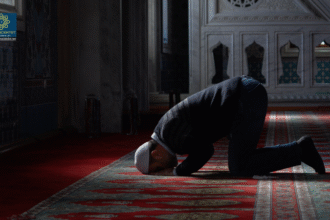
One of the most striking findings of the review is the overwhelming role of religion as a motivator. Across nearly every study in Muslim-majority countries or among Muslim immigrants, the primary reason for using miswak was religious—it is a highly recommended practice (Sunnah) of the Prophet Muhammad (peace be upon him).
This is not a trivial detail. It means that for over 1.8 billion Muslims worldwide, the motivation to use a scientifically proven oral hygiene tool is already deeply embedded in their daily spiritual practice. This presents an unprecedented opportunity for public health officials. By partnering with religious leaders, mosque-based health programs, and Islamic schools, they can deliver culturally congruent oral health education that leverages an existing, powerful behavioral driver.
Instead of asking, “Why should I switch from my toothbrush?”, the question becomes, “How can I perform this beloved Sunnah in the most effective and safe way possible?” The review explicitly calls for “culturally sensitive clinical guidelines and community health education programs,” noting that in regions where miswak use is customary, “it should be recognized as a culturally appropriate oral hygiene practice rather than merely a substitute for a regular toothbrush.”
The Call to Action: Standardize, Educate, Integrate
The authors of the review are not suggesting we throw away our toothbrushes. Instead, they are calling for a paradigm shift: from seeing miswak as an “alternative” or “folk” medicine to recognizing it as an evidence-based, legitimate oral hygiene tool that deserves a place in modern dental science and public health policy.
Their recommendations are clear and actionable:
- For Researchers & Dental Associations: Develop and publish a standardized, evidence-based protocol for miswak use. This protocol should cover every step: selection, preparation (soaking, peeling, chewing to form bristles), brushing technique (angle, motion, duration, which surfaces to clean), post-use care (rinsing, cutting the used end, storage), and replacement frequency (typically every 1-2 weeks).
- For Dental Schools & Educators: Integrate this protocol into the curriculum. Future dentists must be able to advise Muslim patients on the correct use of miswak, not dismiss it. As the review notes, dental students who received modern oral hygiene education were less likely to believe in miswak’s efficacy, revealing a bias that needs to be corrected with scientific evidence.
- For Public Health Officials: Design and implement community-based oral health programs, particularly in Muslim-majority countries and among Muslim immigrant communities in the West. Use mosques, Islamic schools, and religious radio/podcasts as channels to deliver simple, visual guides (pamphlets, videos) on correct miswak use.
- For the Public (Especially Miswak Users): Do not rely on tradition alone. Seek out proper guidance. Ask your dentist. Look for instructional materials. The key steps are: (a) Soak the stick for 8-12 hours before first use to soften it. (b) Chew one end until it forms soft, brush-like bristles. (c) Use a gentle, vertical or circular motion, cleaning all tooth surfaces. (d) Rinse the stick after use, cut off the used bristles (about 0.5-1 cm), and store it dry. (e) Replace the stick when the bristles become hard or the flavor fades (usually every 1-2 weeks).
A Holistic Path Forward
The miswak is not a perfect tool. It is less convenient to carry than a plastic toothbrush. It requires more preparation. It does not come with fluoride toothpaste built-in (though you can add it). And, as this review clearly shows, its effectiveness is highly dependent on the user’s technique.
But its advantages are undeniable. It is natural, sustainable, cost-effective (often free), and deeply meaningful to a quarter of the world’s population. The science now confirms what traditional practice has known for millennia: this simple twig from the desert holds remarkable power to clean teeth and heal gums.
The challenge is no longer about proving if it works. It is about ensuring how it is used. By bridging the ancient wisdom of the miswak with the rigor of modern evidence-based guidelines, we can unlock a simple, affordable, and culturally resonant solution to improve oral health for millions—perhaps billions—of people worldwide. It is time to give the world’s oldest toothbrush the modern instruction manual it deserves.
Reference: Here
Other Articles: