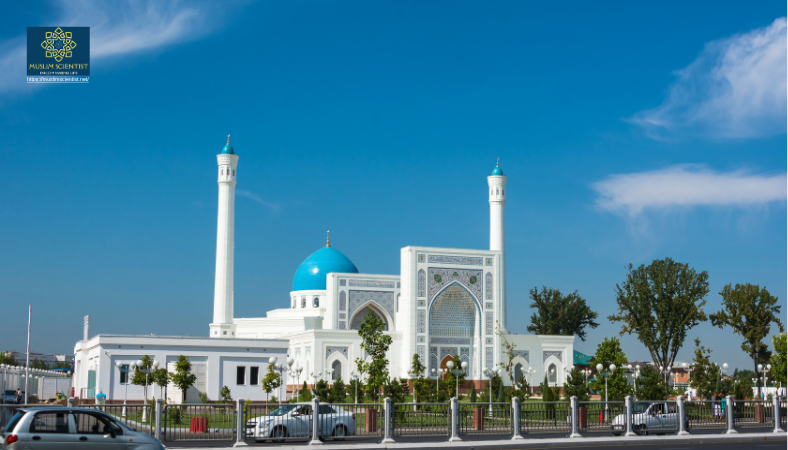
In the Chirchiq river valley, where the Soviet past once erased mosques and madrasas, something unexpected is rising. Not a shopping mall. Not a glass-and-steel corporate tower. A monument to Islamic civilization—built with presidential ambition, international scholarship, and a 270-meter-long multimedia wall that may be the most ambitious museum installation on the planet.
The Islamic Civilization Center in Uzbekistan, located in Tashkent’s Olmazor district, is set to fully open by March 2026. Eight years in the making, this three-story, 15,000-square-meter complex on seven hectares of land adjacent to the Hazrati Imam complex is more than a museum. It is a declaration.
The Vision: From 2017 to 2026
The plans were first presented in 2017, alongside a presidential initiative to restore valuable artifacts and bring back pieces of Uzbekistan’s heritage from around the world. The goal was never simply preservation. It was active exploration.
“Here, history is presented not for the sake of the past, but for the sake of the future,” says Farhan Ahmad Nizami, director of the Oxford Centre for Islamic Studies.
That phrase—“for the sake of the future”—captures the geopolitical subtext. Uzbekistan, long viewed through a Soviet or Russian lens, is repositioning itself as a Central Asian intellectual hub. The center is part of a broader strategy: reclaiming the region’s pre-Soviet, pre-Russian identity as a crossroads of Islamic science, philosophy, and art.
What’s Inside? A City Within a Building
The center is not a single gallery. It is a campus of ideas.
Inside the Islamic Civilization Center – Key Facilities
| Facility | Purpose |
|---|---|
| Quran Hall | Houses rare manuscripts including the Mushaf of Uthman |
| Five Thematic Exhibition Halls | Pre-Islamic period → First Renaissance → Second Renaissance → Modern era → New Uzbekistan |
| Children’s Museum | Educational programming for young visitors |
| Library | Research collections on Islamic civilization |
| Film Studios | Digital content production |
| Publishing Houses | Academic and popular publications |
| Research Departments | Scholarly investigation of artifacts and history |
| Restoration Laboratories | Conservation of recovered artifacts |
| Multimedia Installation | 270-meter “Wall of Civilizations and Discoveries” |
The ground floor alone features five exhibition spaces, each organized thematically as a showcase of creative talents—artists, writers, craftspeople, and philosophers—across different epochs of Central Asian history.
The Three Renaissance Framework
The center organizes its narrative around three “renaissances”—a deliberate framing that challenges Western-centric histories.
The Three Renaissances of Central Asia
| Renaissance | Period | Key Contributions | Figures/Examples |
|---|---|---|---|
| First Renaissance | Pre-Islamic / Antiquity | Cultural origins, Zoroastrian influences, early urban civilizations | Archaeological finds from the region’s pre-Islamic past |
| Second Renaissance | Islamic Golden Age (8th–14th centuries) | Mathematics, astronomy, medicine, philosophy, art | Al-Khwarizmi (algebra), Al-Farabi (philosophy), Ibn Sina (medicine), Ulugh Beg (astronomy) |
| Third Renaissance | New Uzbekistan (21st century) | Cross-cultural collaboration, modern scholarship, global integration | Ongoing initiatives, restored heritage sites, international academic partnerships |
The First Renaissance Hall explores the region’s cultural origins, including its pre-Islamic roots. This is significant: many post-Soviet states have struggled to acknowledge pre-Islamic heritage without triggering religious sensitivities. The center appears to navigate this carefully, presenting Zoroastrian and early urban civilizations as part of a continuous cultural evolution.
The Second Renaissance Hall is where the center shines brightest. Here, visitors encounter the legacy of Central Asia’s golden age—when cities like Bukhara, Samarkand, and Khiva were global centers of science and philosophy. Al-Khwarizmi gave the world algebra (the word comes from “al-jabr”). Al-Farabi preserved and expanded Aristotle’s works. Ibn Sina’s Canon of Medicine remained a standard medical text in Europe for 500 years.
The Third Renaissance Hall celebrates “New Uzbekistan”—the post-Mirziyoyev era (following the death of long-time authoritarian leader Islam Karimov in 2016). President Shavkat Mirziyoyev, who succeeded Karimov, has pursued economic liberalization, improved regional relations, and invested heavily in cultural diplomacy. The center is arguably his most visible legacy project.
The Artifact Hunt: Sotheby’s, Christie’s, and the Return of Lost Heritage
One of the center’s most ambitious missions is recovering artifacts that left Uzbekistan over centuries of conquest, colonization, and Soviet rule.
Working with Uzbek scholars and art historians, the center has sourced over a thousand rare items via:
- Auctions at Sotheby’s and Christie’s
- World-renowned private collectors
- International galleries
These recovered items form the highlights of the pentaptych (five-part) hero exhibitions. The range spans from pre-Islamic artifacts to 19th-century manuscripts, each piece telling a story of displacement and return.
This repatriation effort is politically significant. Many formerly colonized nations have demanded the return of artifacts from Western museums. Uzbekistan’s approach—buying at auction and negotiating with private collectors—is pragmatic rather than confrontational. It avoids diplomatic fights while quietly rebuilding a national collection.
The Showstopper: A 270-Meter Multimedia Wall
The center’s prime spot is occupied by the “Wall of Civilizations and Discoveries”—a 270-meter-long multimedia installation that unspools across three halls.
This is not your grandfather’s museum display. Dynamic projections and interactive solutions show how Uzbekistan and Central Asia contributed to global movements across:
- Science
- Culture
- Art
- Spirituality
The timeline stretches from antiquity through the Renaissance, demonstrating continuity rather than rupture. Visitors can watch the transmission of knowledge from ancient Greece to Islamic Baghdad to Renaissance Europe—with Central Asia as a crucial bridge.
Architecture as Message
The building itself is a political statement. Designed in the spirit of Uzbekistan’s medieval cities—Samarkand and Herat—it is imposing, colorful, and deliberately reminiscent of Timurid architecture. This is not a Soviet-style brutalist block. It is not a generic glass box. It is unmistakably Central Asian.
The choice of location—adjacent to the Hazrati Imam complex in Olmazor district—grounds the center in an existing religious and historical landscape. Hazrati Imam houses the Uthman Quran, one of the oldest Quranic manuscripts in the world. The new center complements rather than competes with this heritage.
Who Is Coming? International Scholars
The center is designed to host over 1,500 scholars from 40 countries. Research departments and restoration laboratories will offer opportunities for international collaboration.
For Western academics, the center provides unprecedented access to Central Asian manuscripts and artifacts. For Uzbek scholars, it offers a platform to publish and engage with global peers. For the government, it burnishes Uzbekistan’s credentials as a regional intellectual leader.
Why Now? Geopolitical Context
The opening of the center in 2026 coincides with several strategic shifts:
- Post-Russia Realignment: Since its full-scale invasion of Ukraine, Russia’s influence in Central Asia has waned. Uzbekistan has sought closer ties with Turkey, the Gulf states, China, and the West. Cultural diplomacy—including the Islamic Civilization Center—signals that Tashkent has alternatives.
- Islamic Finance Law (March 2026): As covered in our previous report, Uzbekistan just passed comprehensive Islamic finance legislation. The two moves—cultural and financial—are linked. Together, they signal to Gulf investors that Uzbekistan is serious about integrating into the Islamic world economically and culturally.
- Tourism Diversification: Uzbekistan has long relied on Silk Road tourism (Samarkand, Bukhara, Khiva). The center gives Tashkent its own world-class attraction, encouraging visitors to spend more time in the capital.
- Domestic Legitimacy: For President Mirziyoyev, the center is a legacy project. It positions him as a patron of culture and learning, contrasting with Karimov’s more insular, security-focused regime.
What It Is Not
The center is not a mosque. It is not a religious authority. It is a cultural and scholarly institution focused on history, science, and art. This distinction matters. The government is careful to present the center as a celebration of civilization—not a vehicle for political Islam.
Nor is it a conventional museum. The emphasis on research, restoration, and international scholarship sets it apart. The children’s museum and film studios suggest a focus on education and public engagement, not just artifact display.
The Visitor Experience
When the center fully opens in March 2026, visitors will move through a carefully choreographed narrative:
- Pre-Islamic Hall: Origins, early urban cultures, Zoroastrian heritage.
- First Renaissance: The region’s early flourishing.
- Second Renaissance: The Islamic Golden Age—mathematics, astronomy, medicine.
- Modern Era: Colonial and Soviet periods (handled delicately).
- New Uzbekistan: Present-day ambitions and future visions.
Along the way, they will encounter the 270-meter multimedia wall, the Quran Hall with its rare manuscripts, and interactive installations designed for all ages.
Potential Criticisms
No government-sponsored cultural project is immune from critique. Some scholars may question the center’s emphasis on “renaissances”—a term borrowed from European historiography. Others may note that the center celebrates Islamic civilization while the government maintains tight control over religious expression.
The repatriation efforts, while impressive, focus on artifacts that could be bought at auction rather than those held by major Western museums (like the British Museum or the Louvre). The most contentious repatriation claims remain unresolved.
Conclusion: A New Chapter
When the Islamic Civilization Center opens its doors in March 2026, it will mark a turning point—not just for Tashkent, but for how Central Asia presents itself to the world. For centuries, the region has been defined by others: as the “Wild East” of the Russian Empire, as the “Heart of the Silk Road” for tourists, as a footnote in Western histories of the Islamic Golden Age.
This center flips that script. It says: we have a story. It is long, rich, and globally significant. And we will tell it ourselves.
Reference:
Other Articles: