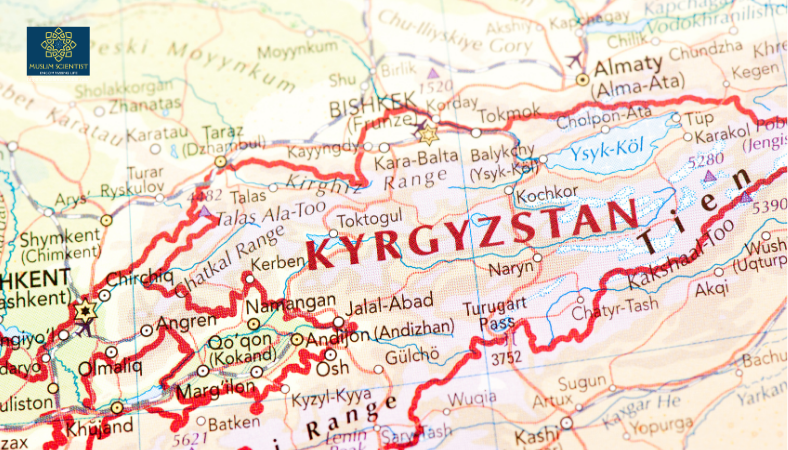
A new study reveals how social media has fundamentally transformed religious engagement among Muslim youth in Kyrgyzstan, creating a digital revolution in Islamic practice across this Central Asian nation. Published in Central Asian Survey, researcher Baktygul Shabdan’s ethnographic work in Bishkek demonstrates that Instagram, YouTube, and Telegram now serve as primary sources of religious knowledge for young Kyrgyz Muslims, effectively bypassing traditional family structures and mosque-based learning.
The study surveyed 200 young people aged 14-28 and found that 74.5% rely on the Internet for religious information, a dramatic increase from just 5% in 2013. This shift represents a profound generational change, particularly notable because 72% of respondents do not perform daily prayers and 80.5% never attend mosques. Nevertheless, all 200 participants reported receiving or searching for religious content online.
Young people primarily engage with digital religion through platforms like Instagram and YouTube, accessing content from popular figures such as the late Chubak Ajy, whose videos continue circulating widely even after his death. The study also highlights the growing influence of female religious influencers who frame Islam through themes of self-care, happiness, and personal development.
A notable trend shows young people making conscious decisions about their religious practice, often independently from their parents. The case of Akylai, a 30-year-old teacher who started practicing Islam through YouTube videos despite parental opposition, illustrates how social media enables individualized spiritual journeys. Many young women choose to wear the hijab after encountering religious content online, even when their families disapprove.
However, the study identifies a concerning dark side: social media also serves as a recruitment tool for extremist groups exploiting religious illiteracy. In response, the government-affiliated Muftiyat actively uses digital platforms to provide mainstream Islamic education and counter extremist narratives.
The research reveals a complex landscape where young people navigate between online and offline religious spaces, transitioning from passive receivers of religious knowledge to active co-creators of religious content. Social media has made religious authorities more accessible while enabling young people to construct religious identities beyond family and community boundaries, marking a significant shift in how Islam is understood and practiced in post-Soviet Kyrgyzstan.
A Mosque Filled Through Instagram
December 2021 marked a revealing moment in Kyrgyzstan’s religious evolution. The Imam Sarahsi Mosque in Bishkek, a grand structure completed in 2018, hosted a lecture on “Self-care” for women. Approximately 250 attendees filled the female section—and nearly all had learned about the event through Instagram.
This observation sparked researcher Baktygul Shabdan’s investigation into how social media platforms have revolutionized religious engagement among Kyrgyz youth. What she discovered represents nothing less than a digital transformation of Islamic practice in Central Asia.
Religious Engagement Among Kyrgyz Youth (2021)
| Practice | Percentage |
|---|---|
| Perform daily prayers (namaz) | 28% |
| Attend mosque regularly | 19.5% |
| Fast during Ramadan | 84.7% |
| Wear hijab (female respondents) | 17.5% |
| Use social media for religious info | 100% |
| Get religious info primarily from Internet | 74.5% |
Source: Shabdan (2026), survey of 200 young people in Bishkek
The study reveals a fascinating paradox: despite low levels of traditional religious practice, Kyrgyz youth actively seek religious knowledge online. All 200 survey respondents reported receiving or searching for religious content on digital platforms, making social media the great equalizer of religious education.
The Rise of Digital Religion in Central Asia
Scholars have long understood that media plays a fundamental role in religious expression. Sacred texts, holy buildings, and religious symbols all function as “media” through which the sacred manifests in the world. However, the emergence of digital platforms has created entirely new forms of religious engagement.
Social media now serves as a “spiritual marketplace” where young people choose from diverse religious sources.
The concept of “digital religion” examines how religious communities adapt to and engage with digital culture. This framework proves particularly valuable in understanding Kyrgyzstan’s evolving religious landscape, where Soviet-era religious suppression left many families with limited Islamic knowledge.
For Kyrgyz youth, smartphones are not merely communication tools but gateways to religious identity formation. WhatsApp, Instagram, Telegram, YouTube, and TikTok dominate their digital lives, yet the platforms they use for religious purposes differ from their general social media usage patterns.
Instagram and YouTube: The New Religious Authorities
Instagram and YouTube emerged as the primary platforms for religious engagement, each serving distinct purposes. Youth use Instagram to discover events, access short-form religious content, and follow religious influencers. YouTube, alternatively, provides longer lectures and in-depth religious teachings from authorities.
Social Media Platforms Used for Religious Purposes
| Platform | Percentage of Users |
|---|---|
| 29% | |
| YouTube | 29% |
| Other (Nasaat Media) | 20% |
| Telegram | 12% |
| 10% |
Source: Shabdan (2026)
The “Other” category mainly refers to Nasaat Media, a religious channel with 2.6 million Instagram followers and 602,000 YouTube subscribers. This organization produces content featuring religious scholars, provides prayer time reminders, and serves as a comprehensive Islamic resource for Kyrgyz-speaking audiences.
Chubak Ajy: A Posthumous Digital Icon
Chubak Ajy Jalilov (1975-2020) represents the most influential religious figure for Kyrgyz youth, even years after his death. His popularity stems from clear explanations, accessible teaching style, and remarkable sense of humor. His videos continue circulating widely across social media platforms, reaching audiences beyond Kyrgyzstan’s borders.
Unlike traditional religious authorities, Chubak Ajy pioneered extensive social media usage. His online presence allowed him to connect with Kyrgyz migrants in Russia and other countries, demonstrating how digital platforms transcend geographical boundaries. His legacy illustrates how social media amplifies religious voices and extends their influence well beyond physical limitations.
The “Coming to Islam” Phenomenon
Many young people described their religious journey as “coming to Islam”—a conscious, deliberate choice made independently from their families. Akylai’s story exemplifies this trend.
At 27, this geography teacher felt depressed and lost. Her cousin, who lived with her, would perform daily prayers, sparking Akylai’s curiosity. Neither her cousin nor anyone else pushed her toward religion. Instead, YouTube became her teacher.
Social media bridges the gap created by Soviet-era religious suppression and parental religious illiteracy.
Akylai began watching videos about Islam, primarily from Russian-speaking preachers since many Kyrgyz imams deliver lectures in Kyrgyz, a language she understands less fluently. She followed Shamil Alyautdinov from Russia, Abdullah Kostekskii, and Nouman Ali Khan. Over time, her interest grew from YouTube to books, deepening her religious knowledge.
When Akylai decided to wear the hijab, her parents objected strongly. They failed to notice during cold months, but spring revealed her commitment. Despite their opposition, Akylai remained firm, supported by the religious knowledge she had acquired online.
Hijab Conflicts and Intergenerational Tension
Akylai’s experience reflects a broader pattern. Many young women face parental opposition when choosing to wear the hijab, leading to family conflicts. Religious authorities frequently address these tensions, offering support to young people navigating family disapproval.
Parents’ religious illiteracy creates gaps that children fill through online sources.
The generational divide proves significant. Most parents belong to the Soviet generation, who received minimal religious education and faced obstacles to practicing Islam. Their children, however, grew up in independent Kyrgyzstan with unprecedented access to religious information.
The Muftiyat (Religious Administration of Muslims of Kyrgyzstan) acknowledges this gap and actively works to increase religious literacy among the population. Social media serves as their primary tool for reaching young people who might otherwise encounter extremist content.
The Dark Side: Extremist Exploitation
Social media functions as a double-edged sword. While enabling religious education, these platforms also allow extremist groups to exploit religious illiteracy, particularly among vulnerable youth. Recruiters disseminate distorted interpretations of Islam and facilitate radicalization through the same channels that carry mainstream Islamic content.
The Muftiyat and other religious authorities actively counter this threat by providing accessible, moderate Islamic education online. They argue that basic religious knowledge helps young people identify “the right way to Islam” and avoid extremist groups.
Language plays a crucial role in this contest. Most imams preach in Kyrgyz, but many urban youth—like Akylai—speak Russian primarily. Those who cannot understand Kyrgyz-language religious lessons become vulnerable to Russian-language extremist content. To address this vulnerability, the Muftiyat has increased its Russian-language offerings.
Religious Literacy and the Soviet Legacy
Understanding Kyrgyzstan’s religious landscape requires examining the Soviet legacy of religious suppression. During Soviet rule, mosques were destroyed or repurposed, religious educational institutions closed, and practicing religion faced significant obstacles.
Many scholars argue that Kyrgyzstan’s religious illiteracy stems not solely from Soviet atheist policies but from initially superficial Islamization of Kyrgyz society. Regardless of its origins, religious illiteracy remains widespread, creating opportunities for diverse interpretations of Islam.
Young people’s conscious religious choices often exceed their parents’ religious knowledge.
The 2021 survey revealed that 72% of respondents believe young people are more religious than older generations. This perception reflects genuine differences in religious knowledge and practice, driven partly by differential access to religious education through digital platforms.
Bridging Online and Offline Worlds
Religious engagement no longer remains confined to either online or offline spaces. The Imam Sarahsi Mosque’s self-care lecture demonstrates how social media extends mosque activities and mobilizes participation. Instagram announcements fill halls with women who might otherwise never attend.
Similarly, Telegram groups provide religious education through audio messages, connecting learners with offline events like Quran courses and self-development workshops. The online and offline religious spheres complement each other, creating integrated spiritual experiences.
Yet traditional practices maintain their importance. Respondents emphasized that mosque attendance would not decrease simply because religious content exists online. Community prayer (jamaat) remains essential, and online experiences sometimes actually increase in-person mosque attendance.
The Future of Religious Engagement in Kyrgyzstan
This research raises important questions about religious engagement’s future in Central Asia. As digital natives mature, their relationship with online religion will likely evolve. The current generation of 14-28 year olds represents just the beginning of this transformation.
The Kyrgyz government’s decision to introduce “History of the Development of Religions” into the ninth-grade curriculum reflects awareness of religious education gaps. Parents and teachers expressed mixed reactions, some fearing excessive religious influence in secular society.
Nevertheless, social media’s role appears assured. Religious authorities increasingly depend on digital platforms to reach audiences, while young people continue using these platforms to construct religious identities.
The question is no longer whether social media matters for religion, but how its influence will shape future generations.
Conclusion: A Digital Spiritual Revolution
Kyrgyzstan’s Muslim youth navigate a religious landscape transformed by social media. They search for meaning, identity, and spiritual guidance through Instagram, YouTube, and Telegram, often independent from family religious traditions.
The study reveals a generation making conscious, deliberate choices about Islamic practice. While many do not perform daily prayers or wear hijab, they actively seek religious knowledge through digital platforms. For those who do “come to Islam,” social media often provides the spark.
Religious authorities recognize social media’s importance, using it to counter extremism, educate the population, and extend mosque activities. Meanwhile, religious influencers—particularly women—have emerged as powerful voices shaping young people’s understanding of Islam through themes of self-care, happiness, and personal development.
Understanding this digital religious revolution requires more research, especially on the content produced by religious influencers and their impact on broader communities. Future studies should also examine rural youth and non-students to create a comprehensive picture of Kyrgyzstan’s evolving religious landscape.
What remains clear is that social media has permanently changed how Kyrgyz youth understand, practice, and experience Islam. Digital natives have become digital believers, weaving online and offline religious experiences into a new fabric of faith.
Reference: Baktygul Shabdan (24 Feb 2026): Social media and religious
engagement among Muslim youth in Kyrgyzstan, Central Asian Survey, DOI:
10.1080/02634937.2026.2623158
Other Articles: