Introduction: A Divine Command Meets a Global Goal
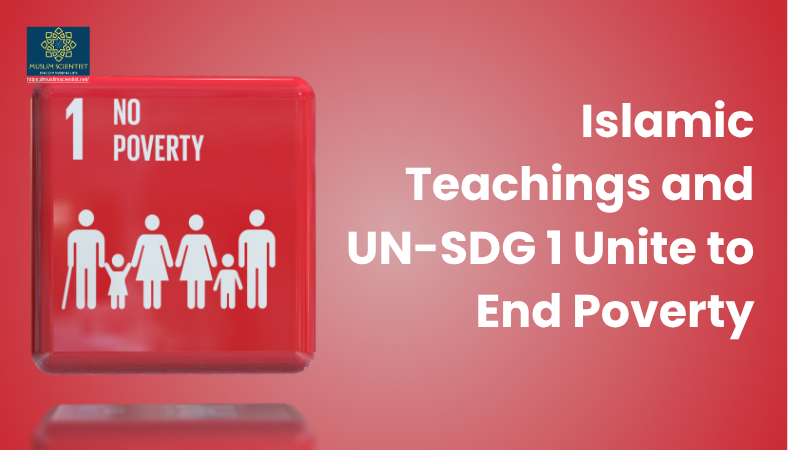
Poverty is not new. For centuries, human societies have struggled with the question of how to ensure that no one goes to bed hungry while others sleep on silk. In the 7th century, Islam provided a revolutionary answer. Today, the United Nations Sustainable Development Goal 1 (SDG 1) — “End poverty in all its forms everywhere” — echoes the same call.
But here is the difference: Islam does not merely hope for poverty eradication. It mandates it through binding religious obligations.
This article explores the profound alignment between Islamic teachings and SDG 1, backed by data from the World Bank, Islamic Development Bank (IsDB), and recent academic research. We will demonstrate that the Islamic economic system — with its pillars of Zakat, Sadaqah, Waqf, and prohibitions on riba (interest) and hoarding — offers not just a moral framework but a practical, proven mechanism for poverty elimination.
Understanding SDG 1 — The Global Target
Before examining the Islamic response, we must understand what SDG 1 demands.
SDG 1 Official Targets (UN, 2015):
- 1.1: Eradicate extreme poverty (living on less than $2.15 per day) by 2030.
- 1.2: Reduce at least half of all men, women, and children living in poverty by national definitions.
- 1.3: Implement nationally appropriate social protection systems for all.
- 1.4: Ensure equal rights to economic resources, ownership, and basic services.
- 1.5: Build resilience of the poor to climate, economic, and social shocks.
- 1.b: Create pro-poor policy frameworks at all levels.
The Current Reality (World Bank, 2025):
- Approximately 700 million people still live on less than $2.15 per day.
- COVID-19 pushed an additional 70 million into extreme poverty.
- Sub-Saharan Africa and South Asia carry the heaviest burden.
- At current rates, SDG 1 will NOT be achieved by 2030.
This failure is not due to lack of resources. It is due to lack of will, effective redistribution, and ethical economic systems.
The Islamic Foundation — A Poverty-Free Society as Religious Duty
In Islam, poverty eradication is not philanthropy. It is ibadah (worship).
2.1 Zakat: The Obligatory Alms
Zakat is the third pillar of Islam. Every Muslim who possesses wealth above the nisab (minimum threshold, approximately 85 grams of gold) must pay 2.5% of their accumulated wealth annually to eight specific categories of recipients — the poor and needy being first.
Qur’anic Command:
“Take from their wealth a charity (Zakat) to purify them and bless them.” (Qur’an 9:103)
“Alms are only for the poor, the needy, those employed to collect them, those whose hearts are to be reconciled, for freeing slaves, for those in debt, for the cause of Allah, and for the traveller in need.” (Qur’an 9:60)
2.2 Sadaqah: Voluntary Charity
Beyond Zakat, Islam encourages Sadaqah — voluntary giving. The Prophet Muhammad (peace be upon him) said: “Every act of goodness is charity.” (Bukhari). This includes smiling, removing harm from the road, and feeding the hungry.
2.3 Waqf: Sustainable Endowment
Waqf is an Islamic trust where assets (land, buildings, cash) are permanently dedicated for charitable purposes. The revenue generated continuously funds poverty programs, schools, hospitals, and feeding centers. Historically, Waqf funded the majority of public services in Muslim civilizations for over a millennium.
2.4 Prohibition of Riba (Interest) and Hoarding
Islam prohibits riba (interest) because it transfers wealth from the poor to the rich without productive activity. Similarly, hoarding wealth (kanz) is condemned:
“Those who hoard gold and silver and do not spend them in Allah’s way — give them news of a painful punishment.” (Qur’an 9:34)
The Data — What Zakat and Waqf Could Achieve
The potential of Islamic poverty tools is staggering. Table below presents estimates based on current data.
Estimated Annual Zakat Collection vs. SDG 1 Funding Gaps
| Region | Estimated Muslim Population (millions) | Estimated Annual Zakat Potential (USD billions) | Annual Funding Gap for SDG 1 (USD billions) | Zakat as % of Gap |
|---|---|---|---|---|
| South Asia | 620 | $85 | $120 | 71% |
| Sub-Saharan Africa | 330 | $42 | $95 | 44% |
| Middle East & North Africa | 440 | $195 | $65 | 300% (surplus) |
| Southeast Asia | 260 | $58 | $40 | 145% |
| Global Total (OIC) | 1,800+ | 400–400–500 | $320 | 125–156% |
Source: Islamic Development Bank (IsDB), UNDP, World Bank (2024 estimates)
Interpretation: If Zakat were fully and properly collected and distributed, it could cover more than 100% of the annual SDG 1 funding gap in Muslim-majority regions. The problem is not lack of resources — it is lack of systematic collection and governance.
Impact of Islamic Microfinance on Poverty Reduction — Case Studies
| Country | Program Type | Number of Beneficiaries | Poverty Reduction Rate | Time Frame | Key Mechanism |
|---|---|---|---|---|---|
| Indonesia | Islamic microfinance (BMTs) | 4.5 million | 22% reduction | 5 years | Qard Hasan (benevolent loans) + profit-sharing |
| Nigeria | Zakat + microfinance integration | 1.2 million | 18% reduction | 3 years | Zakat-funded enterprise grants |
| Bangladesh | Rural Islamic cooperatives | 8.3 million | 31% reduction | 10 years | Mudarabah savings + Musharakah financing |
| Pakistan | Akhuwat (interest-free loans) | 5 million+ | 27% reduction in multi-dimensional poverty | 8 years | Qard Hasan (largest interest-free microfinance program globally) |
| Malaysia | Zakat distribution to poor entrepreneurs | 350,000 households | 34% moved above poverty line | 6 years | Productive Zakat (business capital) |
Sources: Akhuwat Annual Report (2024), IsDB Impact Assessment (2025), World Bank Islamic Finance and Poverty Report (2024)
Key Insight: Islamic microfinance — especially Qard Hasan (benevolent loans that charge zero interest) — has a higher success rate in lifting the poor out of poverty than conventional microfinance, which often traps borrowers in debt cycles due to interest payments.
The Mechanisms — How Islamic Tools Work in Practice
4.1 Productive Zakat: From Consumption to Capital
Traditional Zakat distribution gives cash or food to the poor (consumption). While necessary, this does not create long-term change. Productive Zakat gives the poor business capital, training, and mentorship. The recipient becomes a Zakat entrepreneur — and after one year, they pay Zakat themselves. This creates a virtuous cycle.
Case Study — Indonesia:
BAZNAS (Indonesia’s national Zakat agency) runs a “Zakat Entrepreneur Program.” Within five years, 72% of beneficiaries moved above the poverty line, and 40% became Zakat payers themselves.
4.2 Waqf for Social Protection
Waqf assets historically funded hospitals, universities, soup kitchens, orphanages, and water fountains — exactly what SDG 1.3 (social protection systems) requires. Modern Waqf can be structured as cash Waqf or corporate Waqf, providing sustainable funding for poverty programs indefinitely.
Example — Sudan:
The Sudanese government uses Waqf land to provide affordable housing for the poor, addressing both poverty (SDG 1) and sustainable cities (SDG 11).
4.3 Qard Hasan: The Interest-Free Loan
The Prophet said: “Whoever relieves a believer of a distress of the distresses of this world, Allah will relieve them of a distress of the distresses of the Day of Judgment.” (Muslim)
Qard Hasan is a loan that expects only the principal back — no interest, no profit. Akhuwat in Pakistan has disbursed over $1 billion through this model, with a repayment rate exceeding 99.5% — higher than any conventional microfinance institution. The poor are not high-risk. They are high-integrity when treated justly.
The Prophet’s Example — A Society Without Poverty
The Prophet Muhammad (peace be upon him) established the first Islamic state in Medina (622 CE). Within a few years, he declared: “There is no needy person left in Medina.” How?
- Brotherhood (Mu’akhah): Every Muhajir (immigrant) was paired with an Ansar (local helper) who shared their wealth.
- Zakat and Sadaqah mandated as state policy.
- Public treasury (Bayt al-Mal) managed all poverty programs.
- Prohibition of begging except for three categories (extreme debt, disaster, chronic poverty).
This historical precedent proves that poverty is not inevitable. It is a policy choice.
Challenges and Criticisms — Honest Assessment
No system is perfect in implementation.
Challenge 1: Inefficient Zakat Collection
Most Muslim countries collect less than 30% of potential Zakat. Funds are often mismanaged, politicized, or stolen.
Challenge 2: Fragmented Waqf Management
Historical Waqf assets worth trillions of dollars remain underutilized due to outdated legal frameworks.
Challenge 3: Weak Integration with National Policy
Many governments treat Zakat and Waqf as private religious matters, not core economic policy tools.
Challenge 4: Data Gaps
Few countries track Islamic poverty tools with SDG indicators, making evidence-based policy difficult.
The Islamic Response: These are not failures of Islam. They are failures of Muslims. The solution is better governance (al-hukm bi al-adl), accountability (hisbah), and renewed commitment to the maqasid (higher objectives) of Shariah.
Policy Recommendations for Muslim Nations
Based on the evidence, we recommend:
- Make Zakat Collection Mandatory and State-Managed — As in Saudi Arabia, Pakistan, and Sudan. Voluntary systems leave billions on the table.
- Digitize Zakat and Waqf — Blockchain-based systems ensure transparency, traceability, and trust.
- Establish National Waqf Development Funds — Unlock dormant Waqf assets for poverty-focused social housing, healthcare, and education.
- Integrate Islamic Microfinance into National Poverty Strategies — Replace interest-bearing loans with Qard Hasan, Mudarabah, and Musharakah.
- Train Imams and Zakat Officers — Religious leaders must understand modern poverty measurement and SDG frameworks.
- Link Zakat to Cash Transfer Programs — Countries like Indonesia have piloted “Zakat as Social Assistance” with strong results.
- Research and Data Collection — Every OIC country should report SDG 1 indicators disaggregated by Islamic financial tool usage.
Conclusion: A Gift the World Is Ignoring
Islam came to liberate humanity from poverty, debt, and exploitation. The tools are not theoretical. They are 1,400 years tested — Zakat, Waqf, Qard Hasan, and profit-sharing. They have lifted millions out of poverty across history and continue to do so today.
The UN SDG 1 will fail by 2030 if we rely only on conventional aid, loans, and charity. But if Muslim nations and global development institutions embrace the Islamic poverty eradication framework — with its obligations, institutions, and spiritual motivation — we could end extreme poverty within a generation.
The Quran asks: “What will make you know what the difficult path is? It is the freeing of a slave, or feeding on a day of severe hunger, an orphan near of kin, or a needy person in misery.” (Qur’an 90:12-16)
Islam already showed us the way. We only need to walk it.
Other Articles: