A new report reveals the immense untapped potential of Islamic finance for the UK economy, from unlocking billions in pension savings to expanding homeownership and supporting student finance.
The Hidden Economic Engine
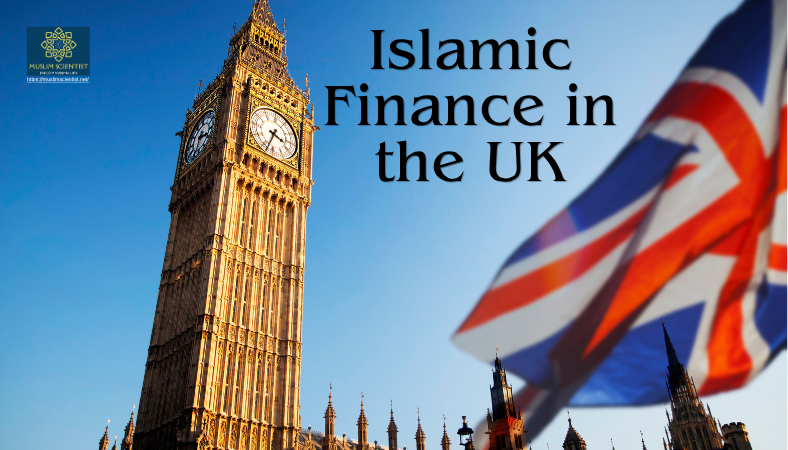
Islamic finance in the UK has quietly grown into a £6 billion sector, holding an impressive 85% of Europe’s Islamic finance assets . Yet according to a groundbreaking report from Equi titled “Growth with Purpose: The Untapped Potential of Islamic Finance,” this thriving industry represents only a fraction of its possible contribution to the British economy.
The findings are remarkable. With targeted policy support, Islamic finance could generate nearly £2.5 billion annually for the government through regular sovereign Sukuk issuance, alternative student finance, and reduced pensioner poverty costs . This exceeds the £2.3 billion expected from the Australia free trade deal.
“The UK is on a knife edge at the moment,” warns Omar Khaliel, CEO of the Riba Free Foundation. “Islamic finance organisations will just set up in other jurisdictions that are more progressive and accepting, like the US, Dubai, Turkey, Malaysia and Indonesia. That’s the risk the UK is facing right now” .
Beyond Muslim Communities: Universal Appeal
Perhaps surprisingly, Islamic finance attracts interest far beyond Muslim communities. The report’s national polling reveals that 30% of non-Muslims would switch to Islamic finance products if they offered comparable services to conventional products .
This broader appeal stems from shared values. Islamic finance prohibits interest and investment in harmful industries like gambling, alcohol, and weapons manufacturing, instead promoting transparency, risk-sharing, and social responsibility . These principles resonate strongly with ethically-minded consumers of all faiths.
Nine out of eleven Islamic finance providers interviewed confirmed their products attracted non-Muslim customers . Algbra, an ethical FinTech company, estimates that approximately 25% of its consumer base comes from non-Muslim backgrounds, attracted by its ESG credentials and transparent approach .
“Non-Muslims are attracted to our ethical credentials,” explains Sagheer Malik of Offa. “We are all about transparency. We don’t have any hidden fees… they like the fact that we won’t invest in any arms companies or animal testing companies” .
The Financial Inclusion Gap
While demand for Islamic finance is strong, supply remains inadequate. The survey found that 64% of British Muslims prefer Islamic finance over other alternatives, yet only just over half currently hold an Islamic bank account . This gap between desire and access carries significant consequences.
Financial exclusion among Muslims is particularly acute. 10% of Muslims have no bank account, and they are three times less likely to have one compared to their non-Muslim counterparts . 70% of Muslims say tailored financial services would be helpful, yet faith is entirely absent from the government’s Financial Inclusion Strategy .
The costs of this exclusion are substantial. Each year, approximately 6,000 students forgo higher education because no alternative student finance exists, costing the government £450 million per cohort . Furthermore, the lack of Islamic pension options could cost the economy £54.4 billion in missing pension savings over the lifetimes of the current British Muslim population .
Key Areas Where Islamic Finance Can Make a Difference
Pensions: A £54.4 Billion Opportunity
Nearly 40% of Muslim employees report that their workplace does not offer an Islamic pension option . For 78% of Muslims without a pension, the primary concern is whether the investment complies with Shariah principles.
The consequences are severe. Without adequate pension savings, many Muslims risk poverty in old age, potentially costing the government £1.9 billion annually in healthcare and social support . Nest’s Shariah fund, despite being the second most popular fund choice, reaches only 35,000 members—a fraction of those who could benefit .
Home Finance: Addressing the £45 Billion Market
Islamic home finance faces significant obstacles despite clear demand. 80% of British Muslims feel their finance options are restricted due to faith, yet 80% would consider Islamic home finance in the future . The UK Islamic Finance Council estimates the addressable residential property market at £45 billion .
Current barriers include double stamp duty charges for some shared ownership models, lengthy FCA regulatory processes, and inequitable treatment under the Building Safety Act . These obstacles force many Muslims to compromise their values or remain excluded from homeownership.
Alternative Student Finance: A Decade-Long Delay
Despite overwhelming support for an interest-free student finance system, the UK government has not yet implemented the alternative student finance scheme approved in the Higher Education and Research Act 2017 . This delays access to higher education for thousands of Muslim students annually.
Policy Recommendations
The report outlines ten key recommendations for unlocking Islamic finance’s potential:
Establishing a Bespoke Islamic Finance Unit
Create a dedicated unit within HM Treasury to support sector growth and ensure Islamic finance contributes to economic growth and financial inclusion .
Launching a Sovereign Sukuk Programme
Regular Sukuk issuances would strengthen the UK’s global position and attract investment. Previous issuances attracted orders exceeding £625 million .
Embedding Faith-Sensitive Design
Include Islamic finance in the Financial Inclusion Strategy and ensure the proposed Industry-Led Inclusive Design Working Group engages with Islamic finance providers .
Improving Financial Education
Ensure financial education covers alternative and Islamic finance, with targeted efforts to address the gender gap in awareness .
Updating Home Finance Legislation
Reform Stamp Duty Land Tax and the Building Safety Act to prevent Islamic home finance users from bearing taxes or charges that don’t apply to conventional mortgages .
Promoting Islamic Pensions
Encourage employers to offer Shariah-compliant pension funds as standard options within workplace schemes .
Equalising Tax Treatment
Introduce tax deductions for equity-based Islamic finance products equivalent to those available for debt finance .
Regulating Equity-Based Products
Expand the FCA’s remit to cover equity-based Islamic products and provide regulator training on Islamic finance structures .
Removing Sukuk Listing Requirements
Withdraw statutory listing requirements for alternative finance investment bonds to reduce unnecessary costs for Islamic finance institutions .
Ensuring Local Business Support Includes Islamic Options
Local authorities offering loans or financial advice should provide Shariah-compliant alternatives .
Converging Values: Islamic Finance and ESG
The report highlights a growing convergence between Islamic finance and ESG (environmental, social, and governance) principles. Muslim consumers demonstrate remarkable awareness of green finance—72% compared to 42% of non-Muslims—and are 20% more likely to use green finance products .
The sustainable Islamic finance market has a global potential estimated at £298 billion . The London Stock Exchange Group has already led on developing Green, Social and Sustainability Sukuk Guidelines, positioning the UK at the forefront of this intersection .
“The fact that the UK puts Islamic finance from the taxation perspective on the same footing as conventional finance is extremely important,” notes Abdullo Kurbanov of Ayan Capital. “This is not the case in many countries” .
International Standing Under Threat
While the UK remains the leading Western centre for Islamic finance, competitors are gaining ground. Euronext Dublin, Frankfurt Stock Exchange, and Nasdaq Dubai have emerged as serious rivals for Sukuk listings .
The UK ranks fifth on the Global Islamic FinTech Index, with 52 FinTech companies operating in the country—the highest number outside Organisation of Islamic Cooperation countries . However, much of the government’s levelling-the-playing-field approach has targeted Islamic banks rather than the more dynamic FinTech sector.
“Whether it’s setting up a baking or catering business, tailoring, an online shop, home tuition or beauty services, Muslim women tend to start small and just work their way up rather than try and take a loan out,” explains Bana Gora, CEO of the Muslim Women’s Council. “I think there’s difficulty accessing finance and they prioritise debt free living if they can” .
Conclusion: A Missed Opportunity for Growth
The Equi report presents a compelling case for expanding Islamic finance in the UK. The sector combines commercial opportunity with social purpose, offering a model of finance rooted in ethics, transparency, and shared prosperity.
Financial inclusion cannot be achieved through a one-size-fits-all approach. As Naz Shah MP, Chair of the All-Party Parliamentary Group on Islamic and Ethical Finance, writes in the foreword: “This report reminds us that alternative approaches to finance can strengthen the economy while upholding principles of fairness and responsibility. Supporting this agenda is not only the right thing to do. It is firmly in the national interest” .
With the right policy support, Islamic finance has the potential to move from niche to mainstream, unlocking participation, innovation, and economic contribution that might otherwise remain unrealised. The question is not whether the UK can afford to invest in Islamic finance, but whether it can afford not to.