What Islam Teaches About Intimacy During Menstruation — And Why Medicine Agrees
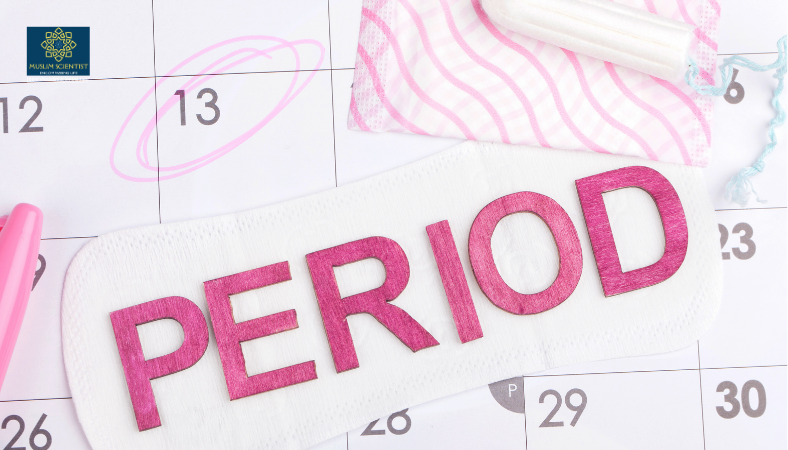
Menstruation touches nearly every woman’s life, yet conversations about intimacy during this time often stay private, even within marriage. Islamic teaching, however, addresses the subject directly and specifically, offering guidance that couples have followed for fourteen centuries. Meanwhile, modern medicine has arrived at strikingly similar conclusions through an entirely different route: clinical research on infection risk and reproductive health. This article explains the relevant Quranic verse, the Prophetic guidance that expands on it, and the medical reasoning that now supports the same practical boundaries, so married couples can approach the topic with clarity rather than confusion.
The Quranic Ruling on Menstruation and Intimacy
The primary source on this topic appears in Surah Al-Baqarah, where companions of the Prophet Muhammad asked directly about menstruation. The Quran responds that menstruation is a state of harm, or discomfort, and instructs believers to keep away from women during it, avoiding intercourse until purification occurs (Quran 2:222). Ibn Kathir’s classical commentary explains that this instruction prohibits intercourse specifically, while confirming that intimacy resumes once the menstrual period ends and ritual purification, known as ghusl, takes place.
Importantly, the verse does not describe menstruation as shameful or as a punishment. Instead, classical commentators such as those cited in Tafheem al-Quran describe the Arabic term used, adha, as pointing to both discomfort and a health-related condition, closer to sickness than to ordinary purity. Therefore, the ruling functions less like a moral judgment and more like protective guidance, similar in spirit to medical advice that limits certain activities during an illness. This framing matters, since it shapes how the rest of the guidance should be understood: as care rather than restriction for its own sake.
What Remains Permitted During Menstruation
A common misunderstanding holds that Islam requires total physical separation between spouses during menstruation, echoing older practices among some ancient communities. However, authentic hadith literature corrects this directly. According to a hadith recorded in Sahih Muslim, the Prophet was asked what a husband may do with his wife during her menses, and he responded that everything is permitted except intercourse itself (Sahih Muslim 302). Affection, closeness, and non-penetrative intimacy remain entirely allowed.
Permitted and Prohibited Actions During Menstruation (Islamic Guidance)
| Category | Status | Primary Source |
|---|---|---|
| Vaginal intercourse | Prohibited until purification | Quran 2:222 |
| Kissing, hugging, and general affection | Permitted | Sahih Muslim 302 |
| Sleeping in the same bed | Permitted | Sahih Al-Bukhari 300 |
| Sharing meals and daily life | Permitted | Sahih Al-Bukhari 300 |
| Intercourse after ghusl (purification) | Permitted | Quran 2:222 |
A separate hadith reinforces this closeness further: Aisha, the Prophet’s wife, reported that she would drink from a cup while menstruating, and the Prophet would take the same cup and drink from the same spot she had used (Sahih Muslim 300). Consequently, ordinary daily contact, sharing food, sleeping side by side, remains fully normal. The restriction applies narrowly to intercourse, not to the relationship as a whole.
The Prophet’s Own Practice
Aisha’s testimony offers some of the richest detail on this subject, since she frequently described her own married life for later generations of scholars. In one widely cited narration, she explained that the Prophet would ask her to wear a garment during her menses and would then lie close to her, embracing her without engaging in intercourse (Sahih Al-Bukhari 300). This account illustrates that emotional and physical closeness were actively encouraged, not avoided, even while the specific prohibition remained in place.
Scholars across the major schools of Islamic jurisprudence agree on this core boundary, even though minor details differ regarding areas of the body considered appropriate for contact. Nevertheless, the consensus remains clear on the central point: affection continues, while intercourse pauses. This balance reflects a broader theme found throughout Islamic teaching on marriage, where physical intimacy is treated as a source of comfort and connection, not merely a biological act to be permitted or forbidden in isolation.
The Medical Perspective: Why Restraint Makes Sense
Modern medical research offers a complementary explanation for this guidance, arrived at without reference to religious text. During menstruation, the cervix sits slightly open, and the vaginal environment undergoes measurable changes in bacterial balance and immune activity. As a result, several studies link intercourse during menstruation to a higher risk of transmitting blood-borne infections, including HIV, since infected blood present during intercourse increases exposure for both partners. A study published through the U.S. National Institutes of Health specifically identified intercourse during menstruation as a potential risk factor for the heterosexual transmission of HIV and other sexually transmitted infections.
Medical Considerations Related to Intercourse During Menstruation
| Factor | Why It Matters | Source |
|---|---|---|
| Cervix position | Slightly open during menses, offering less of a natural barrier | Clinical reproductive health research |
| Blood-borne infection exposure | Menstrual blood can increase transmission risk of HIV and similar infections | NIH-published research (PubMed 8885071) |
| Vaginal microbiota changes | Bacterial balance shifts during menstruation, affecting infection susceptibility | Reproductive health studies |
| Herpes outbreak triggers | Menstruation is a recognized trigger for genital herpes flare-ups | Clinical dermatology and gynecology literature |
Consequently, healthcare providers generally advise added caution around intercourse during this window, even outside any religious framework. This does not mean the practice carries guaranteed harm for every couple; however, it does mean the caution embedded in the Quranic verse fourteen hundred years ago anticipated a real, measurable health consideration that clinical science only confirmed much later.
Purification and Resuming Intimacy
Once menstruation ends, Islamic teaching requires ghusl, a full ritual bath, before intercourse resumes. Ibn Kathir’s commentary notes that scholars agree on this requirement, whether performed with water or, when water is unavailable, through tayammum, a dry purification method using clean earth or sand. The Quran specifically states that once purification occurs, spouses may come together as Allah has ordained (Quran 2:222).
This structure gives couples a clear, unambiguous marker for when the restriction lifts, removing guesswork from an otherwise sensitive conversation. Furthermore, the requirement of ghusl adds a moment of intentional transition, encouraging couples to approach intimacy with awareness rather than treating it as an automatic default. In this sense, the ritual functions similarly to how modern relationship counselors describe intentional check-ins around consent and readiness, even though the religious and therapeutic frameworks developed independently.
Addressing Common Misconceptions
Several misconceptions persist around this topic, and clearing them matters for both religious accuracy and marital wellbeing. First, some assume menstruating women must be isolated entirely, a practice the Quran explicitly criticizes by referencing how the Jews of that era avoided menstruating women completely, including refusing to eat with them. Islamic teaching corrects this directly, permitting full social and emotional closeness.
Second, some believe any physical contact is forbidden, yet the hadith literature reviewed above shows otherwise; only intercourse itself falls under the restriction. Third, some couples assume the guidance stems purely from ritual concerns with no practical basis, though the medical research above suggests a real, health-related rationale sits alongside the spiritual one. Recognizing these distinctions helps couples navigate the topic with confidence rather than unnecessary anxiety, and it prevents religious guidance from being misapplied in ways that create emotional distance rather than closeness.
Respect, Communication, and Marital Wellbeing
Beyond the specific rulings, Islamic teaching frames marital intimacy broadly as a source of tranquility, describing spouses as garments for one another in the Quran (Surah Al-Baqarah 2:187), a metaphor for closeness, comfort, and mutual protection. This framing suggests that periods of temporary restriction should not be treated as a source of shame or distance between partners. Open communication about needs, comfort, and timing remains encouraged throughout Islamic marital guidance, and many scholars note that the temporary pause on intercourse offers couples an opportunity to nurture other forms of connection instead.
Ultimately, both the religious guidance and the medical research point toward the same practical conclusion: a temporary, specific restriction rooted in genuine care for wellbeing, paired with continued affection and closeness in every other respect. Couples who understand both the spiritual reasoning and the health rationale tend to approach the topic with far less confusion than those relying on assumptions or incomplete information passed down informally.