A study reveals that the way influencers tell stories about halal travel differs dramatically between Indonesia and Japan—and these cultural nuances directly impact how much Muslim travelers trust and want to visit these destinations.
The Digital Bridge to Halal Tourism
The global halal tourism market is expanding rapidly, projected to reach a staggering $410.9 billion by 2032 . With 89% of Indonesian Muslim travelers ranking halal food as their top priority, the demand for authentic, trustworthy travel content has never been higher . Enter the influencers.
A comprehensive new study published in Cogent Arts & Humanities analyzed YouTube content from 48 halal tourism influencers, along with 1,276 audience comments and extensive visual data, comparing how Indonesian and Japanese creators present Muslim-friendly travel experiences . The findings reveal profound cultural differences in communication style that significantly affect audience trust and travel intentions .
What Is Multimodal Communication?
Before understanding the cultural differences, we need to grasp how influencers actually communicate. Multimodal Discourse Analysis (MDA), the framework used in this study, examines how meaning is constructed through the interplay of multiple communication channels .
Think of it this way: when an influencer showcases a halal restaurant in Tokyo, they’re not just speaking. The visual imagery of the food, the background music, the on-screen text captions, their facial expressions, and even the editing rhythm all work together to create a destination image. This combination of visual, verbal, and auditory elements is what researchers call “multimodal meaning construction” .
The Cultural Divide: Explicit vs. Implicit Storytelling
The study’s most striking finding involves the fundamental difference in how Indonesian and Japanese influencers construct meaning .
Indonesian Influencers: Rich, Explicit, and Expressive
Indonesian content creators scored significantly higher across all three multimodal meaning categories: representational meaning (65 vs. 19), interactive meaning (55 vs. 23), and compositional meaning (26 vs. 14) . This means Indonesian influencers use more detailed descriptions, more direct engagement with audiences, and more elaborate visual arrangements.
When promoting halal tourism, Indonesian influencers employ:
- Direct Address: Warm greetings like “Assalamualaikum” and personal invitations like “Let’s go” or “You must try”
- Detailed Sensory Descriptions: “It’s truly like an explosion of flavors in your mouth… it’s practically melting in my mouth”
- Rich Visual Framing: Showing halal certification, prayer facilities, and alcohol-free environments in explicit detail
Japanese Influencers: Minimalist and Symbolic
Conversely, Japanese influencers adopt what researchers describe as a “high-context” communication style . Their scores across all multimodal categories were notably lower, but this doesn’t indicate a poverty of meaning. Rather, it reflects a cultural preference for subtlety, implicit symbolism, and minimalist aesthetics .
Japanese influencer content typically features:
- Restrained Narration: Linear, experience-based storytelling without excessive emotional embellishment
- Subtle Visual Cues: Minimal visual hierarchy and understated representations
- Implicit Meaning Making: Relying on cultural context and audience inference rather than overt messages
Narrative Transportation: Who Gets Lost in the Story?
Narrative Transportation Theory (NTT) explains how audiences become “lost” in a story, leading to stronger persuasion and trust . The study measured six dimensions of narrative transportation across Japanese and Indonesian audiences .
Cross-Cultural Narrative Transportation in Halal Tourism Influencer Content
| Dimension | Japan Score | Indonesia Score | Key Insight |
|---|---|---|---|
| Emotions Evoked from Story | 23 | 28 | Both cultures engage emotionally, but Indonesians slightly more intensely |
| Identification with Character | 11 | 12 | Remarkably similar—a universal human connection |
| Imagination & Vividness | 15 | 27 | Indonesian audiences mentally immerse themselves far more deeply |
| Individual Tendencies | 29 | 44 | Indonesians show stronger predisposition toward narrative engagement |
| Attention & Focus | 16 | 33 | Indonesian viewers demonstrate superior sustained attention |
| Story Quality | 14 | 38 | Indonesian audiences rate narrative quality significantly higher |
How Different Cultures Experience Halal Travel Stories
Why Credibility Matters More Than Popularity
The study’s conclusions challenge conventional wisdom about influencer marketing. Credibility isn’t simply about how many followers someone has. Instead, it emerges from how consistently and authentically they construct meaning .
For halal tourism promotion, credibility is built through:
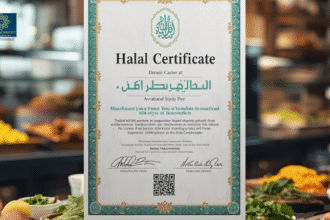
Explicit and Verifiable Halal Representation: Influencers who show halal certificates, prayer rooms, wudhu facilities, and alcohol-free environments demonstrate expertise and reliability . As one Japanese influencer noted, “Having a worry-free halal dining and prayer are two essential things when we are in Japan” .
Interpersonal Closeness: Direct address and warm communication styles reduce psychological distance. When influencers say “my Muslim friends” or “you’re gonna love it,” they build parasocial relationships that enhance trust .
Immersive Storytelling: Sensory-rich descriptions of food texture, flavor, and atmosphere transport audiences into the experience. “Each bite is an experience itself where you can taste the quality care and the craftsmanship,” one influencer described .
Religious and Cultural Alignment: Influencers who authentically represent Muslim values are more trusted across cultures. When Japanese creators demonstrate genuine effort to understand halal needs, audiences respond with gratitude and trust .
The Real-World Impact
The study’s findings have practical implications for how destinations market themselves to Muslim travelers. For non-Muslim countries like Japan, the challenge is twofold: maintain cultural authenticity while ensuring unambiguous, consistent halal cues across all communication channels .
Japanese influencers are already building these bridges. Nanako Shibasaki, a Japanese influencer with 1.7 million TikTok followers (80% Indonesian), has become a cultural ambassador . She learned fluent Indonesian through livestreaming and now introduces halal-certified restaurants to Muslim audiences . Similarly, Navito Halal receives about 500 comments daily, with followers expressing appreciation for his efforts to understand halal needs . His content serves as both halal education and practical travel guidance .
Conclusion: One Size Does Not Fit All
The study demonstrates that effective halal tourism promotion requires understanding cultural communication styles. For Indonesian Muslim audiences, narratives should emphasize vividness, emotional warmth, and structured storytelling. For Japanese audiences, subtler narrative techniques remain effective, provided that credibility cues remain unambiguous .
The broader lesson applies to any cross-cultural marketing: influence isn’t just about who you are, but about how you create meaning and tell stories that resonate with specific audiences. As the halal tourism market continues to grow, understanding these cultural nuances will separate successful destinations from those that merely offer halal food .
Reference: Agus Budi Cahyono, Santi Andayani, Emma Rahmawati Fatimah & Emy Sudarwati (2026) Multimodal narratives and persuasion routes: a comparative study on Indonesian and Japanese halal tourism influencer contents, Cogent Arts & Humanities, 13:1, 2718697, DOI: 10.1080/23311983.2026.2718697