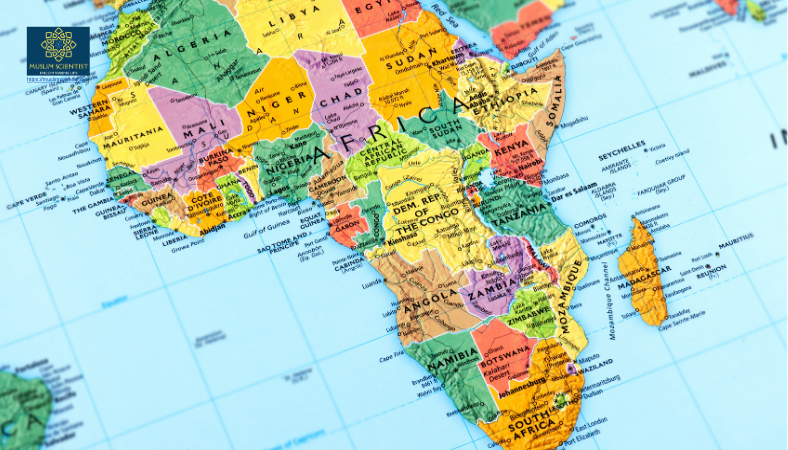
An analysis of nine African markets and global Islamic equities uncovers which markets transmit shocks and which ones offer true portfolio protection.
The Investment Puzzle Nobody Solved—Until Now
Global investors have long viewed both African and Islamic equities as attractive diversification tools. African markets offered growth potential with perceived insulation from global turmoil. Islamic stocks promised ethical screening and asset-backed stability.
Yet one crucial question remained unanswered: Can these two asset classes effectively hedge against each other?
A comprehensive new study from Nelson Mandela University finally provides answers . Professors Andrew Phiri and Izunna Anyikwa analyzed daily data from 2013 to 2024 across nine African exchanges and the Dow Jones Global Islamic Equity Index. Their findings challenge conventional wisdom about both markets.
The bottom line: Blending Islamic equities broadly with African stocks often reduces hedging effectiveness. However, strategic pairings with specific markets—particularly Egypt and Nigeria—create meaningful portfolio stability .
Why This Research Matters Now
Islamic finance assets are projected to exceed US$5 trillion globally. African stock markets have more than doubled in capitalization over the past decade. Many international investors now hold positions in both.
The researchers employed sophisticated TVP-VAR connectedness models to track how shocks move between these markets over time . Unlike traditional static analysis, this approach captures dynamic shifts during crises. The study spans multiple major events:
- 2013-2014 US taper tantrum
- 2014 Russian currency crisis
- 2015 oil price collapse
- 2017 emerging market crash
- 2019 US-China trade war
- 2020 COVID-19 pandemic
- 2022 Russia-Ukraine conflict
Key insight: Connectedness between these markets tripled during crisis periods compared to tranquil times . Normal interdependence and contagion are fundamentally different phenomena.
Which Markets Transmit vs. Receive Shocks?
The study identifies clear winners and losers in shock transmission:
| Market Type | Net Transmitters | Net Receivers |
|---|---|---|
| Large African Markets | South Africa (strongest), Namibia, Botswana | Egypt (most vulnerable) |
| Islamic Markets | Global Islamic equities | Morocco (smaller Sharia market) |
| Oil-Dependent | — | Nigeria, Egypt |
| Smaller Markets | — | BRVM, Kenya, Mauritius |
Source: Phiri & Anyikwa (2025), TVP-VAR connectedness analysis
South Africa emerges as the dominant shock transmitter to other African markets . Its integration through cross-listings and electronic trading systems creates powerful spillover channels. Namibia, surprisingly, serves as both transmitter and receiver due to its tight connection with Johannesburg.
Egypt stands out as the most vulnerable recipient of systemic shocks. This large Sharia-compliant market absorbs waves from both Islamic and African sources . High inflation and oil dependency amplify its susceptibility.
The Decoupling Hypothesis: True or False?
Islamic equities theoretically decouple from conventional markets through Sharia screening . These principles prohibit:
- Non-halal business activities
- Speculative transactions without physical ownership
- Interest-based debt instruments
The evidence is mixed. Global Islamic equities show limited exposure to African market shocks, confirming partial decoupling . However, Egypt—the largest African Islamic market—remains highly connected to both systems.
This paradox suggests that market size overwhelms religious screening when it comes to shock transmission. Larger markets integrate more deeply with global financial systems regardless of Sharia compliance.
Optimal Portfolio Weights—How Much to Allocate?
The Minimum Connectedness Portfolio (MCoP) approach reveals optimal allocations:
| African Market | Optimal Weight | Islamic Equity Weight | Hedging Effectiveness |
|---|---|---|---|
| Botswana | 13% | 9% (avg) | Negative (-9.8) |
| Egypt | 12% | 9% (avg) | Positive (0.37) |
| Kenya | 11% | 9% (avg) | Negative (-1.28) |
| Namibia | 7% | 9% (avg) | Positive (0.92) |
| South Africa | 4% | 9% (avg) | Positive (0.08) |
Note: Negative hedging effectiveness indicates increased portfolio risk from mixing assets.
Striking finding: Combining Islamic equities with Botswana, Kenya, or Mauritius actually increases portfolio risk . Only Egypt, Namibia, and South Africa show positive hedging effectiveness in multivariate portfolios.
Bivariate Strategies: The Pairing Advantage
The research reveals that pairing Islamic equities with individual African markets works better than broad diversification . Some combinations show remarkably strong hedging effectiveness:
High-Effectiveness Pairings:
- Islamic/Namibia: 94% hedging effectiveness
- Islamic/Egypt: 72% hedging effectiveness
- Islamic/Nigeria: 61% hedging effectiveness
Low-Effectiveness Pairings:
- Islamic/Botswana: 40% hedging effectiveness
- Islamic/Mauritius: 36% hedging effectiveness
- Islamic/Morocco: 34% hedging effectiveness
Investor takeaway: Don’t add Islamic equities indiscriminately to African portfolios . Target specific markets where the hedge actually works.
Crisis Periods: When Spillovers Spike
Dynamic analysis shows three periods of heightened connectedness :
1. 2013-2014 Taper Tantrum – US Federal Reserve signaling ended QE. Shock waves spread rapidly to emerging markets. South Africa transmitted most strongly during this period.
2. 2020 COVID-19 Pandemic – QE expansion to combat economic collapse. Islamic equities showed resilience but still experienced elevated connectedness.
3. 2021-2022 Immunization Period – Mass vaccination campaigns boosted investor confidence . Actually increased market interconnectedness through renewed global risk appetite.
During these episodes, connectedness nearly tripled baseline levels . This confirms that African and Islamic markets are not permanently decoupled. Systemic crises create contagion effects that override normal insulation mechanisms.
Policy Implications for Regulators
Central banks and financial regulators should take note :
Early warning systems – Dynamic connectedness spikes can signal brewing systemic risk. Monitoring TCI (Total Connectedness Index) provides advance notice of market stress.
Regional integration risks – South Africa’s dominant shock transmission role means regional integration programs may concentrate rather than diversify risk. Policymakers must consider spillover channels.
Bubble detection – Several African markets show bubble build-up behavior. Regulators should monitor these patterns closely.
Inflation vulnerability – High-inflation environments like Egypt and Nigeria show greater shock susceptibility . Macroeconomic stability supports market resilience.
Investor Strategies: Practical Applications
Based on the findings, investors should consider :
Do:
- Pair Islamic equities strategically with Egypt, Nigeria, or Namibia
- Monitor dynamic connectedness indices for early crisis signals
- Rebalance portfolios during monetary policy shifts
- Consider smaller allocations to South Africa and Botswana
Don’t:
- Add Islamic equities indiscriminately to African portfolios
- Assume decoupling during all crisis periods
- Ignore market size and inflation environment
- Rely on static diversification without time-varying adjustments
What This Means for Islamic Finance Growth
Islamic finance continues expanding globally. This research suggests that integration with African markets creates both opportunities and risks.
The upside: Strategic pairing with certain African markets offers genuine hedging benefits . This could attract more institutional capital.
The caution: Broad Islamic equity exposure doesn’t automatically diversify African risk. Investors need targeted approaches based on specific market characteristics.
Egypt, as both the largest African Islamic market and most vulnerable to shocks, requires particular attention . Its high inflation and oil dependence make it a transmission channel rather than a safe haven.
Research Limitations and Future Directions
The study acknowledges several constraints :
Data scope – Daily data captures short-term volatility but may miss longer-term structural shifts. Monthly or quarterly analysis could reveal different patterns.
Index selection – The Dow Jones Islamic Equity Index may not represent all Sharia-compliant opportunities. Regional indices might show varying results.
Market coverage – Nine African markets were selected. Including smaller emerging exchanges could alter spillover patterns.
Future research should examine macroprudential policy impacts, geopolitical risk factors, and behavioral responses of Islamic vs. conventional investors during crises .
Conclusion: Rethinking Diversification
This groundbreaking study fundamentally changes how investors should view African and Islamic equity combinations .
“Blending Islamic equities with African stocks generally diminishes overall hedging effectiveness unless strategically paired with specific markets like Egypt and South Africa.”
The research confirms that market size and financial system type drive spillover behavior more than religious screening. Larger non-Islamic markets like South Africa transmit shocks effectively. Smaller Islamic markets show greater insulation.
For investors, the message is clear: Strategic pairing matters more than broad diversification. Target specific African markets that actually benefit from Islamic equity hedging. And adjust allocations dynamically during crisis periods.
For policymakers, these findings highlight the importance of monitoring systemic risk through connectedness indices. Early warning systems could prevent contagion from spreading across regional markets.
Reference: Andrew Phiri & Izunna Anyikwa (2025) Connectedness and spillovers
between African and global Islamic equities: implications for portfolio hedging and investment
strategies, Cogent Economics & Finance, 13:1, 2459198, DOI: 10.1080/23322039.2025.2459198
Other Articles: