A new discourse analysis of First Balkan War correspondence reveals that Western reporters did not just cover the war – they actively constructed the Ottoman Empire as a backward, fatalistic, and alien civilization.
In October 1912, the Balkan League (Bulgaria, Serbia, Greece, and Montenegro) launched a coordinated attack on the Ottoman Empire. Within months, the Ottoman army collapsed. Turkish historiography has since focused on military failures: logistical errors, command dysfunction, and inadequate preparation. But a new study published in the academic journal Religions asks a different question: not just why the Ottomans lost the war, but how Western journalists represented that loss to global audiences.
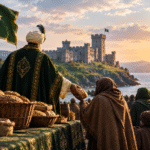
The answer, according to the research, is disturbing. War correspondents writing for influential newspapers like The Times, The Daily Telegraph, and the Illustrated London News did not act as neutral observers. Instead, they reproduced a centuries-old Orientalist discourse that framed Turks as inherently incapable of civilization, organization, and rational governance. Religion – specifically the opposition between the Christian “Cross” and the Islamic “Crescent” – served as the primary symbolic language through which this hierarchy was naturalized.
The Power of the Pen: Why War Correspondents Mattered
The First Balkan War was one of the first conflicts covered by a new generation of professional war correspondents equipped with telegraphs, cameras, and direct access to European publics. These journalists were not mere recorders of events; they were knowledge producers whose texts shaped public opinion, influenced foreign policy, and legitimized military intervention.
The study examines 11 primary sources, including the works of Ellis Ashmead-Bartlett (With the Turks in Thrace), Lionel James (With the Conquered Turks), H. C. Seppings-Wright (Two Years Under the Crescent), and others. Most were British, but the analysis also includes German, Austrian, and French correspondents. The author applies Critical Discourse Analysis based on Norman Fairclough’s three-dimensional model, combined with Edward Said’s concept of “Orientalism,” Stuart Hall’s theory of “representation,” and Maria Todorova’s concept of “Balkanism.”
The theoretical framework is essential to understanding what the study reveals: these texts are not transparent windows onto reality. They are symbolic instruments that construct meaning by deploying specific linguistic choices, metaphors, and binary oppositions.
Theatrical Narratives: How Turks Were Represented
One of the study’s most striking findings is the theatrical, dramatized language correspondents used to describe Ottoman defeats. Ashmead-Bartlett, for example, portrays Ottoman Commander Abdullah Pasha as “blindfolded, desperately searching for his enemy” – a scene the author calls a “compelling example of theatrical narrative.”
When describing the plight of Muslim refugees (muhacirs), Wright employs vivid imagery: “anxious night,” “hopeless day,” “sorrowful eyes,” and “trembling crowds.” Wounded and cholera-stricken soldiers retreating through Istanbul are framed not as victims of war but as evidence of Ottoman inadequacy.
This dramatization serves a clear ideological purpose: it accentuates the failure of Turks and their administrators. The hardships civilians face are attributed not to the brutality of war itself but to the “irrational, unplanned, and unprogrammed practices” supposedly characteristic of Eastern societies.
“A Labyrinth of Sewers”: The Construction of Istanbul as Decayed Space
Istanbul, the Ottoman capital, receives particularly harsh treatment. Ashmead-Bartlett describes it as a “labyrinthine network of sewer systems, composed of mosques devoid of originality, constructed upon its ostentatious refuse.” He alleges that the city’s “dishonorable and idle atmosphere” causes “moral anemia” even among Europeans. He even advocates for using incendiary tactics to destroy parts of the city.
Wright projects Istanbul as a “deadly site of bacteria,” coding the East as the source of disease. Migrating people become “an extraordinary mass” recast through “a thicket of cattle horns” – a chaotic tableau that the author argues expresses the “crisis of rationality” experienced by the modernist Western mind.
The cholera epidemic that affected both sides is blamed on Turkish “disgusting habits.” Reginald Rankin, an English aristocrat covering the war from the Bulgarian side, explicitly ascribes the deaths of thousands of Bulgarian soldiers from cholera to Turkish cultural practices, not to wartime conditions.
Common Stereotypes of Turks in Western War Correspondence
| Stereotype | How It Appears in Texts | Ideological Function |
|---|---|---|
| Fatalism (“Kismet”) | Turks accept suffering without resistance; they are “happy children unaware of tragedy” | Justifies Western intervention as necessary for progress |
| Nomadism | Turks are innately unsuited to art, literature, commerce, or stable governance | Explains Ottoman “decline” as racial, not historical |
| Inability to organize | Trains don’t run on time; three-hour waits for officials are “behavior peculiar to Turks” | Positions the West as the agent of order and rationality |
| Moral decay | Istanbul is corrupt, diseased, and labyrinthine | Frames Ottoman rule as illegitimate and temporary |
| Military bravery (ambivalent) | Turkish soldiers are brave, resilient, and patient – but like “happy children” | Praise is backhanded; reinforces paternalistic hierarchy |
The “Cross and Crescent”: Weaponizing Religion
The study demonstrates that religion was not merely a background fact but an active representational tool. Tsar Ferdinand of Bulgaria explicitly framed his war manifesto as a “War of the Cross and the Crescent.” Correspondents eagerly adopted this language.
Philip Gibbs, writing for The Graphic, asserts that “the Crescent impedes progress by virtue of its rigid faith, regardless of the geographical location in which it prevails.” He claims Turks are now facing the consequences of their “historical transgressions, including ineffective governance, widespread corruption, and oppressive rule.”
The replacement of the crescent with the cross on the Hagia Sophia dome becomes a recurring fantasy in these texts. This symbolizes not just military victory but the displacement of Eastern civilization by Western civilization. Religion here operates as a code that renders political and cultural distinctions visible and natural.
The Fatalism Trap: Kismet as Justification for Domination
One of the most pervasive stereotypes is that Turks are “fatalistic” – that they believe in kismet (fate) and therefore do not rationally plan for the future. Wright describes kismet as “the guiding principle of the Islamic world” and contrasts it with the “organized military might of the Western world.”
At first glance, some correspondents seem to praise Turkish resilience. Bernard Grant says he was “impressed by the Turkish soldier’s profound faith.” But he immediately criticizes “incompetent” administrators for leaving matters to fate. Baldwin notes soldiers’ “extraordinary patience and fortitude” but also their lack of adequate medical treatment.
The study argues that this framing does double duty: it makes Turks appear spiritually noble but practically inadequate. The more fatalistic the East, the more rational – and therefore more deserving of dominance – the West appears. As Sir Charles Eliot, an English Orientalist cited by the correspondents, bluntly states: Westerners equate fatalism with indolence, and “nomads” who do not strive to change their situation are regarded as “at the level of animals rather than humans.”
Minorities as “Parasites”: The Construction of Internal Enemies
The study reveals that Christian minorities within the Ottoman Empire – Greeks, Armenians, Jews, and Levantines – receive even harsher treatment than Turks in correspondent narratives. They are repeatedly framed as “parasites,” “corrupt,” and “shameless.”
Ashmead-Bartlett quotes an old Turkish proverb: “To outmaneuver a Greek requires two Jews; to deceive an Armenian necessitates five Greeks.” He then characterizes minorities as a “corrupt, shameless, and dishonest” community within a “weak civilization.”
Lionel James describes Armenians as “exploitative parasites who prey on the hardships experienced by Turkish refugees.” He asks, incredulously, how the Turks “did not succeed in eradicating these parasites.” Even William Pickthall, an Englishman who later converted to Islam and opposed Western policies, uses the same parasitic language to describe minorities.
The study interprets this through Stuart Hall’s reading of Mary Douglas’s Purity and Danger: minority groups are treated as “matter out of place” – as polluting elements that disrupt the social order because of their hybrid identity (Christian but Eastern, local but foreign).
How Different Groups Were Represented (Hierarchy of Otherness)
| Group | Representation | Distance from “Western Norm” | Key Discourse |
|---|---|---|---|
| Western Europeans | Rational, ordered, progressive | Zero – the norm itself | Civilization |
| Balkan Christians (Bulgarians, Serbs) | Semi-civilized, reckless, immature, but Christian | Moderate | Balkanism (incomplete self) |
| Ottoman Turks | Fatalistic, nomadic, morally decayed, militarily brave but backward | High | Orientalism |
| Minorities (Greeks, Armenians, Jews) | Parasites, corrupt, dishonest, treacherous | Highest (as polluting hybrids) | Orientalism + naturalization |
Balkanism: The “Incomplete Self”
The study makes an important theoretical distinction. Maria Todorova’s concept of “Balkanism” describes how Western discourse represents Balkan peoples not as absolute external others (like the Ottoman Turks) but as Europe’s “other within” – incomplete, belated, fragmented, and problematic.
In the correspondents’ texts, Bulgarians and Serbs are Christian, so they are not fully alien. But they are also “semi-civilized,” “excessive,” and “immature.” Philip Gibbs calls the Balkan alliance a “diabolical mixture” of “semi-civilized peoples.” Cyril Campbell writes that for British public opinion, the Balkans consisted of “an uncertain idea where little-known races accumulated” – a “mere fiction.”
Gibbs describes Serbian soldiers as “mute animals anticipating slaughter” and Bulgarian soldiers as “hairy savages.” Rankin claims that “the low mental level of the Bulgarian peasant is a well-established, documented fact.” Yet, simultaneously, Bulgarian soldiers are praised as “magnificent” and “well-trained.”
This ambivalence – admiration mixed with disgust – is the signature of Balkanism. The Balkans are close enough to Europe to be familiar but distant enough to be a problem. As the study notes, they occupy the position of the “incomplete self” or “insider outsider.”
The Counter-Narrative: Leon Trotsky’s Alternative Voice
Not all correspondents reproduced the dominant Orientalist discourse. The study highlights Leon Trotsky (the famous Russian revolutionary), who covered the Balkan Wars as a journalist and later published his dispatches as a book.
Trotsky’s analysis differs radically from his Western colleagues. He does not explain Ottoman defeat through fatalism, moral decay, or civilizational inadequacy. Instead, he analyzes economic and historical factors: the underdevelopment of industry, the absence of a bourgeois class, and the lack of a working class to support the Young Turk movement.
Trotsky argues that the objectives of the Great Powers were obscured by “eloquent rhetoric concerning racial affinity.” He examines the Balkan states within their historical processes, not as timeless national essences. Even when he uses terms like “backwardness” or “primitivism,” he roots these in social underdevelopment and the non-existence of class contradictions – not in “national character.”
The presence of this counter-narrative is methodologically crucial. It demonstrates that the reality of the war was not singular or transparent. It was interpreted in different ways within different discursive configurations. Trotsky’s text breaks the illusion that Western correspondents were merely “telling it like it was.”
Why This Matters for Turkish Historiography
The study levels a serious critique at Turkish academic tradition. Turkish historians have frequently used Western correspondent texts as primary sources, assuming they are objective records of events. They have cited Ashmead-Bartlett, James, and others as reliable witnesses without analyzing their ideological, symbolic, or linguistic patterns.
This is a mistake. As the study demonstrates, these texts are not neutral. They are “symbolic instruments of construction” that produce meaning through specific representational strategies. By uncritically citing them, Turkish historiography has unknowingly reproduced Orientalist stereotypes.
The author calls for a more critical approach: “The article challenges the claim of neutrality in archival records.” Western memoirs and war correspondence should not be treated as “transparent” sources but as texts that actively produce the cultural and political significance of the war.
Practical Takeaways for Readers
For journalists and media consumers: War reporting is never neutral. Pay attention to metaphors, binary oppositions (civilized/backward, order/chaos), and religious imagery. Ask: who benefits from this representation?
For historians: Archival sources are not transparent. Always analyze the discourse within which a text was produced. Do not assume that a witness is objective just because they were present.
For anyone interested in Islam-West relations: Many of the stereotypes identified in this 1912–1913 correspondence – fatalism, nomadism, inability to organize, moral decay – persist in contemporary Western media coverage of Muslim societies. Recognizing their historical construction is the first step toward deconstructing them.
For Turkish readers: Western archives are valuable, but they must be read with a critical eye. The “Terrible Turk” image was not a natural fact. It was produced, in part, by journalists who believed in the superiority of the Cross over the Crescent.
Conclusion: Religion as a Representational Code
This study makes a significant contribution by demonstrating that religion in war correspondence is not merely a matter of belief or identity. It is a representational code that renders political and cultural distinctions visible and natural. The “Cross and Crescent” dichotomy transforms a geopolitical conflict into a civilizational struggle. Ottoman military defeat becomes evidence of Islamic backwardness. European intervention becomes a duty, not a choice.
By distinguishing between Orientalist representations of Turks and Balkanist representations of Balkan Christians, the study offers a nuanced understanding of Western discursive hierarchies. Not all “Others” are constructed equally. The West’s relationship with its internal other (the Balkans) differs from its relationship with its external other (the Ottoman Turks). Both, however, serve to legitimize Western dominance.
As the author concludes, understanding how these representations were produced in the early 20th century helps us recognize similar patterns today. The language of “fatalistic Muslims,” “chaotic Middle Eastern cities,” and “the clash of civilizations” did not emerge from nowhere. It was crafted, in part, by war correspondents armed with telegraphs, cameras, and a deep conviction in the superiority of the Cross over the Crescent.