It is a quiet crisis, unfolding not on the streets, but behind the closed doors of hiring managers and in the quiet disillusionment of job applicants. A groundbreaking new experimental study, published in the Journal of Muslims in Europe, provides the first causal evidence that labour market discrimination against Muslims does not just hurt their wallets—it directly damages their trust in the core institutions of German democracy.
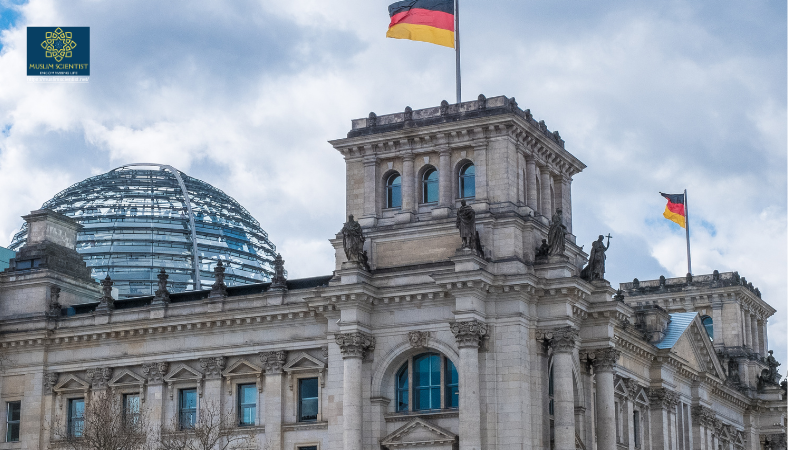
The study, “Labour Market Discrimination of Muslims and Political Trust in Germany: Experimental Evidence on Muslim and Non-Muslim Responses” by Dr. Stephanie Müssig and Inken Okrug from Friedrich-Alexander-Universität Erlangen-Nürnberg, moves beyond correlation to prove a direct, negative link. When Muslims learn about systemic bias against people like them in the job market, their faith in the police and the national parliament (Bundestag) plummets.
“Democracies are not only dependent on the participation of their citizens, but also on their goodwill,” the researchers write. “If parts of society are under the impression the state is neither willing nor able to prevent their discrimination… they may withdraw their support for democratic institutions and norms.”
The Experiment: Proving a Causal Link
To isolate the effect, the researchers conducted a randomized online experiment with 121 participants (46 Muslims, 75 non-Muslims) in Germany. Participants were randomly assigned to either a control group (receiving neutral information) or a treatment group. The treatment group read a short, factual excerpt from a German public broadcaster report detailing real discrimination: for example, that Muslim women wearing a headscarf must submit four times as many job applications as non-Muslim women to receive a single interview invitation.
After reading this information, participants were asked about their trust in four key institutions: the German parliament (Bundestag), the federal government, the federal constitutional court, and the police.
The results were stark and specific.
Key Finding 1: Muslim Trust Drops for Parliament and Police
For non-Muslims, learning about discrimination had no negative effect. In fact, their trust in institutions like the parliament and constitutional court slightly increased—a phenomenon the researchers suggest might be linked to a desire to maintain a positive image of the “ingroup’s” dominance or a lack of perceived personal threat.
But for Muslims, the effect was profound and negative.
- Trust in the Police: Muslims who read about job discrimination reported significantly lower trust in the police compared to the control group. The effect size was medium to large (d = 0.54) . The police, as the most visible representatives of state authority, became the primary target for this lost confidence. Researchers note that people “transfer negative experiences to the institutions they know best and with which they are most likely to interact.”
- Trust in the German Parliament (Bundestag): Trust also dropped significantly for Muslim participants exposed to the information (effect size d = 0.51). Muslims appeared to hold the legislative branch accountable, perceiving that it was not fulfilling its role in passing and enforcing effective laws against discrimination.
Interestingly, trust in the German government and the highly respected Federal Constitutional Court remained unaffected. The researchers suggest the court may be seen as “sacrosanct” or too distant from everyday experiences of bias.
The Impact of Learning About Job Discrimination on Muslim Trust in German Institutions
| Political Institution | Effect on Muslim Trust (Treatment vs. Control Group) | Statistical Significance | Effect Size (Cohen’s d) |
|---|---|---|---|
| Police | Significant Decrease | p < 0.05 | 0.54 (Medium-Large) |
| German Parliament (Bundestag) | Significant Decrease | p < 0.05 | 0.51 (Medium) |
| Federal Government | Non-Significant Decrease | n.s. | – |
| Constitutional Court | Non-Significant Increase | n.s. | – |
Key Finding 2: Identity Matters – The “Strong Identifier” Effect
The study also explored why some Muslims are more affected than others. Drawing on social identity theory, the researchers hypothesized that Muslims who identify strongly with their religious group would feel the sting of discrimination more acutely.
The results confirmed this. Among Muslims who ranked “Muslim” as their strongest identity (over German, European, etc.), learning about discrimination led to a clear decline in trust in the parliament, government, and police. For Muslims who held other identities as primary (e.g., German first), the treatment had a weaker or even opposite effect.
This supports the “rejection-identification” model: strongly identified group members are more likely to interpret negative outcomes as group-based discrimination, which in turn leads to a withdrawal of trust from the political system they feel has failed to protect their community.
Key Finding 3: Generalised Trust Takes a Hit (But Doesn’t Explain Everything)
The researchers also examined whether learning about discrimination erodes “generalised trust”—the basic belief that most people can be trusted. This is important because generalised trust is a cornerstone of social cohesion.
- For Muslims: Generalised trust declined after learning about job discrimination (from a mean of 4.60 to 3.77 on a 0-10 scale), although this result was not statistically significant due to the sample size. Importantly, this decline in generalised trust did not statistically explain the drop in political trust, suggesting that political trust is eroded through a more direct, institutional accountability pathway.
- For Non-Muslims: Generalised trust remained completely unchanged. Non-Muslims did not become more cynical about humanity after learning about bias against Muslims.
Where Trust Remains (or Recovers)
| Indicator | Muslim Participants | Non-Muslim Participants | Why This is Encouraging |
|---|---|---|---|
| Trust in the Federal Constitutional Court | Unaffected (slight, non-sig. increase) | Unaffected | Suggests that Europe’s highest legal bodies retain a “sacrosanct” status as ultimate arbiters of justice, even when other institutions fail. |
| Generalised Trust (Non-Muslims) | – | Unaffected | Indicates that majority group members do not become more cynical or misanthropic simply by learning about minority discrimination. Social trust remains resilient. |
| Political Trust (Non-Muslims) | – | Slight increase for parliament/court | While complex, this suggests that non-Muslims do not turn against democracy. Their trust is not threatened by minority rights awareness. |
The Bigger Picture: Why This Matters for All of Europe
This study, while focused on Germany, has profound implications for every European nation struggling with integration and rising populism. The labour market is often the first true test of belonging. When that test is systematically rigged, it signals to a minority group that they are not full members of the political community.
The researchers conclude with a stark warning: “If general trust erodes among societal groups who are brushed aside to the margins through systematic discrimination, and who cannot count on solidarity by more privileged groups, the foundation of democracy is at risk. ”
The solution, the study implies, is not just anti-discrimination laws on paper, but their swift, visible, and effective enforcement. Restoring trust requires proving that the parliament and the police will act against bias—not just acknowledge it. For non-Muslims, the data offers a quiet encouragement: awareness of discrimination does not breed cynicism. There is room for solidarity.
As Germany and the EU move forward, this experimental evidence turns a social justice issue into a democratic stability issue. The fight against labour market discrimination is, quite literally, a fight for the health of democracy itself.
Reference: here
Other Articles: