The Halal Economy: More Than Just Food
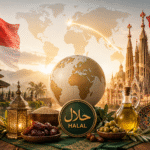
The halal industry has evolved far beyond its traditional roots in food and beverages. Today, the halal ecosystem encompasses cosmetics, pharmaceuticals, finance, tourism, and even digital services . This expansion reflects the growing sophistication of Muslim consumers who seek products and services that align with their faith, values, and modern lifestyle requirements .
Global Halal Market Value by Segment (2022)
| Segment | Estimated Value (USD) | Growth Outlook |
|---|---|---|
| Food & Beverages | $1.67 trillion | 7.1% annual growth |
| Modest Fashion | $375 billion | 6.1% annual growth |
| Media & Recreation | $308 billion | 7.5% annual growth |
| Pharmaceuticals | Growing segment | Significant potential |
| Cosmetics | $477 billion (2024) | Expanding rapidly |
| Shariah Finance | Major investment sector | 66.4% of total investment |
Source: State of the Global Islamic Economy Report, 2022; industry analysis
Halal certification principles now apply across entire supply chains, from raw materials to finished products. For pharmaceutical companies like Sinopharm, this means developing medicines that comply with Shariah standards . For cosmetics brands entering markets like Indonesia, halal certification has become essential for market access . This broadening scope presents both opportunities and challenges for producers worldwide.
China’s Unexpected Leadership in Halal Production
Despite having only 22 million Muslims, representing approximately 1.8% of its population, China has become the world’s number one halal product producer . This achievement stems from the country’s industrial prowess, strategic infrastructure investments, and proactive government policies .
The Belt and Road Initiative has been particularly instrumental in China’s halal expansion, opening trade routes to Muslim-majority markets across Asia, Africa, and Europe . Chinese halal industrial centers in regions like Ningxia and Xinjiang have attracted significant investment through tax incentives and infrastructure development . These special economic zones position China as a strategic production hub for halal goods.
China’s Halal Market Growth Projections
| Metric | 2025 Value | 2034 Projection | CAGR |
|---|---|---|---|
| China Halal Food Market | $320.19 billion | $11,436.78 billion | 48.72% |
| Global Halal Food Market Share | 8.21% | Growing significantly | – |
Source: Deep Market Insights, 2026
International cooperation has further accelerated China’s rise. Bilateral trade agreements with Indonesia and Malaysia, along with participation in global halal exhibitions, have strengthened China’s export capabilities . Recent diplomatic efforts between Indonesia’s Halal Product Assurance Agency (BPJPH) and Chinese halal institutions demonstrate the growing recognition of China’s halal ecosystem .
The Certification Challenge: Building Global Trust
Halal certification remains the most significant obstacle to China’s full integration into the global halal market. Unlike countries such as Malaysia, which has internationally recognized certification bodies, China lacks an integrated national halal certification standard .
This fragmentation creates confusion for international buyers and undermines consumer confidence. The absence of centralized oversight has led some Chinese companies to pursue multiple certifications from different bodies, which often fails to provide access to key markets . For example, Indonesian halal certification typically applies only within Indonesia, while Saudi and other Middle Eastern countries require higher levels of verification from farm to finished product .
Key Challenges for Chinese Halal Certification:
- No unified national halal certification standard
- Varying certification requirements across regions
- Limited international recognition of Chinese halal bodies
- Consumer perception issues regarding product authenticity
- Compliance burdens for small and medium enterprises
The Indonesian government has recognized these challenges and is actively working with Chinese halal institutions to align standards ahead of mandatory halal certification requirements scheduled for October 2026 . Such cooperation represents a critical step toward building the international trust needed for China to fully leverage its halal production capacity.
Emerging Opportunities in Halal Sectors
Beyond traditional food products, several halal sectors offer significant growth opportunities for Chinese producers. The halal cosmetics market in China, while experiencing recent volatility, continues to attract international investment, with top exporters including France, Japan, South Korea, and the United States .
Halal tourism presents another promising avenue, with cities like Xi’an and Shanghai becoming popular destinations for Muslim travelers . The development of Muslim-friendly facilities, halal food options, and appropriate accommodation reflects China’s commitment to diversifying its halal market portfolio.
Digital transformation is reshaping the halal landscape. E-commerce platforms and mobile applications now enable consumers worldwide to access Chinese halal products more easily . Companies that leverage these technologies effectively can significantly boost sales and market penetration.
Fastest-Growing Halal Sectors:
- Packaged food products (ready-to-eat meals, frozen items)
- Beverages (functional drinks, plant-based alternatives)
- Cosmetics and personal care
- Pharmaceuticals and medical devices
- Halal tourism and hospitality services
- Shariah-compliant financial products
Navigating Cultural and Regulatory Complexities
For Chinese companies seeking to enter Muslim markets, cultural understanding extends far beyond obtaining halal certification. Legal frameworks, business practices, and workplace cultures vary significantly across the Islamic world .
In Middle Eastern markets, contract law presents particular challenges. Chinese contractors have faced substantial losses due to unfamiliarity with local contract provisions, particularly regarding design changes and project delays . Similarly, cultural factors such as prayer schedules, Ramadan observance, and local employment quotas require careful management and adaptation.
Small and medium enterprises often struggle with marketing to Muslim consumers. Unauthorized use of religious symbols, misleading halal claims, or even well-intentioned but culturally inappropriate packaging can result in fines or legal action . These mistakes underscore the importance of local knowledge and cultural sensitivity in halal market expansion.
Cultural Considerations for Market Entry:
- Respect for prayer times and religious holidays
- Understanding of local employment requirements
- Compliance with Islamic legal standards
- Appropriate product labeling and certification
- Sensitivity to religious symbols and imagery
- Adaptation to local business customs
The Path Forward: Strategic Recommendations
China’s success in the halal industry over the next decade will require coordinated efforts from government, industry, and international partners. Several strategic priorities emerge from this analysis.
Strengthening Certification Systems
Developing a unified national halal certification standard that meets international requirements should be a top priority. This could involve centralizing oversight, harmonizing regional standards, and establishing mutual recognition agreements with key trading partners .
Enhancing International Cooperation
Building on existing partnerships with Muslim-majority countries, China should expand collaborative efforts in technology transfer, joint venture production, and distribution network development . Regular diplomatic and business exchanges can build the trust essential for long-term commercial relationships.
Leveraging Digital Technologies
Blockchain technology offers particular promise for ensuring halal supply chain transparency and authenticity . Artificial intelligence and big data analytics can help producers understand consumer preferences and optimize production .
Investing in Consumer Education
Chinese halal producers should invest in marketing that emphasizes quality, safety, and ethical production. International consumers increasingly view halal certification as an indicator of product excellence, and Chinese producers can benefit from this perception .
Conclusion: A Decade of Opportunity
The next ten years will define China’s role in the global halal economy. With its manufacturing capacity, infrastructure investment, and strategic positioning, China possesses the foundation for halal industry leadership. However, realizing this potential requires overcoming certification challenges, building international trust, and demonstrating cultural sensitivity.
The rewards are substantial. As one of the fastest-growing consumer markets globally, the halal sector offers economic opportunities that extend beyond religious observance to encompass quality, sustainability, and ethical production. For China, success in this industry represents not just a commercial opportunity but a contribution to inclusive global economic growth .
Countries and companies that can navigate the complexities of halal certification and cultural adaptation will be well-positioned to benefit from this expanding market. China’s journey from the world’s largest halal producer to a globally trusted halal leader will require continued investment, strategic cooperation, and commitment to the highest standards of quality and authenticity .
Reference:
Other Articles: