Before penicillin. Before MRIs. Before modern nursing. There was the Bimaristan—a revolutionary hospital system that treated mental illness with music, required doctors to pass licensing exams, and welcomed patients of every religion, race, and social class.
Imagine a hospital where flowing fountains and fragrant gardens are considered essential medicine. Where musicians are employed to calm anxious patients. Where a patient with mental illness receives not chains and neglect, but occupational therapy, massage, and even bloodletting—all delivered with dignity.
This was not a futuristic vision. This was the Bimaristan, the pioneering hospital system of the medieval Islamic world. And it existed over 1,200 years ago.
While Europe languished in the so-called “Dark Ages,” the Islamic world was building something extraordinary: the first true hospitals in human history. These institutions—known as Bimaristans, from the Persian words “bimar” (sick) and “stan” (place)—were not mere shelters for the dying . They were centers of healing, teaching, and research that would influence medicine for centuries to come.
The Birth of the Hospital
The story begins in 8th-century Baghdad, the glittering capital of the Abbasid Caliphate and one of the world‘s most advanced cities. According to most historians, the first agreed-upon Bimaristan was built around 805 CE during the reign of Caliph Harun al-Rashid .
But Baghdad was just the beginning. Within decades, similar hospitals sprouted across the Islamic world—in Damascus, Cairo, Aleppo, Fez, Marrakech, and even in Makkah and Madinah . By the 9th century, more than 34 hospitals were operating throughout the Islamic empire .
What made these institutions so revolutionary? Several things:
1. They were for everyone. Unlike European hospitals of the same era (which were often religious charities that prioritized prayer over treatment), Bimaristans were secular institutions open to all—men and women, Muslim and Christian, rich and poor, free and enslaved .
2. They had specialized wards. Patients were not thrown into a single room. Bimaristans featured separate departments for internal medicine, surgery, ophthalmology (eye diseases), orthopedics, fever, and mental illness .
3. They employed trained professionals. Salaried physicians, pharmacists, nurses, and orderlies staffed these hospitals . Some even had notaries and administrators to handle paperwork .
4. They were teaching hospitals. The ablest physicians—names like Al-Razi (Rhazes) and Ibn Sina (Avicenna)—served as both hospital directors and deans of medical schools . Students learned through ward rounds, patient discussions, and meticulous record-keeping.
Major Bimaristans and Their Innovations
A Hospital Fit for a King (and a Beggar)
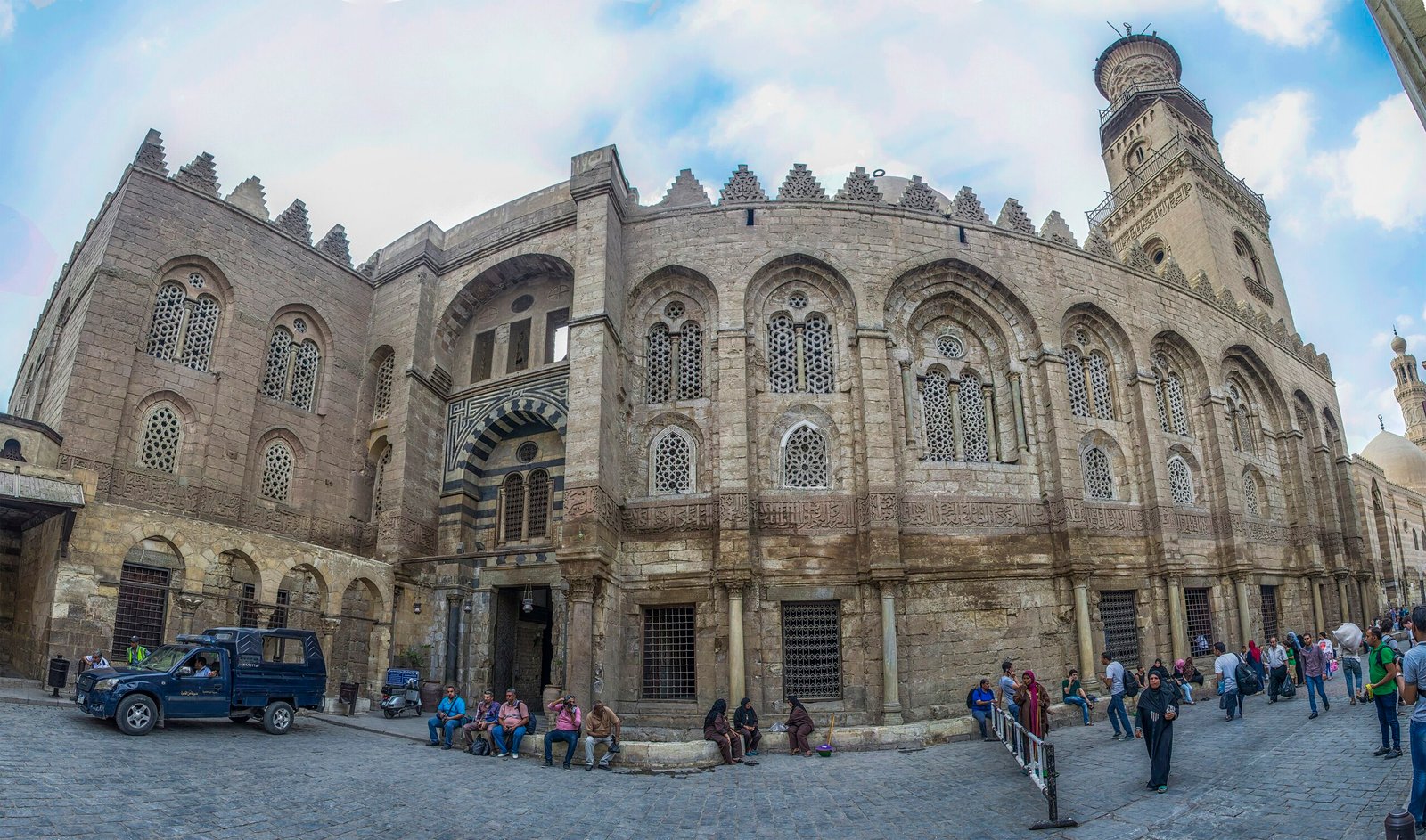
Perhaps the most magnificent Bimaristan ever built was the Al-Mansuri Hospital in Cairo, established in 1284 CE by the Mamluk Sultan Al-Mansur Qalawun .
Legend has it that Qalawun was inspired to build the hospital after being saved from a lethal illness at the Bimaristan Nur al-Din in Damascus . He spared no expense. The Al-Mansuri Hospital could accommodate 8,000 patients simultaneously—a capacity that rivals many modern hospitals .
Its annual operating budget, funded entirely by religious endowments (waqfs), was one million dirhams . That’s roughly equivalent to millions of dollars today.
The hospital‘s features were astonishing for the 13th century:
- Separate wards for men and women, staffed by nurses of the same sex
- Specialized departments for medicine, surgery, fever, wounds, mania, and eye diseases
- An in-house pharmacy to prepare medications
- A library stocked with medical manuscripts
- A mosque for prayer, and occasionally a chapel for Christian patients
- Musicians employed to comfort and cheer patients
Patients were treated without regard to their color, religion, sex, age, or social status . Upon admission, their clothes and money were safely stored. They received clean hospital garments, free medication, and physician-supervised meals. There was no time limit on treatment—patients could stay until they were fully recovered .
Upon discharge, patients not only got their belongings back but also received clean clothes and a monetary stipend to compensate for lost wages and help them re-establish their livelihoods .
Healing the Mind: Mental Health Care in the Middle Ages
Long before modern psychiatry, Bimaristans were treating mental illness with remarkable compassion and sophistication.
Specialized wards for mentally ill patients existed in many Bimaristans . The treatments were surprisingly modern:
- Occupational therapy (ergotherapy) — patients were engaged in meaningful activities
- Herbal medicines and drugs to address symptoms
- Massage and bloodletting (based on the humoral theory of the time)
- Beautiful environments — fountains, gardens, fresh air, and natural light were considered essential to healing
The architectural design of Bimaristans reflected this therapeutic philosophy. Most were built around a central rectangular courtyard with a fountain at its center . Trees, fragrant flowers, and green plants surrounded the courtyard. The sound of bubbling water and the cool shade were thought to calm the mind.
As one researcher explains: “The idea that beauty founded on balance, harmony, and rhythm is healing” was central to Bimaristan design .
The Bimaristan Arghun al-Kamili in Aleppo (built 1354 CE) even had a highly secured wing for dangerous mentally ill patients, with barred windows and limited access to prevent harm to themselves or others . Meanwhile, patients with mild mental illness were treated in the open courtyard, where they could benefit from fresh air and social interaction .
The First Licensing Exams and Medical Records
The Bimaristans gave us two other innovations we now take for granted: physician licensing and medical records.
The story goes that in 931 CE, a patient in Baghdad died as a direct result of a physician‘s error . When Caliph Al-Muqtadir learned of this, he was furious. He ordered his chief physician, Sinan ibn Thabit, to examine every single person practicing medicine in the city.
Of the 860 practitioners examined, 160 failed . They were banned from practicing.
From that moment on, licensing examinations became standard across the Islamic world. A government official called the Muhtasib (inspector general) oversaw the process. Aspiring physicians had to pass both oral and practical exams administered by the chief physician. If successful, they swore the Hippocratic Oath and received their license .
Bimaristans also pioneered written medical records . Students were responsible for keeping detailed records of each patient—symptoms, treatments, progress, and outcomes. These records were later compiled, edited by clinicians, and formatted into what became known as “treatments based on repeated experience” (an early form of evidence-based medicine).
Mobile Hospitals: Bringing Care to the People
Perhaps the most surprising innovation was the mobile Bimaristan —literally, a hospital on wheels .
The concept dated back to the time of the Prophet Muhammad, when a separate tent was erected for wounded soldiers during the Battle of the Ditch . Over time, these “MASH units” evolved into true traveling dispensaries.
By the reign of the Seljuq Turkish Sultan Muhammad Saljuqi, the mobile Bimaristan had become so extensive that its equipment required forty camels to transport it . These mobile clinics carried doctors, pharmacists, nurses, tents, instruments, and medicines. They traveled to remote villages and disadvantaged communities, ensuring that even those far from major cities could receive quality medical care .
A Legacy That Shaped Europe
The influence of Bimaristans did not stay within the Islamic world. When European Crusaders traveled to the Middle East during the 11th-13th centuries, they encountered these sophisticated hospitals and brought the knowledge back to Europe .
The first hospital in Paris —Les Quinze-Vingts—was founded by King Louis IX after his return from the Crusade between 1254 and 1260 .
More directly, the Maristan of Sidi Frej in Fez, Morocco (13th century), served as the model for the first Western psychiatric hospital, which opened in Valencia, Spain, in 1410 . A plaque placed by the Moroccan Association of the History of Medicine in 1993 commemorates this direct line of influence.
The Bimaristan Nur al-Din in Damascus (built 1154-1156 CE) is still standing today, now functioning as the Museum of Arabic Medicine and Science . Visitors can walk through its four grand iwans (vaulted halls), admire its intricate red-brick muqarnas dome, and stand in the same lecture hall where medical students gathered over 850 years ago .
Bimaristan Innovations vs. European Medicine at the Time
Key Insight: The Bimaristan model was centuries ahead of European medicine. It took Europe until the Renaissance and Enlightenment to catch up to what the Islamic world had already perfected.
Why This History Matters Today
The Bimaristan story is not just a fascinating footnote. It challenges two common assumptions:
First, that “modern medicine” is purely a Western invention. The hospital as we know it—with specialized wards, trained staff, pharmacies, libraries, and teaching functions—was perfected in the Islamic world centuries before similar institutions appeared in Europe.
Second, that pre-modern medicine was uniformly cruel or ineffective, especially regarding mental health. The Bimaristans treated mental illness with music, occupational therapy, and compassionate care—approaches that align remarkably well with contemporary psychiatric practice.
As one researcher put it: “The planning and building of an institution typologically comparable to modern hospitals… represented, both medically and architecturally, a great achievement of the medical Islamic society” .
The End of an Era
The golden age of Bimaristans began to decline after the Mongol sack of Baghdad in 1258 CE and the Spanish Reconquista in the late 1400s . Many of the medical contributions of the Islamic world were lost to the West until recently.
But the buildings themselves endured. Some, like the Bimaristan Nur al-Din, were preserved as museums. Others, like the Al-Mansuri Hospital in Cairo, continued functioning—albeit with diminishing resources—into the Ottoman period and beyond.
Today, efforts are underway to digitally preserve these architectural treasures. Project Anqa, a collaboration between CyArk, ICOMOS, and Carleton University with support from Arcadia Foundation, has created detailed 3D digital documentation of the Bimaristan Nur al-Din to protect it for future generations .
A Call to Remember
The Bimaristans remind us that compassion, science, and beauty have always been intertwined in the practice of medicine. They treated the poor and the powerful with equal dignity. They believed that gardens and music were as important as drugs and surgery. They educated generations of physicians who preserved and expanded the medical knowledge of antiquity.
Their legacy lives on in every hospital room, every medical license, and every patient record. It lives on in the simple idea that healthcare should be available to all—regardless of ability to pay.
And in a time when modern healthcare often feels rushed, impersonal, and fragmented, perhaps we could learn something from the Bimaristans: that healing is not just about treating disease, but about caring for the whole person—body, mind, and spirit.
Reference: here
Other Articles: