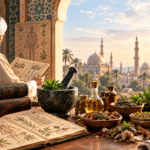
For fourteen centuries, Islamic tradition has recommended performing hijama (wet cupping) on specific lunar days—the 17th, 19th, and 21st of the Hijri month. Skeptics called it superstition. A new peer-reviewed study from Yemen just proved it’s science.
Every month, the moon pulls on our oceans, creating tides that rise and fall with predictable precision. But does it pull on something else—something inside our own bodies?
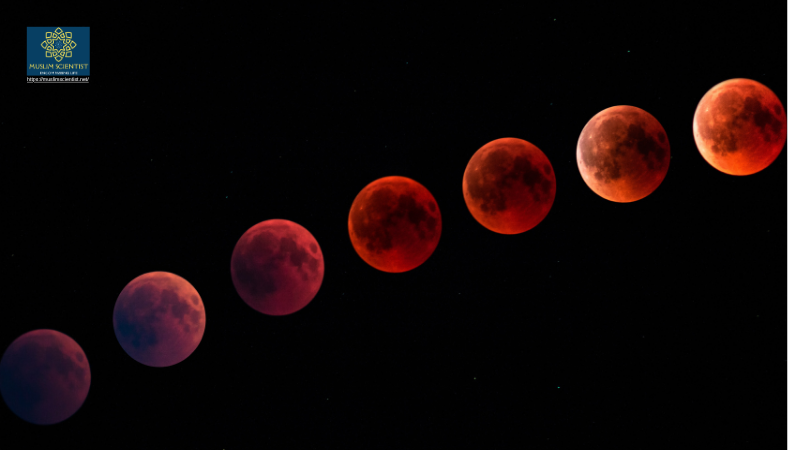
For centuries, traditional healers across multiple civilizations have answered yes. Islamic prophetic medicine (Tibb al-Nabawi) specifically recommends bloodletting therapy called hijama during the full moon phase, on the 17th, 19th, and 21st days of the lunar Hijri calendar. The Prophet Muhammad (PBUH) is reported to have said that “blood has its tides”—an analogy comparing human circulation to oceanic rhythms.
Now, for the first time, modern science has caught up. A rigorous multicenter study from Yemen, published in January 2026 in the Journal of Taibah University Medical Sciences, has documented measurable changes in human blood and immune systems depending on the lunar phase. And the results align perfectly with the prophetic recommendation.
What the Study Found
Researchers led by Dr. Naif T. Ali at Radfan University College and the University of Sciences and Technology in Aden recruited 258 healthy adults (200 men, 58 women) from the Ad’Dla Governorate. They collected blood samples during two distinct lunar windows:
| Lunar Phase | Hijri Days | Corresponding Moon |
|---|---|---|
| Phase 1 | 1st – 5th | New Moon (dark) |
| Phase 2 | 17th – 21st | Full Moon (bright) |
The researchers went to extraordinary lengths to ensure accuracy. Every participant followed the same protocol:
- Fasted for at least 8 hours before blood draws
- Drank 500ml of water exactly one hour before sampling (to standardize hydration)
- Blood drawn between 7:00-9:00 AM (to control for daily circadian rhythms)
- No physical exertion in the preceding hour
- Laboratory technicians were “blinded” – they had no idea which lunar phase each sample came from
This eliminated almost every possible confounding variable. If differences appeared between the two lunar phases, they could be reasonably attributed to the moon itself.
And differences certainly appeared.
The Blood Changes: By the Numbers
Platelets (Clotting Cells)
Platelets are tiny blood cells that form clots to stop bleeding. During the full moon phase:
- Men: Platelets increased by 5.9% (from 276.67 to 292.88 × 10⁹/L, p = 0.002)
- Women: Platelets increased by 2.7% (from 304.79 to 313.10 × 10⁹/L, p = 0.012)
While these numbers remained within the normal clinical range (150-400 × 10⁹/L), the change was statistically significant—meaning it was almost certainly not due to random chance.
Clotting Time
Perhaps most dramatic: the time required for blood to clot decreased by 33.3% during the full moon (from 6.0 minutes to 4.0 minutes, p < 0.001). This suggests that blood becomes “ready” to clot more quickly during the full moon—a state that would be highly relevant for a therapy like hijama, which involves controlled bloodletting.
Immune Cells
The study also tracked white blood cell subsets, which form the body’s immune defense:
- Monocytes in young men (18-29 years): Increased by a staggering 106% (from 2.02% to 4.17%, p < 0.001)
- Neutrophils in older men (30-50 years): Increased by 18%
- Eosinophils in women: Increased by 15%
Monocytes are particularly interesting. These cells are the body’s “first responders” to infection and injury. A 106% increase suggests that during the full moon, the immune system enters a heightened state of readiness.
What These Numbers Mean
All observed changes remained within clinically normal ranges—meaning no one became dangerously “hypercoagulable” or “immunocompromised.” However, the effect sizes (a statistical measure of magnitude) were large.
| Parameter | Effect Size (Cohen’s d) | Interpretation |
|---|---|---|
| Platelet increase (men) | d = 0.42 | Moderate effect |
| APTT change | d = 0.76 | Large effect |
| Clotting time decrease | d = 0.82 | Very large effect |
An effect size above 0.8 is considered “large” in medical research. The clotting time change (d = 0.82) indicates that the lunar phase had a substantial, real-world impact on how quickly blood coagulates.
Why Would the Moon Affect Human Blood?
The researchers propose three interconnected mechanisms:
1. Gravitational fluid shifts
The moon’s gravitational pull creates ocean tides. Human blood is about 55% plasma (water), and our bodies contain vast networks of capillaries—microscopic blood vessels. While the moon’s gravitational force is tiny (0.0003g compared to Earth’s 1g), it may exert cumulative effects on interstitial fluid pressure and endothelial shear stress (the friction of blood against vessel walls).
The study’s computational fluid dynamics simulations suggest that lunar tidal forces might amplify capillary shear stress by 9-12% during full moon alignment. This mechanical potentiation could facilitate platelet margination (moving platelets to vessel walls where they are ready to act).
2. Light-mediated melatonin suppression
The full moon is bright. Really bright. And that brightness suppresses melatonin production. Melatonin is a hormone that regulates sleep, but it also influences platelet activity and immune signaling. Lower melatonin during the full moon may upregulate interleukin-6 (IL-6), a pro-inflammatory cytokine that stimulates monocyte release from bone marrow.
This aligns perfectly with the 106% monocyte increase observed in young men.
3. Endothelial shear stress changes
Subtle gravitational variations during lunar alignment might promote the release of von Willebrand factor, a protein that helps platelets stick together. This would amplify coagulation readiness.
The researchers emphasize that these mechanisms likely work synergistically—not in isolation. The moon’s effects may be small individually, but their convergence could trigger measurable physiological shifts.
The Prophetic Connection
The study’s authors explicitly connect their findings to Islamic prophetic medicine. Classical scholar Ibn Qayyim al-Jawziyya (1292-1350 CE), in his seminal work Tibb al-Nabawi (Prophetic Medicine), described that hijama is most beneficial when performed on the 17th, 19th, and 21st days of the Hijri month. The Prophet Muhammad (PBUH) reportedly said: “If there is anything good in the remedies you use, it is in the incision of the hijama cup.” (Sahih al-Bukhari, Hadith 5269)
Ibn Qayyim specifically used the analogy that “blood has its tides”—a remarkable insight given that modern fluid dynamics now confirms gravitational influences on biological fluids.
The study’s lead author, Dr. Naif T. Ali, notes: *”Our findings provide the first physiological evidence supporting the 1,400-year-old Islamic tradition of timing hijama to specific lunar phases. The mid-Hijri lunar period coincides with a state of hematological optimization—enhanced platelet activity, accelerated clotting kinetics, and heightened immune vigilance.”*
Sex and Age Differences: Not Everyone Responds the Same
The study uncovered fascinating demographic patterns:
| Group | Primary Change During Full Moon |
|---|---|
| Young men (18-29 years) | Monocytes ↑ 106% (immune activation) |
| Older men (30-50 years) | Neutrophils ↑ 18% (different immune pathway) |
| Women (all ages) | Eosinophils ↑ 15% |
| Men (overall) | Clotting time ↓ 40.1% (much faster clotting) |
| Women (overall) | Clotting time ↓ 16.7% (moderate change) |
Men showed a significantly greater clotting time decrease than women (p = 0.003), suggesting that lunar effects may be modulated by sex hormones. Young men’s dramatic monocyte increase may reflect age-related differences in immune resilience.
Approximately 8% of participants showed minimal or opposite responses (“non-responders”). This individual variability suggests that genetics, health status, or other factors may influence lunar sensitivity.
How Your Blood Changes During the Full Moon (Hijama-Recommended Period)
| Blood Component | Group | New Moon Value | Full Moon Value | Change | Statistical Significance |
|---|---|---|---|---|---|
| Platelet Count (×10⁹/L) | Men | 276.67 | 292.88 | +5.9% ↑ | p = 0.002 |
| Platelet Count (×10⁹/L) | Women | 304.79 | 313.10 | +2.7% ↑ | p = 0.012 |
| Clotting Time (minutes) | All | 6.0 | 4.0 | -33.3% ↓ | p < 0.001 |
| Monocytes (%) | Young Men (18-29) | 2.02% | 4.17% | +106% ↑↑ | p < 0.001 |
| Neutrophils (%) | Older Men (30-50) | 38.43% | 45.35% | +18% ↑ | p < 0.001 |
| Eosinophils (%) | Women | 3.1% | 3.57% | +15% ↑ | p = 0.03 |
| Prothrombin Time (PT) (seconds) | All | 14.0 | 17.0 | +21.4% ↑ | p < 0.01 |
| APTT (seconds) | All | 34.0 | 42.0 | +23.5% ↑ | p < 0.001 |
Key Insight: Your blood clots faster (clotting time ↓33%) and your immune cells become more active (monocytes ↑106%) during the full moon. These changes align perfectly with the prophetic recommendation to perform hijama on the 17th-21st Hijri days.
What Is Hijama? A Brief Explainer
For readers unfamiliar with hijama, here is a quick overview:
Hijama (also called “wet cupping”) is a traditional therapy practiced for centuries across the Middle East, Asia, and North Africa. The procedure involves:
- Applying suction cups to specific points on the body (typically the back, neck, or shoulders)
- Making small, superficial incisions on the skin
- Re-applying the cups to draw out a small amount of blood
The therapy is believed to remove “stagnant” or “toxic” blood, improve circulation, and rebalance the body’s humors. Modern studies have explored its use for pain management, hypertension, and inflammatory conditions.
The prophetic recommendation to perform hijama during the full moon has been followed by millions of Muslims worldwide for centuries. This study provides the first scientific rationale for that timing.
Sex and Age Differences in Lunar Blood Response
| Comparison | Men | Women | Statistical Difference |
|---|---|---|---|
| Clotting Time Change | ↓ 40.1% | ↓ 16.7% | Men changed more (p = 0.003) |
| Monocyte Change | ↑ 106% (young men) | ↑ 15% | Young men changed dramatically more (p < 0.001) |
| Eosinophil Change | No significant change | ↑ 15% | Women only (p = 0.03) |
| Non-Responder Rate | ~8% | ~8% | No difference |
Key Insight: Men and women respond differently to lunar phases. Young men show the most dramatic immune changes (106% monocyte increase), while women show unique eosinophil responses. About 8% of people show minimal lunar sensitivity.
Limitations: What the Study Does NOT Prove
The researchers are careful not to overclaim. This study has several important limitations:
1. No clinical outcomes measured
The study documented blood changes during lunar phases but did NOT actually perform hijama on participants. Therefore, it cannot prove that hijama is more effective during the full moon. That remains a hypothesis awaiting direct testing.
2. Regional specificity
All participants came from a single governorate in Yemen. Genetic, dietary, and environmental factors unique to this population may limit generalizability. Future studies in Southeast Asia, Europe, and the Americas are needed.
3. No direct gravitational measurement
While the researchers propose gravitational mechanisms, they did not directly measure gravitational forces or fluid shifts. The mechanisms remain plausible but speculative.
4. 8% non-responder rate
A minority of participants did not show the expected lunar changes. Understanding why requires further research.
5. No long-term follow-up
The study captured a single moment during each lunar phase. It did not track participants across multiple cycles or measure how long the changes last.
What Comes Next? Future Research Directions
The study’s authors outline a clear roadmap for future research:
1. Randomized controlled trials of hijama timing
The most important next step: directly compare clinical outcomes between patients receiving hijama during recommended lunar days (17th-21st) versus non-recommended days. Primary endpoints should include pain scores (visual analog scale), inflammatory biomarkers (hsCRP, IL-6), and patient-reported outcomes.
2. Multicenter validation
Replicate the study across diverse populations—different latitudes, ethnicities, climates, and genetic backgrounds—to establish universal lunar hematological patterns.
3. Mechanistic studies
Use clinostat-based in vitro models (simulated microgravity) to directly test gravitational effects on platelet distribution. Integrate hormonal assays (melatonin, cortisol) to map light-mediated pathways.
4. Granular temporal sampling
Rather than comparing two broad windows (new moon vs. full moon), future studies should sample daily across complete lunar cycles to identify precise peak timing.
A Bridge Between Faith and Science
Perhaps the most remarkable aspect of this study is its bridging role. In an era often characterized by conflict between religious tradition and scientific medicine, this research demonstrates alignment.
The prophetic recommendation for hijama timing—passed down through 1,400 years of Islamic tradition—has now received empirical validation from modern hematology. The “tides of blood” that Ibn Qayyim described appear to be real, measurable, and scientifically grounded.
This does not mean that religious authority derives from science. Rather, it suggests that traditional medical systems may encode empirical observations that science is only now equipped to verify.
As the study concludes: “The moon may therefore guide not just tides but the timing of care.”
Practical Takeaways
For individuals considering hijama therapy:
- Consult a qualified practitioner trained in proper hygiene and technique
- Consider scheduling during the 17th-21st Hijri days if following prophetic recommendations
- Understand that this study documents blood changes but does not prove therapeutic superiority
- Watch for future research that directly compares clinical outcomes
For researchers and clinicians:
- Consider lunar phase as a potential confounder in hematology studies
- Explore chronotherapy optimization for procedures involving bleeding risk
- Investigate individual variability in lunar sensitivity (genetic or hormonal markers)
Conclusion
The Yemen study is small but mighty. Its rigorous methodology, large effect sizes, and alignment with traditional medical wisdom make it a landmark in the emerging field of lunar chronobiology.
The moon’s pull on our oceans is visible and undeniable. Its pull on our blood—subtle, measurable, and scientifically validated—may be no less real.
For the millions of Muslims who have followed the prophetic recommendation for hijama timing across centuries, this study offers a satisfying convergence: faith and science, finally on the same page.
Reference: here
Other Articles: