Business experts have searched for the secret recipe to make employees more loyal, hardworking, and emotionally connected to their companies. Some pointed to higher salaries. Others emphasized bonuses, recognition programs, or fancy office perks. But a new study from Central Java, Indonesia, suggests that the answer might be much older, much deeper, and far more meaningful: faith-based ethics.
Specifically, researchers have found that Islamic work ethics — values like honesty, hard work, justice, helping others, and seeing work as an act of worship — strongly increase both an employee’s emotional attachment to their company and their actual job performance.
This discovery is not just a religious affirmation. It is a practical roadmap for family businesses, which form the backbone of economies across Asia, the Middle East, and beyond. In Indonesia alone, family businesses dominate the private sector, and with 86.7% of the population Muslim, these findings carry enormous weight.
The Study: Numbers Don’t Lie
The study titled “Islamic Work Ethics, Affective Commitment, and Employee’s Performance in Family Business: Testing Their Relationships”. This study surveyed 273 employees working in family businesses across the Pati, Batang, and Demak districts of Central Java. After filtering, 147 complete responses were analyzed — a solid 53.8% response rate.
Using Structural Equation Modeling (SEM) via AMOS 21 software, the researchers tested three main hypotheses. The results were striking: all three hypotheses were strongly supported.
“Islamic work ethics were confirmed to be positively and significantly associated with affective commitment and employee performance,” the authors wrote.
In plain language: When workers take Islamic ethics seriously, they become more emotionally loyal and perform better. And when they feel that emotional loyalty, their performance improves even further.
Who Participated?
This table helps you understand the 147 workers who took part in the study.
| Characteristic | Group | Percentage | What This Means |
|---|---|---|---|
| Gender | Male | 86% | Most respondents were men. |
| Female | 14% | Women were a minority in these family businesses. | |
| Age | Less than 30 years | 24% | About one in four is young. |
| 31–50 years | 67% | Two-thirds are middle-aged. | |
| More than 51 years | 9% | Only a small group is older. | |
| Work Experience | Less than 5 years | 22% | One in five is relatively new. |
| 5–10 years | 27% | Over a quarter have a decade of experience. | |
| More than 10 years | 51% | Half of all workers have been there for over ten years. |
Key takeaway for common people: These are experienced, middle-aged workers who have been with their family businesses for a long time. Their loyalty is already high, yet Islamic ethics still made a measurable difference.
What Exactly Are “Islamic Work Ethics”?
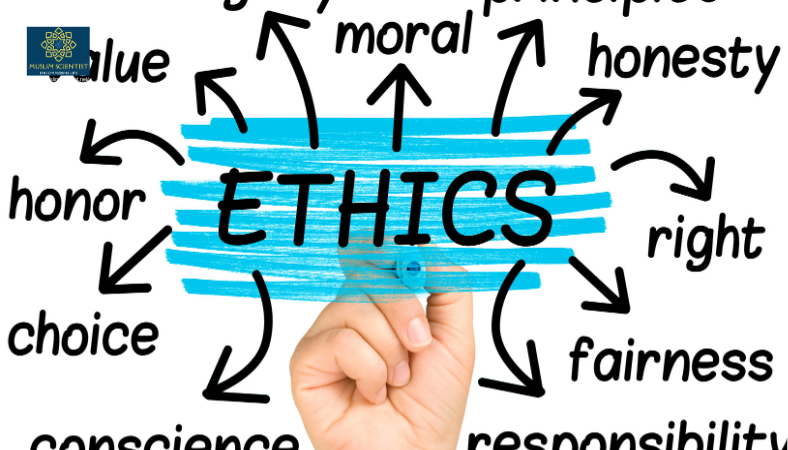
You might hear the term and think it is only about prayer or religious rituals. But according to the study, Islamic work ethics are practical, everyday behaviors rooted in the Qur’an and the teachings of Prophet Muhammad (PBUH).
The researchers measured six specific indicators:
- Dedication to work benefits both yourself and others.
- Justice and generosity at work are necessary for society’s welfare.
- One should carry out work to the best of one’s ability.
- Work is not an end in itself but a means to grow personally and socially.
- Life has no meaning without work.
- One should constantly work hard to meet responsibilities.
These are not vague religious slogans. They are concrete attitudes: show up on time, help a coworker with a heavy load, share information, listen to problems, and do your best because it is a form of worship.
“Islam views working as an obligation of religion for the realization of obedience to Allah,” the study explains. It also quotes a saying of the Prophet: “Not a single person eats better food than that produced from his own work.”
The Three Big Findings
| Relationship Tested | Strength of Link | Statistically Significant? | What This Means in Everyday Words |
|---|---|---|---|
| Islamic Work Ethics → Employee Performance | Very strong (0.97) | Yes | Workers with strong Islamic ethics perform much better. They work harder, help others, and take responsibility. |
| Islamic Work Ethics → Affective Commitment (Emotional Loyalty) | Very strong (0.86) | Yes | Islamic ethics make employees feel a deep emotional bond to their company. They are proud to work there. |
| Affective Commitment → Employee Performance | Very strong (0.96) | Yes | Emotionally loyal employees also perform better. They don’t just work for money — they care about the company’s success. |
Note: The numbers (0.97, 0.86, 0.96) are close to 1.00, which means nearly perfect positive relationships. In simple terms: the stronger the ethics, the stronger the loyalty and performance.
Why Does This Happen? The Science of Giving Back
The researchers used Social Exchange Theory to explain their findings. This theory, developed by sociologists like Blau and Emerson, says that human relationships are based on reciprocity. When an organization treats employees well — with fairness, respect, and ethical leadership — employees naturally want to give back.
In this case, when family businesses promote Islamic values like honesty, justice, and helping others, employees feel valued. They develop an emotional attachment, or “affective commitment.” And that attachment transforms into better performance: coming to work on time, helping new employees, sharing information, and going beyond the bare minimum.
“Employees become more productive and perform meaningfully when they feel emotional closeness to the organization,” the study states.
This is not just theory. The numbers prove it. Employees who scored high on Islamic work ethics also scored high on affective commitment and performance.
Why Family Businesses Specifically?
Family businesses are unique. They are not just economic entities; they are emotional ones. They are run by fathers, mothers, children, cousins, and in-laws. They aim to pass the business down through generations.
This creates both strengths and weaknesses. On the positive side, family members are often extremely loyal. On the negative side, conflicts are common, and non-family employees may feel left out.
The study focused on family businesses precisely because Islamic ethics — with their emphasis on fairness, care for others, and collective welfare — can heal those wounds. When a family business treats all employees (family or not) with Islamic fairness, everyone performs better.
“The strong culture of kinship and closeness motivates their involvement in boosting family businesses,” the authors note.
Real-World Lessons for Bosses and Workers
For Business Owners (Especially Family Businesses)
- Don’t separate faith from work. Islamic ethics are not just for mosques or Fridays. Integrate them into daily operations: encourage honesty, reward helpfulness, and model hard work.
- Build emotional loyalty, not just financial incentives. The study shows that affective commitment is a powerful driver of performance. Celebrate your company’s mission, treat employees like family, and show genuine care.
- Hire and train for values. Skills can be taught. Honesty, dedication, and justice are harder to train but more valuable. Use Islamic work ethics as a hiring and evaluation framework.
For Employees
- Your ethics matter. Working hard, helping colleagues, and being honest are not just “good deeds.” They directly improve your performance and career growth.
- Emotional connection is powerful. If you feel proud of your company and attached to its mission, you will naturally perform better. Seek workplaces that align with your values.
- Work is worship. In Islam, earning an honest living is an act of obedience to Allah. This mindset transforms daily work from a grind into a meaningful duty.
What the Study Could Not Do (Limitations)
Honest researchers always mention weaknesses. This study had three main limitations:
- Small sample size – Only 147 respondents, all from three districts in Central Java. The findings might not apply to all of Indonesia or other countries.
- Self-reported data – Employees rated their own ethics, commitment, and performance. This can create bias (people rate themselves higher than reality).
- No distinction between family and non-family employees – The study did not separate responses from family members versus regular employees. Their motivations might differ.
The authors recommend future research in government offices, hospitals, schools, and other sectors, including demographic factors like gender, education, and income.
A Quiet Revolution in Management
What makes this study so refreshing is its simplicity. In an age of complex HR software, performance reviews, and gamified motivation apps, the researchers found that ancient ethical teachings still work.
You do not need to be Muslim to learn from this. Every culture has its own work ethics: honesty, hard work, fairness, and community. This study shows that when any organization genuinely lives those values, employees respond with loyalty and effort.
For Indonesia, the world’s largest Muslim-majority nation, these findings are particularly relevant. Family businesses can stop seeing Islamic values as “soft” or “religious-only.” Instead, they can embrace them as performance tools.
“The love and loyalty of employees for the organization must be encouraged to stimulate their willingness to settle and realize the goals of the company,” the authors conclude.
Final Takeaway
The next time you hear someone say that religion and business should be kept separate, remember this study. In a family business in Central Java, Islamic work ethics did not just make people “feel good.” They made people work better, stay longer, and care more.
That is not just faith. That is smart management.
Reference: here
Other Articles: