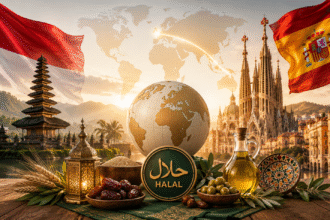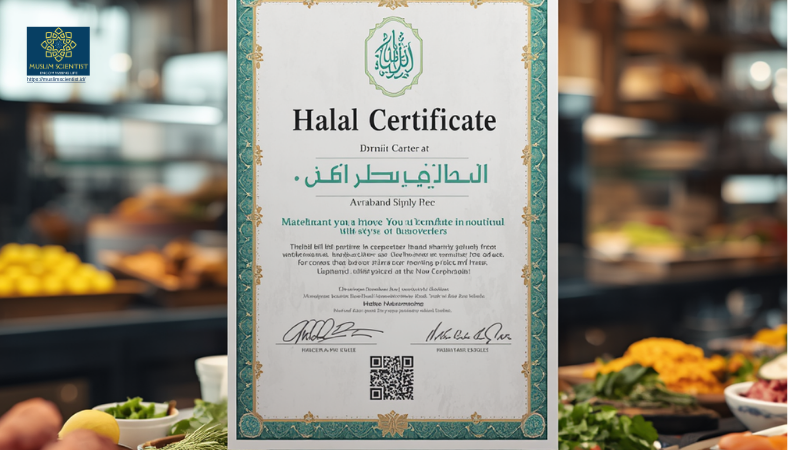
Every time a Muslim consumer buys packaged meat, a quiet legal battle unfolds. That small halal logo represents more than religious compliance. It stands at the center of a growing conflict between divine law and international trade rules. A new academic study has now mapped this confrontation in detail.
The research, published in May 2026, examines how Shariah-based halal certification fits within the World Trade Organization’s legal framework. The findings reveal deep tensions. Religious obligations derived from the Quran do not easily translate into the secular language of trade agreements. Consequently, Muslim-majority nations face an uncomfortable choice: honor divine commands or comply with global trade disciplines.
Key Differences Between Shariah and WTO Legal Systems
| Aspect | Shariah (Islamic Law) | WTO Trade Law |
|---|---|---|
| Source of legitimacy | Divine revelation (Quran & Sunnah) | Treaty obligations & state consent |
| Basis for food rules | Religious obligation (fard) | Scientific evidence & necessity |
| View of halal vs non-halal meat | Ontologically different products | Physically “like products” |
| Standard-setting authority | Islamic jurisprudence (fiqh) & ijtihad | Codex Alimentarius & SPS Agreement |
| Flexibility mechanism | Ijma (consensus), qiyas (analogy), istihsan | Public morals exception (GATT Art. XX) |
What Exactly Is Halal Certification?
Halal comes from an Arabic word meaning “permissible.” Under Islamic law, it defines what Muslims may lawfully consume or use. The opposite is haram, or forbidden. The Quran provides clear guidance on this matter. Surah Al-Baqarah (2:168) instructs believers: “O mankind, eat from whatever is on earth that is lawful (halalan) and pure (tayyiban).”
This verse establishes two conditions. First, permissibility according to divine command. Second, wholesomeness in ethical and health terms. Together, these principles transform consumption from a mere economic activity into an act of worship.
The most sensitive area involves meat production. Surah Al-Maidah (5:3) explicitly forbids carrion, blood, pork, and animals slaughtered without invoking Allah’s name. Therefore, proper slaughter requires a Muslim to recite God’s name while cutting the animal’s throat. This ritual act, called tasmiyah, carries profound religious significance. Without it, the meat becomes haram regardless of its physical quality.
Jurists across different Islamic schools of thought — Hanafi, Shafi’i, Maliki, and Hanbali — have developed detailed rules around these requirements. Their interpretations sometimes differ. For instance, the Hanafi school accepts meat slaughtered by Jews and Christians as long as God’s name is mentioned. The Shafi’i school, however, requires a more explicit invocation. Such diversity reflects the richness of Islamic jurisprudence, not inconsistency.
How WTO Rules Work (And Why They Struggle With Religion)
The World Trade Organization oversees global trade through binding agreements. Its core principles include non-discrimination, transparency, and predictability. Two agreements matter most for halal certification: the Technical Barriers to Trade (TBT) Agreement and the Sanitary and Phytosanitary (SPS) Agreement.
The TBT Agreement regulates product standards and conformity assessments. Article 2.2 prohibits technical regulations that create unnecessary trade barriers. Legitimate objectives include protecting human health or preventing deceptive practices. Notably absent from this list is religious compliance.
The SPS Agreement deals with food safety and animal health measures. It requires that such measures be based on scientific principles and international standards. The Codex Alimentarius Commission, run by the World Health Organization and FAO, sets these benchmarks. Religious or ethical considerations do not qualify as scientific justifications.
This creates a structural problem. Halal certification stems from divine command, not empirical evidence. A Muslim country requiring imported meat to be halal cannot easily defend this measure under SPS rules. Nor does the TBT Agreement explicitly recognize religious objectives. Consequently, such requirements risk being challenged as technical barriers to trade.
The non-discrimination principle compounds this difficulty. Under GATT Articles I and III, WTO members must treat “like products” equally regardless of origin. Halal and non-halal meat appear physically identical. They share the same composition, taste, and nutritional value. WTO panels would likely classify them as like products. Therefore, treating them differently could violate national treatment obligations.
How WTO Agreements Apply to Halal Certification
| WTO Agreement | Key Requirement | Challenge for Halal Certification |
|---|---|---|
| GATT Art. I (MFN) | Treat like products from all members equally | Halal vs non-halal meat = “like products” despite religious distinction |
| GATT Art. III (National Treatment) | No discrimination between imported & domestic goods | Mandatory halal certification may burden imports |
| TBT Agreement Art. 2.2 | Regulations must not be more trade-restrictive than necessary | Religious objective not explicitly recognized as “legitimate” |
| SPS Agreement | Measures must be scientifically justified | Divine command ≠ scientific evidence |
| GATT Art. XX(a) | Public morals exception (limited) | Possible legal avenue, but strict tests apply |
The Public Morals Exception: A Narrow Door
WTO law does offer one potential escape route. GATT Article XX(a) allows members to adopt measures “necessary to protect public morals.” This exception has gained attention in recent dispute settlement cases.
In EC-Seal Products (2014), the Appellate Body accepted that animal welfare concerns could fall within public morals. The European Union’s ban on seal products was deemed legitimate, though ultimately found discriminatory in application. This ruling suggests that moral and ethical values can justify trade restrictions.
Halal certification advocates could similarly argue that their requirements protect the religious morals of Muslim populations. Many Muslim-majority states consider Islamic law part of their constitutional identity. Respect for religious obligations, therefore, constitutes a genuine public moral concern.
Nevertheless, two hurdles remain. First, the necessity test requires showing that no less trade-restrictive alternative exists. Second, the measure’s application must not be arbitrary or disguised protectionism. Halal certification must apply equally to domestic and imported products. If a country certifies local meat but not imports, the measure would likely fail.
Power Imbalances in Global Standard-Setting
The study highlights a critical dimension often overlooked: power asymmetry. Developed countries dominate international standard-setting bodies. The Codex Alimentarius Commission, though formally open to all members, requires significant technical expertise and financial resources. Developing nations struggle to participate effectively.
Consequently, the scientific-secular paradigm becomes entrenched as the default measure of legitimacy. Religious norms get relegated to the periphery. They appear as “exceptions” rather than equally valid regulatory frameworks. This outcome is not neutral. It privileges one epistemology while marginalizing others.
Muslim-majority countries face a double bind. Domestically, they must respect religious obligations. Internationally, they must navigate a system structurally biased against faith-based regulation. Exporters from developed nations, meanwhile, often view halal requirements as discriminatory non-tariff barriers.
The research draws on Third World Approaches to International Law (TWAIL) scholarship to critique this dynamic. Universalism in trade law, the paper argues, often masks particular interests. Secular rationality becomes the universal standard only because powerful states have the capacity to impose it.
Legal Pluralism as a Way Forward
Despite these tensions, the study offers constructive solutions. The concept of legal pluralism provides theoretical grounding for coexistence. Multiple normative orders can operate within the same social field without necessarily conflicting.
For WTO law, this means developing interpretive flexibility. Panels and the Appellate Body could adopt a more deferential approach to religiously grounded measures. The public morals clause could be interpreted generously, acknowledging that societies legitimately differ on what constitutes morality.
Mutual recognition agreements offer another practical path. Muslim-majority nations could negotiate bilateral or regional arrangements accepting each other’s halal certification standards. This would reduce transaction costs and regulatory fragmentation. The Organization of Islamic Cooperation (OIC) and its standard-setting body, SMIIC, could play coordinating roles.
Institutional reforms within the WTO would also help. Enhanced technical assistance for developing countries could level the playing field in standard-setting bodies. Greater representation of diverse legal traditions within dispute settlement panels would bring multiple perspectives to bear on interpretive questions.
What This Means for Muslim Consumers and Global Trade
For ordinary Muslims, this legal debate has real consequences. Halal certification provides assurance that their consumption aligns with divine commands. Without proper recognition, imported products may lack reliable certification. Alternatively, overly strict requirements may reduce product availability or raise prices.
For Muslim-majority countries, the stakes involve regulatory sovereignty. They must balance international obligations with constitutional commitments to Islamic law. Strategic engagement with WTO processes — including proactive participation in dispute settlement — becomes essential.
For the global trading system, the challenge involves legitimacy. A regime that systematically marginalizes religious norms cannot claim true universality. Accommodating diversity strengthens the system’s moral authority. Exclusion, conversely, breeds resentment and resistance.
The Quran offers guidance on coexistence. Surah Al-Kafirun (109:6) states: “For you is your religion, and for me is mine.” This ethic of respectful difference could inform institutional design. Uniformity is not the only path to predictability. Mutual accommodation within an agreed framework remains possible.
Conclusion: Toward Genuine Regulatory Coexistence
The study concludes that reconciling religious authenticity with secular trade governance demands more than technical fixes. It requires a paradigm shift. The WTO must move beyond false neutrality toward genuine pluralism. Secular rationality should not enjoy automatic priority over religious reasoning.
Halal certification represents a legitimate normative order. Its foundations differ from WTO law’s premises, but difference does not imply inferiority. Global trade justice demands that multiple epistemic frameworks receive equal respect.
For now, the tensions remain unresolved. Muslim countries continue navigating between divine obligation and trade discipline. The WTO continues operating within its secular framework. Yet the conversation has begun. Legal scholarship is mapping the terrain. Practical solutions are emerging. The path forward involves dialogue, institutional reform, and interpretive generosity.
Reference: here
Other Articles: