The Verse That Asks You to Examine Your Plate
“Then let man look to his food.” (Quran, Abasa: 24)
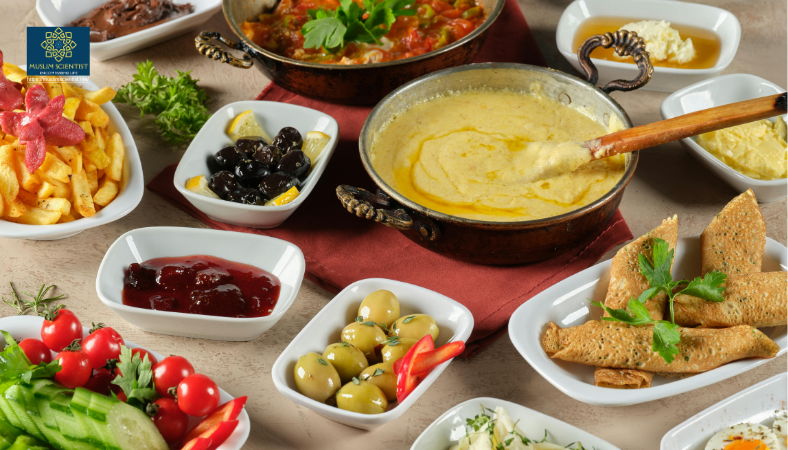
This short verse contains a powerful command. Look at your food. Examine it. Think about where it came from and what it does to your body.
A study interviewed 16 medical university faculty members about nutritional health in the Quran. These were doctors, PhDs, and specialists in fields like immunology, genetics, infectious diseases, and environmental health.
Their findings reveal something remarkable. The Quran mentions specific fruits, vegetables, meats, and drinks. It provides rules about what is lawful (halal) and unlawful (haram). It prescribes fasting as a spiritual and physical practice.
Modern science has confirmed many of these nutritional guidelines. But the Quran laid them out 1,400 years ago.
What the Researchers Did
The research team used a qualitative phenomenological approach. This method digs deep into personal experiences and perceptions. They interviewed 16 faculty members from Lorestan University of Medical Sciences in Iran.
| Participant Characteristic | Details |
|---|---|
| Total participants | 16 |
| Age range | 30-55 years |
| Educational level | PhD, Specialist, Sub-specialist |
| Fields represented | Immunology, Anatomy, Nursing, Environmental Health, Anesthesiology, Genetics, Midwifery, Infectious Diseases, Gastroenterology, Internal Medicine, Microbiology, Medical Physics, Medical Information, Medical Physiology |
| Total interviews | 20 (some participants interviewed twice) |
Each participant had experience reciting the Quran and reflecting on its verses. The main interview question was simple: “What is your perception of nutritional health in the Quran?”
From their answers, researchers extracted 244 distinct codes. These codes organized into three main categories: (1) importance of nutrition in the Quran, (2) reasons for foods being halal or haram, and (3) fasting.
Category One: The Quran’s Emphasis on Fruits and Vegetables
Faculty members pointed out that the Quran refers to specific fruits, vegetables, and foods. These include:
- Figs (At-Tin: 1)
- Olives (At-Tin: 1, Al-An’am: 141)
- Grapes (An-Nahl: 67, Al-Mu’minun: 19)
- Pomegranates (Al-An’am: 99, 141)
- Dates (Maryam: 25)
- Banana (Al-Waqi’ah: 29)
- Cucumber, lentil, garlic, onion (Al-Baqarah: 61)
- Honey (An-Nahl: 69)
One participant, a specialist in internal medicine, noted: “In addition to His swear on olives, He has mentioned it as a holy tree.” The Quran does not just name these foods. It swears by them. This indicates profound respect.
Another participant, an infectious disease specialist, explained why fruits matter for health: “Fresh fruits can prevent cancer and are rich in antioxidants. Therefore, I think it is an appropriate recommendation mentioned in the Quran.”
The faculty member in medical physics added a spiritual layer: “That Allah talks about streams with flowing honey and milk is probably for clarifying things. Heavenly blessings are not comparable with the things we use in this world. Allah wants to give a general picture of heaven and its blessings.”
Fruits and Foods Mentioned in the Quran (Faculty Identified)
| Food Item | Quranic Reference | Faculty-Noted Health Benefit |
|---|---|---|
| Figs | At-Tin: 1 | Laxative, anticancer properties |
| Olives | At-Tin: 1, Al-An’am: 141 | Olive leaf extract treats herpes, antioxidants |
| Grapes | An-Nahl: 67, Al-Mu’minun: 19 | Versatile consumption, various properties |
| Pomegranate | Al-An’am: 99, 141 | Rich in antioxidants |
| Dates | Maryam: 25 | High in antioxidants |
| Honey | An-Nahl: 69 | Effective against drug-resistant diseases |
| Banana | Al-Waqi’ah: 29 | Nutritional value |
| Cucumber, lentil, garlic, onion | Al-Baqarah: 61 | Various health benefits |
The Honey Miracle That Doctors Witnessed
One faculty member in nursing shared a powerful personal testimony: “What I’ve experienced is that honey is effective on many diseases that may not respond to drugs, besides each drug can have its own side effects.”
This aligns perfectly with Quranic verse 69 in Surah An-Nahl: “There comes forth from their bellies a drink of varying color, wherein is healing for men.”
Modern research has confirmed that honey contains antioxidants, fights bacteria, speeds wound healing, and soothes sore throats. A 2012 study cited by the paper notes that honey serves as a full meal. It provides nutrition, metabolic benefits, and therapeutic effects simultaneously.
Another faculty member in environmental health conducted original research on olive leaves: “I myself did a research on the effect of olive leaf extract, showing that it is effective on herpes treatment.”
An anatomy professor made an even more striking claim about figs and dates: “There are high amounts of antioxidants in dates as well, but there are much more in figs. They will completely destroy cancerous tumors in vitro if we purify their extract from figs. An anticancer drug is to be made using this extract.”
Category Two: Why Some Foods Are Halal and Others Haram
The faculty members discussed the logic behind Islamic dietary laws. They covered religious slaughter, wine prohibition, meat classifications, and consequences of consuming haram foods.
Religious Slaughter (Halal Zabihah):
A midwifery faculty member explained the health dimension: “One thing is bursting forth of the pulsating blood from the animal during slaughtering that is very important for us, Muslims. It is sometimes seen that meat devoid of this blood is more hygienic, and gets less rancid and infected.”
She continued: “In many places or tribes, meat is consumed as carrion, possessing this blood in the animal muscles. This involves infectious diseases or other problems that we may be unaware of, including the mad cow disease.”
Scientific research supports this. The more blood removed from meat, the healthier it becomes. Islamic slaughter allows maximum blood drainage compared to other methods.
Wine and Alcohol:
An infectious disease specialist detailed alcohol’s harms: “Consumption of alcoholic drinks is a factor that, we know, can cause numerous damages, including gastric cancer, and particularly hepatic cirrhosis, which is an acute hepatic disease resulting in dementia. A person’s thinking ability decreases due to intoxication by alcohol, and he or she may do actions not compatible with human dignity.”
The Quran prohibits alcohol in multiple verses. Modern medicine confirms liver damage, brain impairment, cancer risk, and social harm from drinking.
Pig Meat:
A medical physics professor explained the prohibition: “In the western culture, for giving an example of a physically or morally filthy person, pig is mentioned.”
Another participant noted that pigs carry dangerous parasites. Even if raised “hygienically,” the meat remains haram. The Quran forbids pig meat in four different verses, emphasizing its importance.
The paper cites an interesting behavioral reason: pigs show no jealousy regarding their mates’ sexual behavior. Consuming pig meat may transfer this lack of modesty to humans.
Consequences of Haram Consumption:
A PhD in medical information emphasized the spiritual dimension: “Nutrition during pregnancy affects the future of the baby. It is important whether the parents followed the rules of halal and haram.”
An environmental health professor framed it simply: “Anything that causes problems for human health is forbidden in Islam.”
Halal and Haram Foods According to Faculty Perceptions
| Food Category | Status | Reason Mentioned by Faculty |
|---|---|---|
| Carrion (dead animals) | Haram | Blood remains in muscles, causing infection |
| Blood | Haram | Unhygienic, disease risk |
| Pig meat | Haram | Parasites, high fat, moral corruption |
| Alcohol | Haram | Liver cirrhosis, dementia, cancer, immoral behavior |
| Properly slaughtered animals | Halal | Maximum blood drainage, hygienic meat |
| Fish | Halal | Refreshing divine blessing |
| Domestic cattle (cow, sheep, goat, camel) | Halal | Mentioned in Quran, used in traditional medicine |
| Fruits and vegetables | Halal (Tayyeb) | Rich in antioxidants, prevent cancer |
Category Three: Fasting for Body and Soul
The third major category focused on fasting. Faculty members distinguished between physical health benefits and spiritual purposes.
Physical Health Benefits:
A specialist in infectious diseases observed: “Fasting creates such a strong ambition in a person helping him to preserve himself against carnal desires including eating, drinking, and many diseases. With fasting, signs and symptoms decrease particularly in overweight patients, those with nervous colics, and nervous pains.”
Research cited in the paper shows that Islamic fasting:
- Improves immune system function
- Helps heal stomach ulcers
- Reduces metabolic disorders
- Prevents obesity-related diseases (cancer, coronary artery disease, hypertension, stroke, liver cirrhosis)
Spiritual Purpose:
Not all faculty members focused on physical benefits. A medical information professor stressed: “The reason of fasting mentioned in the Quran is not physical; the Quran says that it is for enhancing your piety.”
The Quranic verse (Al-Baqarah: 183) states: “O you who believe! Fasting is prescribed for you, as it was prescribed for those before you, so that you may guard against evil (attain piety).”
This creates an important balance. Fasting has real physical benefits. But the primary purpose remains spiritual discipline. Muslims fast to obey Allah, not merely to improve health.
The Quran’s Logic: Science Catches Up Later
One faculty member made a crucial observation: “It is always said that there is a reason for everything prohibited or recommended in the Quran. When it is haram, it has some damages for humans.”
The paper concludes with this powerful statement: “What has been mentioned in the Quran is what scientists have achieved over the time, since the Quran is governed by logic. Although we do not know the reasons for many things in the Quran, we consider it as the foundation.”
This means the Quran provides guidance. Science later discovers the wisdom behind that guidance. Figs prevent cancer. Honey heals. Fasting improves immunity. Alcohol damages the liver. Pig meat carries parasites.
All of these facts were unknown in 7th-century Arabia. Bedouin tribes had no microscopes, no clinical trials, no understanding of antioxidants or cirrhosis. Yet the Book they received contained precise nutritional guidelines that modern science now validates.
Practical Takeaways for Readers
First, eat the foods the Quran emphasizes. Figs, olives, grapes, pomegranates, dates, and honey are not just religious symbols. They are scientifically proven to contain antioxidants, fight disease, and promote longevity.
Second, understand the logic behind halal slaughter. Maximum blood drainage produces cleaner, safer meat. This is not arbitrary ritual. It is hygiene.
Third, avoid what Allah has forbidden. Alcohol damages every organ. Pig meat carries unique health risks. Carrion and blood transmit disease.
Fourth, do not overeat. The Quran warns against extravagance. Modern medicine confirms that obesity causes cancer, heart disease, diabetes, and stroke.
Fifth, fast regularly if able. Beyond Ramadan, fasting improves metabolic health, gives digestive rest, and builds self-control.
Conclusion: The Nutritional Miracle
The Quran is not a medical textbook. It never claims to be. But when it addresses food, drink, and fasting, its guidance aligns perfectly with 21st-century nutritional science.
Medical faculty members who study both the Quran and human biology see this alignment clearly. They recognize that the Creator who designed the human body also revealed the manual for keeping it healthy.
Figs, olives, honey, and fasting. Halal slaughter and alcohol prohibition. These are not random rules. They are divine prescriptions for holistic health.
As one participant said: “Although we do not know the reasons for many things in the Quran, we consider it as the foundation.” Science explains the “how.” The Quran provides the “what.” Both point in the same direction.
Reference: here
Other Articles: