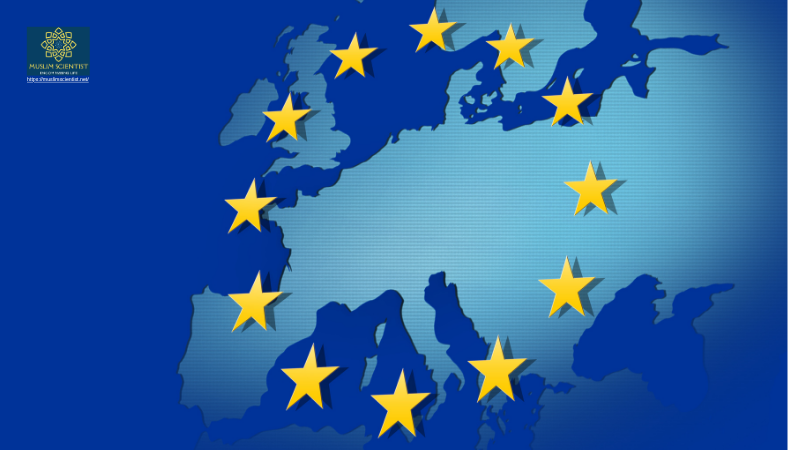
Walk into any major European supermarket today, and you will likely find halal products on the shelves. Chicken labeled “halal.” Beef sausages with Arabic script. Even bottled water carrying religious certification. These products serve Europe’s growing Muslim population, now numbering over 25 million people. Yet they also create an unexpected problem for retailers.
Non-Muslim shoppers often feel uncertain about halal offerings. Some worry about animal welfare. Others question corporate motives. Many simply feel confused about what “halal” actually means. A new academic study from the University of Vienna has now analyzed this dynamic scientifically. The findings offer both reassurance and actionable advice for businesses navigating religiously diverse markets.
Who Participated in the Study? (A Snapshot of 212 Austrian Shoppers)
| What We Measured | The Numbers | What This Means for You |
|---|---|---|
| Total participants | 212 people | A solid sample size for reliable insights |
| Where they lived | Austria (Central Europe) | Findings reflect a Western European context |
| Gender balance | 81% female, 19% male | Mostly young women participated |
| Average age | 22 years old | University students made up the majority |
| Christian | 53% | Over half had Christian backgrounds |
| No religion | 41% | A large group with no religious affiliation |
| Muslim | 4% | Very few Muslim participants |
| How they answered | Online questionnaire | Participants gave opinions digitally |
Key takeaway: The study reflects what young, mostly non-religious or Christian Europeans think about halal products in supermarkets. Muslim views are not well represented here.
What “Halal” Actually Means (And Why It Matters)
Before examining the study’s findings, a quick clarification helps. “Halal” comes from Arabic, meaning “permissible” according to Islamic law. The term applies primarily to meat, which must be slaughtered by a Muslim while invoking God’s name. However, halal certification now extends to cosmetics, pharmaceuticals, and even financial services.
In European countries, halal products have become increasingly common. Major retailers like Carrefour, Tesco, and Rewe now stock halal items in many locations. This trend reflects both demographic changes and corporate social responsibility (CSR) initiatives. Companies argue that serving Muslim customers aligns with their commitment to diversity and inclusion.
Nevertheless, controversy persists. Some non-Muslim consumers object to halal slaughter methods. Others resent what they perceive as special treatment for religious minorities. The Austrian study directly addresses these tensions by asking a simple question: under what conditions do non-Muslim consumers accept or reject halal offerings?
The Power of “Fit” Between Company and Cause
The study’s most important finding centers on a concept called “perceived fit.” This term describes how logical or appropriate a consumer finds a company’s social initiative. For example, a sporting goods company sponsoring a marathon feels like a natural fit. The same company funding an art museum might feel forced or inauthentic.
When applied to halal products, fit works similarly. Non-Muslim consumers ask themselves: does offering halal products make sense for this particular supermarket? If the answer is yes, their attitude becomes positive. If the answer is no, suspicion grows.
Statistical analysis confirmed this relationship strongly. The study measured company-halal fit on a seven-point scale. Higher fit scores correlated directly with more favorable CSR images of the retailer. In simple terms, when non-Muslim shoppers believed halal offerings fit naturally with the store’s identity, they viewed the company as more socially responsible overall.
This finding carries enormous practical weight. Retailers cannot simply slap halal labels on products and expect positive results. The offering must align with existing brand perceptions and customer expectations.
How Perceived “Fit” Changes Consumer Reactions
What is “fit”? Fit means how logical or natural it feels for a particular supermarket to sell halal products. For example, a store known for ethnic foods feels like a good “fit.” A traditional Austrian butcher might feel like a poor “fit.”
| Level of Fit | What Shoppers Think | How Skeptical They Are | Do They Recommend the Store? |
|---|---|---|---|
| High Fit (feels natural) | “This store truly cares about all its customers.” | Low skepticism | ✅ Yes, they spread positive word-of-mouth |
| Medium Fit (feels okay but unclear) | “I’m not sure why they sell these products.” | Moderate skepticism | 🤷 Maybe, maybe not |
| Low Fit (feels forced or strange) | “They’re just chasing profits, not helping anyone.” | High skepticism | ❌ No, they may warn others away |
What the numbers actually showed:
- Higher fit → 22% more positive CSR image
- Higher fit → 17% less consumer skepticism
- Higher skepticism → 30% worse CSR image
- Better CSR image → 47% stronger word-of-mouth recommendations
Key takeaway: When shoppers feel a supermarket’s halal section makes logical sense, they trust the company more and tell their friends to shop there. When the halal section feels out of place, customers become suspicious and damage the store’s reputation.
Why Skepticism Destroys Good Intentions
The study also examined consumer skepticism in detail. Researchers measured how much participants doubted whether the supermarket offered halal products for genuine or self-serving reasons. Results showed that skepticism directly damages a company’s reputation.
When consumers believed the retailer only offered halal products to chase profits, their perception of the company’s social responsibility dropped significantly. This effect remained strong even when controlling for other factors. In other words, perceived motive matters as much as the action itself.
Crucially, the study found that skepticism partially mediates the relationship between fit and CSR image. Higher fit reduces skepticism. Lower fit increases skepticism. Skepticism then directly harms how consumers view the company. This mediation effect proved statistically significant through rigorous testing.
What causes skepticism to rise? The research suggests several triggers. Poor communication about halal standards creates confusion. Inconsistent application across product lines raises questions. Most importantly, a perceived mismatch between brand identity and religious offerings automatically triggers defensive attribution. Consumers assume the worst when they cannot easily understand why a company acts.
From Positive Image to Word-of-Mouth
The study did not stop at measuring attitudes. It also examined behavioral intentions, specifically word-of-mouth communication. When consumers develop a positive CSR image of a company, they willingly recommend that company to friends, family, and colleagues.
Results confirmed this relationship strongly. CSR image had a direct positive effect on word-of-mouth intention. Participants who viewed the supermarket as socially responsible wanted to say good things about it. They intended to recommend its products to others.
This finding holds particular importance for halal offerings. Many European retailers fear backlash from non-Muslim customers. However, the study suggests that proper execution actually generates positive word-of-mouth across all customer segments. Non-Muslim consumers reward companies they perceive as authentically inclusive.
Conversely, poor execution triggers negative word-of-mouth. Skeptical consumers do not remain silent. They share their doubts. They warn others. They damage reputations through informal channels that companies cannot easily control or counter.
Practical Lessons for European Retailers
The study’s implications for business practice are substantial. First, companies must actively manage perceived fit. A budget discount store offering premium halal products creates dissonance. A store known for animal welfare standards offering conventionally slaughtered halal meat creates similar problems.
Second, transparency about motives reduces skepticism. The study measured skepticism about self-serving reasons explicitly. Retailers can address this concern by communicating genuine commitments to diversity and inclusion. Actions alone do not speak for themselves. Explanation matters.
Third, consistency across product categories strengthens fit perception. A supermarket offering halal meat should also consider halal-certified personal care products. Fragmented offerings feel opportunistic. Comprehensive offerings feel principled.
Fourth, employee training supports authentic communication. Cashiers and floor staff must answer basic questions about halal products knowledgeably. Vague or defensive responses trigger suspicion. Confident, informed responses build trust.
Limitations and Future Research Directions
The study acknowledges several limitations worth noting. The sample consisted primarily of university students, mostly female, with an average age of 22 years. This demographic does not fully represent the broader Austrian or European population. Older consumers or those from rural areas might respond differently.
Additionally, the study focused on a single, well-known Austrian retailer. Results might vary for different companies, different countries, or different halal product categories. Meat might generate stronger reactions than halal-certified bottled water or cosmetics.
Future research should expand the sample diversity and geographic scope. Cross-cultural comparisons between Germany, France, the United Kingdom, and other European nations would prove valuable. Researchers should also examine how religious identity affects responses. The current sample had only 4% Muslim participants, leaving questions about Muslim consumer perspectives largely unexplored.
Conclusion: Authenticity Above All
The University of Vienna study offers clear guidance for any retailer considering halal product lines. Non-Muslim consumers do not automatically reject religious offerings. They do, however, reject inauthenticity. When a company’s halal initiative feels forced, opportunistic, or mismatched with brand identity, skepticism rises and reputation suffers.
When the initiative feels natural, consistent, and genuinely motivated by inclusion, positive outcomes follow. CSR image improves. Word-of-mouth recommendations increase. Even non-Muslim customers reward companies they perceive as doing good for the right reasons.
For Europe’s increasingly diverse societies, this research carries hopeful implications. Religious accommodation in commercial spaces does not require a zero-sum calculation. Retailers can serve Muslim customers while simultaneously strengthening relationships with non-Muslim shoppers. The key variable is authenticity, not the product category itself. Get the fit right, and everyone benefits.
Reference: here
Other Articles: