A social media study shows that “halal” means very different things to Arabic, English, and Indonesian speakers online — with surprising implications for business, health, and religion.
Summary
A pioneering study analyzed over 1.3 million Instagram posts mentioning “halal” in Arabic and English, revealing striking cultural diversity in how the concept is understood across different populations.
The research, conducted by scientists from Qatar Computing Research Institute and published in Frontiers in Digital Humanities, found that Arabic-language halal conversations center on animal trading (61% of posts), English-language discussions focus heavily on food (80% of posts), and Indonesian speakers talk primarily about cosmetics and supplements (70% of posts).
Religious authority plays a different role in each community. Arabic posts mentioning religious terms actually receive fewer likes than those without them. Meanwhile, English and Indonesian posts get more engagement when paired with religious language — suggesting that halal is moving away from its traditional moral framing in some cultures but not others.
Perhaps most striking: mentions of official certification bodies like the FDA or Indonesia’s MUI dramatically reduce social engagement. Posts mentioning food without certification average 47 likes in English, while those mentioning certification get only 5 — a 90% drop.
The study reveals a global “halal” that is increasingly commercialized, culturally fragmented, and defined more by Instagram influencers than by traditional religious authorities.
The Global Halal Divide: One Word, Many Meanings
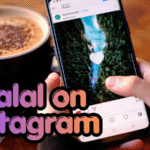
When you search for “#halal” on Instagram, what do you expect to find? Traditional meat slaughter? Religious guidance? Healthy food options?
The answer depends entirely on where you’re looking.
A groundbreaking study by Yelena Mejova and colleagues analyzed 1,004,445 English-language posts and 325,665 Arabic-language posts containing the word “halal.” After filtering by language, they discovered three completely distinct worlds of halal culture.
Arabic Speakers: The Animal Traders
For Arabic-speaking Instagram users, halal is predominantly about sheep and animal trading. A staggering 61% of Arabic halal posts fall into this category. These aren’t sentimental posts about cute animals — they’re commercial advertisements for livestock, often using WhatsApp and BlackBerry Messenger for direct sales.
The conversation centers on the Persian Gulf region, particularly Kuwait, Saudi Arabia, and the United Arab Emirates. Food plays a surprisingly small role, accounting for only 6% of Arabic halal content. Religious authority, however, remains central. Islam is closely associated with trading practices, scholars, and Ramadan in the topic networks.
Key insight: For Arabic speakers, halal remains deeply connected to its traditional roots — livestock trading and religious observance. This is a market-oriented, supply-side view of halal.
English Speakers: The Foodies and Health Enthusiasts
In contrast, English-language halal conversations revolve almost entirely around food — a massive 80% of posts. But these aren’t just any food posts. They frequently intersect with health trends: veganism, organic eating, gluten-free diets, keto, and weight loss.
Unlike the Arabic data, English speakers strongly associate halal with supplements and fitness culture. Health-related terms appear in 44% of posts. The US Food and Drug Administration (FDA) appears prominently in the topic networks — an authority figure completely absent from Arabic discussions.
Key insight: For English speakers, halal has been rebranded as a marker of quality, health, and ethical consumption. It’s less about religious obligation and more about lifestyle choice. The connection to Islam is peripheral — often paired with Kosher as a sign of general “goodness” rather than specific religious compliance.
Indonesian Speakers: The Beauty and Wellness Market
The most surprising finding emerged from Indonesian-language posts. While food still appears frequently (57% of posts), the central conversation revolves around cosmetics, supplements, and skin care (70% of posts).
The keyword “whitening” takes center stage — a controversial topic reflecting Indonesian beauty standards. Certification plays an enormous role, with multiple authorities mentioned: Indonesia’s BPOM (food and drug agency), MUI (Islamic certification), and Australia’s TGA (therapeutic goods).
Religious terms like Quran and Allah appear in a separate, disconnected cluster — far removed from the commercial conversation. Health aspects are also peripheral to the main discussion.
Key insight: For Indonesian speakers, halal has become a quality assurance label for beauty and wellness products. The commercial and religious aspects of halal exist in parallel universes, rarely intersecting.
The Authority Problem: When Government and Religion Don’t Sell
One of the study’s most striking findings involves social engagement with authority figures.
In English-language posts, food content mentioning the FDA gets 90% fewer likes (5 likes vs. 47) than food posts without certification mentions. The Indonesian data shows a similar pattern, though less extreme.
This suggests a crisis of institutional authority in the halal conversation online. Government certifications that are supposed to guarantee quality actually reduce engagement when mentioned.
“We find a complex social engagement around posts mentioning religious terms,” the researchers note. “When a food-related post is accompanied by a religious term, it on average gets more likes in English and Indonesian, but not in Arabic.”
This indicates a shift away from traditional moral framing in some cultures, while Arabic-speaking populations maintain stronger connections between halal and religious authority.
Commercialization and the “Market for Identities”
The study documents a powerful trend: halal is becoming commercialized — and this is happening fastest where traditional religious authority is weakest.
The most prolific users in all three datasets are commercial entities:
- Arabic: Sheep and animal traders
- English: Food and supplement sellers
- Indonesian: Beauty product and supplement marketers
One Arabic account from the UAE contributed 57,065 posts to the dataset — a staggering volume of commercial content. An English supplement account posted 39,878 times, though each post averaged only 4 likes.
“Generation M,” as defined by author Shelina Janmohamed, is the young, tech-savvy Muslim generation embracing modernity alongside faith. The study suggests this generation is actively redefining halal through social media — often in ways that prioritize commerce over traditional religious authority.
However, the most socially successful content comes not from businesses but from celebrities. The most liked posts in English and Indonesian come from musicians, models, and actors. In Arabic, popular accounts include comedians, political commentators, and pro-Iranian government propagandists.
Visual appeal dominates. A visual artist posting daily Quran quotes gathered thousands of likes per post. Food delivery businesses posting attractive images also performed well.
Why This Matters: Beyond the Numbers
This isn’t just an academic curiosity. The findings have real-world implications:
For Businesses
- Halal marketing must be culturally tailored. What works in Indonesia (beauty products) won’t work in the Middle East (livestock) or the West (health food).
- Celebrity endorsements and visual content outperform institutional certification claims.
- Official certifications may not be the selling point you think they are — at least on social media.
For Public Health Officials
- The strong association between halal and “healthy” in English-speaking communities presents an opportunity for health messaging.
- Traditional halal cuisine in the Middle East — often high in meat and fat — deserves attention even as researchers focus on “Westernization” of diets.
- Supplement and fitness marketing in Indonesia and English markets suggests halal can be a pathway to health promotion.
For Religious and Government Authorities
- The declining engagement with official certifications suggests a crisis of trust in traditional institutions online.
- “Instant experts” existing outside traditional spheres of influence are increasingly defining halal for younger generations.
- Religious authority is not automatically respected in online spaces — it must be actively earned through engaging, shareable content.
The Geography of #Halal
The study also mapped where halal conversations happen. Unsurprisingly, Arabic posts concentrate in the Persian Gulf. English posts come from the US, UK, Canada, Australia, and Western Europe.
But the Indonesian data tells a different story. While most Indonesian posts come from Southeast Asia, a significant number originate from the United States and other countries — a testament to the global Indonesian diaspora and the importance of the Asian Muslim community in defining halal online.
The temporal data shows increasing Instagram popularity across all languages since 2012. Interestingly, the annual Muslim holiday Eid al-Adha — when halal sheep are traditionally purchased and consumed — does not produce significant spikes in halal posting. This suggests halal conversation has become year-round, not tied to specific religious observances.
What Instagram Can’t Capture
The researchers acknowledge several limitations:
- Private accounts — users who restrict their Instagram visibility cannot be studied.
- Young, affluent bias — social media users tend to be younger and wealthier than the general population.
- Image content untapped — the study analyzed only text, not the images themselves.
- Alternative spellings — some users spell “halal” with numbers (like “7alal”) and were excluded.
Future research could use computer vision to analyze the actual images shared, detecting people, food, and health-related visual cues. This would enrich understanding of halal’s cultural expression online.
Conclusion: Halal in the Digital Age
The halal market is growing rapidly — estimated at over $2.6 billion in Britain alone in 2011, and expanding globally. As corporations like Nestle and Unilever aggressively label products as halal, understanding what the term means to different populations becomes critical.
This study reveals that “halal” is not a single concept but a cultural chameleon, adapting to local contexts in profoundly different ways. For Arabic speakers, it remains tied to traditional animal trading and religious observance. For English speakers, it’s become a lifestyle marker of health and ethical consumption. For Indonesian speakers, it’s a quality label for beauty and wellness.
The online definition of halal encounters a “crisis of authority and authenticity” as “instant experts” emerge outside traditional spheres of influence. Traditional religious and governmental authorities see their influence declining in the social media sphere, replaced by celebrities, commercial entities, and visually appealing content.
“Halal in today’s world is a multifaceted concept,” the researchers conclude. “Are we talking about a religion, a culture, an approach, or a business and management function?”
The answer, it seems, is all of the above — depending on where you look.
Reference: Mejova Y, Benkhedda Y and Khairani (2017) #Halal Culture on Instagram. Front. Digit. Humanit. 4:21. doi: 10.3389/fdigh.2017.00021
Other Articles: