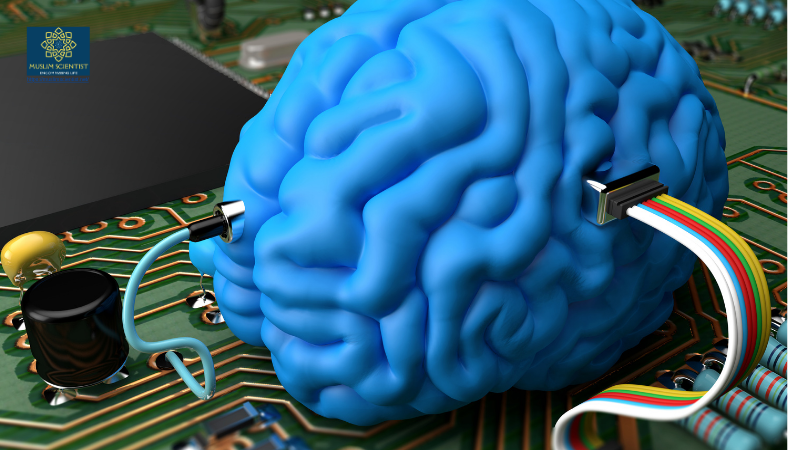
Survey reveals strong religious and ethical opposition to brain chips, gene editing, and embryo selection
The Brave New World of Human Enhancement
Imagine a world where parents could select embryos for intelligence, edit genes to make children smarter, or implant brain chips to boost memory. These technologies are no longer science fiction—they’re rapidly becoming reality. Polygenic embryo screening (PES), CRISPR-Cas9 gene editing, and cognitive-enhancing brain chips are emerging as powerful tools that could reshape human potential .
However, these advancements raise profound ethical questions, particularly in societies where religious beliefs shape moral frameworks. Malaysia, a Muslim-majority nation experiencing declining fertility rates and intense academic competition, presents a unique case study for examining public attitudes toward these controversial technologies .
Why Malaysia? The Perfect Storm of Factors
Malaysia’s fertility rate hit a 50-year low of 1.6 children per woman in 2022, creating a demographic shift with significant implications . Parents now channel all their hopes and dreams into fewer children, allocating more financial and caregiving resources per child . This trend, combined with intense academic pressure and a flourishing private tuition industry, creates a perfect environment for technologies promising cognitive enhancement .
The Malaysian context is particularly relevant for several reasons:
- Declining fertility: Parents invest more in each child, increasing demand for “optimal” offspring
- Academic pressure: Intense competition drives parental anxiety and willingness to consider enhancement
- Cultural norms: Collectivist values and peer comparison influence parenting approaches
- Islamic framework: Religious beliefs strongly shape attitudes toward biomedical interventions
- Existing precedent: Malaysia already allows controversial assisted reproduction procedures like sex selection, making it a potential hub for enhancement technologies
The Study: Understanding Muslim Perspectives
Researchers at the International Islamic University of Malaysia conducted an online survey of 575 Muslim undergraduate students to assess their views on human enhancement technologies . The student body was predominantly female (71.65%), with all participants under 25 years of age.
Before completing the questionnaire, students received a brief overview of human enhancement technologies and their potential ethical and legal implications in Islam. This ensured responses reflected informed perspectives grounded in Islamic epistemology, ethics, and jurisprudence .
Key Findings: Overwhelming Opposition
Student Attitudes Toward Enhancement Technologies
| Technology | Opposition (Disagree/Strongly Disagree) | Support (Agree/Strongly Agree) | Neutral |
|---|---|---|---|
| Brain Chip Implants | 75.5% | 10% | 14.5% |
| Gene Editing | 69.2% | 14.3% | 16.5% |
| Polygenic Embryo Screening | 54.8% | 20.5% | 24.7% |
Note: Percentages are based on survey responses from 575 Malaysian Muslim undergraduate students.
What Students Think About Regulation and Access
| Question | Agree/Strongly Agree | Disagree/Strongly Disagree | Neutral |
|---|---|---|---|
| Should the government ban these technologies for Muslims due to Shari’ah concerns? | 65.7% | 18.8% | 15.5% |
| Will uptake increase social inequalities? | 84.7% | 8.3% | 11% |
| Will there be racial disparities in uptake? | 71.1% | 7.9% | 21% |
| Should the government approve these technologies? | 14.7% | 54.6% | 30.6% |
| Should there be different laws for Muslims vs. non-Muslims? | 64.5% | 18.8% | 16.7% |
| Should there be public subsidies for the poor? | 57.4% | 18.6% | 24% |
Note: Data shows strong opposition to enhancement technologies but support for equitable access if permitted.
The Religious Foundation of Opposition
“Changing Allah’s Creation”
The survey respondents consistently cited religious objections rooted in Islamic teachings. Many quoted Quranic verses and Hadiths prohibiting alterations to God’s creation . A female student from the Faculty of Education stated:
“All of us are the creation of Allah, and I believe Allah has made us for a reason. So, we do not need to screen earlier just to make our future better by going against Allah’s will.”
Key Quranic references included:
- Surah An-Nisa (4:119): Satan promises to command humans to “change the creation of Allah”—viewed as a satanic act
- Surah At-Tin (95:4): “Indeed, We created man in the best stature”—emphasizing humans are already created perfectly
- Surah Ar-Rum (30:30): “The nature of Allah upon which He created mankind. There is no change in the creation of Allah”—establishing the prohibition
- Surah Al-Imran (3:191): Encouraging reflection on creation and acknowledging God’s purpose
Hadiths prohibiting cosmetic alterations like tattoos and teeth filing were also cited, with respondents drawing parallels to enhancement technologies . A female student from the Faculty of Islamic Revealed Knowledge stated:
“In the Holy Qur’an, Allah (SWT) has forbidden any action that changes His creation. The Prophet (SAW) has also prohibited the same things because they are included in the category of changing the creation of Allah (SWT).”
Divine Will and Predestination
Many respondents expressed concerns that enhancement technologies interfere with divine will (irādah ilāhiyyah), divine decree (qaḍā’), and predestination (qadar) . A male student from the Faculty of Economics explained:
“It is ethically contradictory with social and religious norms. God created humans as perfect; humans do not have the power to create humans. Human enhancement technologies raise concerns about interfering with the divine will by reducing human value and creating unfair advantages due to unequal access.”
This theological framework views enhancement as humanity attempting to “play God” by usurping Allah’s role as Creator, expressing dissatisfaction with divine design, and demonstrating a lack of gratitude for God’s perfect creation .
Beyond Religion: Ethical and Social Concerns
Social Inequality and Injustice
An overwhelming 84.7% of respondents agreed that enhancement technologies would increase social inequalities, creating a stratified society of “super humans” and “normal humans” . A female student from the Faculty of Engineering voiced concern:
“We want the human being to experience the real life and human fitrah (natural disposition of mankind). However, it will harm the human being and will change the nature of life, and thus I am against the proposed brain chip.”
Students feared that only the wealthy would access enhancement technologies, widening socioeconomic gaps and creating “unfair advantages” that would perpetuate systemic disadvantages . This concern aligns with the Islamic principle of justice (‘adl) and social solidarity.
Safety and Unknown Risks
Many respondents expressed fears about potential harm to individual health, highlighting the lack of guaranteed success and unknown long-term effects on individuals and future generations . Concerns included risks of “new diseases or disabilities” as well as “hereditary disorders.”
This reflects the Islamic legal maxim of lā ḍarar wa lā ḍirār (no harm nor reciprocating harm), which prioritizes avoiding harm over seeking potential benefits . Respondents emphasized that human enhancement technologies might be permissible only for “dire need,” “emergency,” or “medical purposes.”
Loss of Human Nature and Identity
Ethical concerns extended to the diminishment of human dignity and authenticity . Respondents feared that enhancement technologies would:
- Reduce human value
- Blur the line between humans and machines
- Lead to loss of personal identity and individuality
- Make family-building “less human”
- Create excessive dependence on technology
- Reduce motivation to achieve through effort
A female student from the Faculty of Engineering stated that brain chips would “harm the human being and will change the nature of life,” reflecting fears about preserving the fiṭrah (innate human nature) .
Gender Differences: Women Show Greater Skepticism
While both genders shared similar core religious objections, statistical analysis revealed significant gender differences in attitudes toward gene editing and whether different laws should apply to Muslims vs. non-Muslims . Women demonstrated greater skepticism across multiple categories, particularly concerning polygenic embryo screening and gene editing.
Researchers suggest this may be due to women’s roles as primary carriers of offspring and their deeper socialization in care-giving roles, making them more cautious about irreversible biological interventions . However, the effect sizes remained modest, indicating that both male and female respondents share broadly similar ethical and religious outlooks grounded in Islamic bioethics.
The Paradox: Opposition Meets Support for Subsidies
Despite strong opposition to enhancement technologies, 57.4% of respondents supported public subsidies to make them accessible to lower-income groups if legally permitted . This seemingly contradictory finding reveals an important nuance:
Fair access matters: Respondents acknowledged that if such technologies were permitted, they must be equitably accessed to avoid social injustice. This resonates with the distributive justice principle outlined in the UNESCO Declaration on Bioethics and Human Rights .
Religious caution: Some respondents opposed subsidies because they might increase the likelihood of Muslims going against religious faith . A female student explained:
“Yes, giving subsidies may narrow the gap between the rich and poor in enjoying technological development, but still I do not support it. Because I believe that altering human biology is akin to playing God, disrupting the natural order, and potentially causing unintended consequences. As the poor people do not have proper education, they may be derailed from the Islamic ethos.”
Comparing Secular and Islamic Bioethics
How Secular and Islamic Bioethics View Enhancement Technologies
| Principle | Secular Bioethics Approach | Islamic Bioethics Approach | Convergence/Divergence |
|---|---|---|---|
| Beneficence | Parents have moral responsibility to select optimal traits (“procreative beneficence”) | Enhancement permitted only for therapeutic necessity to protect life and health | Divergence: Secular allows enhancement; Islamic restricts to therapy |
| Non-Maleficence | Risks (e.g., off-target errors, mosaicism, cancer) must be proportionate to benefits | Strict precautionary approach (sadd al-dharā’i) prohibits uncertain risks | Convergence: Both emphasize safety and harm prevention |
| Autonomy | Parents have reproductive autonomy to choose traits; concern about offspring autonomy | Autonomy subordinate to prohibition of altering Allah’s creation (taghyir khalq Allāh) | Divergence: Secular weighs parental rights; Islamic prohibits alteration |
| Justice | High costs create socioeconomic divides, violating distributive justice | Enhancement creates “enhanced vs. unenhanced” hierarchy, violating Islamic equity | Convergence: Both concerned about widening inequality |
Practical Implications: A Three-Pronged Governance Approach
Based on survey findings, the authors propose a governance framework for Malaysia that balances innovation, religious values, and social equity:
1. Bioethical Safeguards
- Establish independent review boards combining scientific and religious expertise
- Create Islamic bioethics review panels to address theological concerns
- Involve the National Bioethics Council and Department of Islamic Development Malaysia (JAKIM) in policy formulation
- Issue Shari’ah-compliant fatwas that align biomedical innovation with Islamic ethical norms
2. Public Engagement and Education
- Conduct comprehensive awareness programs about risks, benefits, and ethical dilemmas
- Utilize deliberative democracy approaches that gather diverse public perspectives
- Include voices from different ethnic and religious communities
- Create platforms for reasoned argumentation and informed policy decisions
3. Economic Accessibility
- Implement tiered healthcare subsidies, particularly for the B40 (bottom 40% income) group
- Ensure equitable access if technologies are legally permitted
- Avoid exacerbating socioeconomic divides through technological advancement
The Deliberative Bioethics Approach
The authors recommend a deliberative bioethics approach for complex policy-making decisions. This inclusive framework brings together different segments of society—including non-experts—to:
- Learn about the technology through engagement with experts
- Discuss through reasoned argumentation rather than simple debate
- Recommend informed policy decisions via interactive dialogue bridging expert and public perspectives
This approach aligns with the UNESCO Universal Declaration on Bioethics and Human Rights and has been successfully piloted in the EU through “Horizon Scanning” initiatives .
Limitations and Future Research
The study’s findings should be interpreted with several limitations in mind:
Single-institution focus: The survey was conducted exclusively at the International Islamic University of Malaysia, where students receive integrated Islamic education. Their views may reflect higher religious awareness than the broader Malaysian Muslim population .
Limited demographic diversity: All respondents were undergraduate students under 25, limiting generalizability to older adults or different educational backgrounds .
Muslim-only perspective: Malaysia is multi-racial and multi-religious, but the study could not include non-Muslim students due to their small numbers at IIUM. Future research should include perspectives from Christians, Buddhists, and Hindus .
Cross-sectional design: The study captures attitudes at a single point in time, limiting understanding of how views might evolve with technological developments .
Future research should:
- Compare responses of medical students who completed bioethics modules vs. those who haven’t
- Survey non-Muslim respondents across different religious communities in Malaysia
- Explore how bioethics education and literacy shape attitudes toward enhancement technologies
- Conduct multi-center studies across different universities and sociocultural contexts
Conclusion: Navigating the Enhancement Frontier
This survey study reveals that Malaysian Muslim undergraduate students approach human enhancement technologies with cautious skepticism rooted in deep religious conviction. The overwhelming opposition to brain chips, gene editing, and polygenic embryo screening reflects concerns about:
- Divine will: Enhancement technologies interfere with Allah’s creation and predestination
- Human nature: They threaten human authenticity and the fiṭrah
- Social justice: They would create insurmountable inequalities
- Safety: Unknown risks to individuals and future generations
- Misuse: Potential for coercion, discrimination, and moral decay
However, the nuanced finding that most respondents support public subsidies if technologies are permitted reveals a commitment to distributive justice that transcends simple prohibition. This suggests Malaysian Muslims are not categorically opposed to all technological advancement but demand ethical frameworks that align with Islamic values and ensure equitable access.
The path forward requires balancing scientific progress with respect for traditional beliefs and values. The proposed three-pronged governance approach offers a practical framework for navigating this complex terrain. By fostering open dialogue and promoting a deeper understanding of the intersection between technology, culture, and religion, Malaysia can develop policies that protect religious values while avoiding the pitfalls of unregulated commercialization or techno-authoritarianism.
As these technologies advance globally, the Malaysian experience offers valuable insights for other Muslim-majority nations grappling with similar ethical challenges. The conversation about human enhancement is not merely academic—it is about defining what it means to be human in an age of unprecedented technological possibility.
Reference: Muhsin SM, Akbar MA, Mustari S, Alashaikh MH and Chin AHB (2026) Human cognitive enhancement and reprogenetic technologies in Malaysia – A survey study of local Muslim undergraduate students’ viewpoints. Front. Sociol. 10:1701007. doi: 10.3389/fsoc.2025.1701007