The Hidden Architects of Urban Space
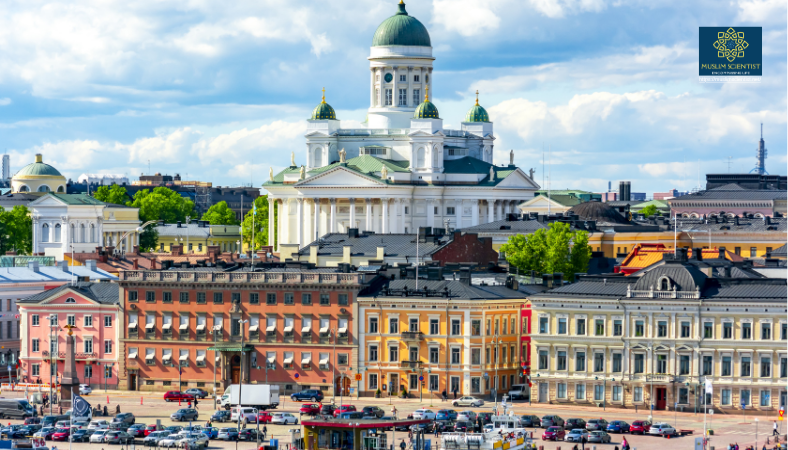
In the eastern suburbs of Helsinki, a quiet transformation is taking place. Immigrant Muslim women are reshaping the urban landscape, turning neglected shopping centers into vibrant community hubs. A new ethnographic study published in Ethnic and Racial Studies reveals how these women are actively producing urban spaces through religious practice, social connection, and economic agency.
The research, conducted by Riina Sinisalo from the University of Helsinki, challenges the common stereotype of Muslim women as passive or marginal figures in European cities. Through a two-year ethnographic study in a diversifying Helsinki neighborhood undergoing urban renewal, Sinisalo documented how immigrant Muslim women are carving out their own places within the city. Their place-making activities demonstrate agency that is creative, faith-driven, and deeply connected to their multiple identities as immigrants, women, and Muslims.
This study is particularly significant in the Finnish context, where Islam is a fast-growing urban religion with a relatively recent history. Muslims today form over two percent of Finland’s population of 5.6 million, making Islam the second-largest religious tradition in the country. Most Muslims have settled in the biggest cities, including Helsinki, where they navigate a society that often views them through the lens of culturalized Christianity and secularism. The findings offer crucial insights for urban planners, policymakers, and anyone interested in the lived experiences of religious minorities in European cities.
The Finnish Context: A Challenging Landscape for Muslim Women
Historical Context and Muslim Presence in Finland
Finland’s relationship with Islam is relatively recent compared to many other European countries. While the first Muslims arrived during the nineteenth century, the community remained small until the 1990s. After that decade, Finland began to receive refugees and asylum seekers from countries such as Somalia and the former Yugoslavia, coinciding with Muslim migration for marriage, study, and work purposes.
Today, most Muslims in Finland are first-generation immigrants who have settled in the biggest cities. My participants’ experiences followed the same patterns as Finnish urbanization in general: movement from smaller towns to bigger cities for family reasons and work opportunities was common. The neighborhoods where they settled often had histories of economic degradation and stigmatization, but they also offered affordable housing and growing immigrant communities.
Multiple Minority Positions
Immigrant Muslim women occupy what researchers describe as an intersection of multiple minority positions. They may face discrimination based on their ethnicity, race, citizenship status, and gender. This creates what scholars call “hypervisibility”—they stand out in white, secularizing spaces but are paradoxically not “seen” as active subjectivities.
The position of Muslims in Finnish society is influenced by historical nation-building processes and Western discourses on Islam, especially after 9/11. A narrative of Finland as a homogeneous, “white”, and secularizing Christian nation can exclude Muslims from Finnish public spaces today. The processes of Islamophobia and racialization connect Muslims to foreignness regardless of one’s background or citizenship status.
This has further spatial consequences. The “hypervisibility” of veiled women of color leads to a potentiality of Islamophobic violence or more subtle structural arrangements hampering Muslims’ physical and social latitude within public spaces. Yet, as the study demonstrates, the ways women navigate these challenges can lead to creative solutions in producing alternative spaces or challenging the use of existing ones.
Place-Making: A Theoretical Framework
Understanding Place-Making
Place-making refers to the activities through which individuals and groups give meaning to places through practices, movement, senses, and emotions. It is closely linked to identity, sense of belonging, and social relations. Through place-making, places can be understood as embodied and filled with social meaning, rather than merely physical settings.
Scholars have paid particular attention to women’s and migrants’ experiences of place-making. Feminist scholars have pointed out how women’s experiences differ from those of men, particularly in urban spaces. Studies on immigrant place-making often describe a sense of belonging and homemaking in a new environment. While homemaking can be directly linked to private homes, in migration and urban studies it can also extend to public spaces through products, languages, sounds, and ways of using spaces.
Agency and Religion
A shared element in both women’s and minorities’ place-making activities is a sense of agency. Agency is action embedded in current local reality as well as the historical and cultural context that has shaped the self. It is highly relational and cannot be reduced to being merely reactionary to contemporary challenges.
One meaningful organizing element for place-making is religion. Religion can work as a medium and a resource through which existing local spatial regimes are negotiated. Scholars have noted the role of religion in shaping urban lives, particularly as spheres for contesting meanings. Cities open new avenues for place-making, especially from the point of view of minority groups.
However, immigrant place-making is sometimes looked at from a problem-based perspective or evaluated through the frame of integration, where active place-making by immigrants is often seen as a sign of a lack of integration. This study challenges such assumptions by examining place-making as a “production of locality” rather than a lack of integration.
Key Dimensions of Immigrant Muslim Women’s Place-Making in Helsinki
| Dimension | Description | Examples from the Study |
|---|---|---|
| Religious Practice | Creating spaces for prayer and faith-driven consumption | Prayer room in clothing shop; faith-based businesses selling hijabs, abayas, halal beauty products; local shops providing products for religious lifestyle |
| Gendered Community | Building women-only spaces for socializing and mutual support | Women gathering in clothing shop; henna evenings; nursing children in private spaces; escaping isolation and loneliness |
| Economic Agency | Establishing businesses to provide income and serve the community | Family businesses managed by women; Muslim entrepreneurship without interest-based loans; serving growing immigrant clientele |
| Flexible Space Use | Adapting commercial spaces for multiple purposes | Shop functioning as prayer space, fitting room, nursing room, social gathering place, and business |
| Rhythm and Time | Creating alternative temporal patterns | Shops opening late morning to late evening; following neighborhood social rhythms; spiritual routes and prayer schedules |
| Resistance to Marginalization | Challenging dominant narratives and spatial arrangements | Creating belonging despite hypervisibility; maintaining cultural and religious practices; economic participation as taxpayers |
The Case Study: Kawthar’s Clothing Shop
A Place of Many Purposes
At the heart of Sinisalo’s study is Kawthar’s clothing shop, a women’s clothing store in an old open-air shopping center in eastern Helsinki. The shop was one of many small businesses in the neighborhood selling clothes, home decor, and prayer rugs, among other things. But above all, it was a place where women gathered to see each other.
The shop represented an important aspect of immigrant Muslim women’s life at the intersections of religion, family, business, and social life. It was the place where they prayed, nursed their children, sold and bought items, and spent time together. The flexibility of the shop to serve diverse purposes strengthened women’s opportunities to demonstrate their agency.
Kawthar, a middle-aged Muslim woman, managed the shop she had established with her family. Her activities were part of the female immigrant entrepreneurship flourishing in the area. While men seemed to run halal meat shops, barbershops, travel agencies, and some restaurants, women had restaurants, clothing shops, and cosmetics shops as part of their family entrepreneurship.
Making Space for Religion
Despite the seemingly secular function of the clothing shop, there was a religious dimension to the place. The most important element was the prayer space—a small oblong space in the back of the shop that was flexibly used both as a fitting area and a prayer room. This was necessary because most prayer spaces in Helsinki were so-called “cellar mosques”—tiny, in transition, and seldom had room for women, as men’s obligation to attend prayers in a mosque was prioritized.
My participants told me about the complexities of belonging to a religious minority in Finland and how they needed spaces for their religious commitments. One participant, Aisha, appreciated local arrangements that supported her everyday life. A makeshift prayer room in a nearby mall had been both a spiritual and a social space for her, but it was later taken out of use, which again emphasized the importance of Kawthar’s shop.
Besides the prayer space, the shop supported women in their spiritual life through its products. In the shop, women could buy necessary items such as headscarves, abayas, other modest clothes, and halal beauty products. Local faith-based businesses were crucial for their religious lives, for their Muslimness.
Creating a Women’s Community
Kawthar’s shop was a space where women felt comfortable to spend time. The relaxed atmosphere, a feeling of sisterhood, and women chatting and eating together created a sense of home. Women who spent the most time in the shop tended to be first-generation immigrants and often shared a similar class background. They came to the shop even if they lived further away, in other neighborhoods.
The shop was central for my participants’ feelings of both safety and belonging in the city. Despite experiences of exclusion, “hypervisibility,” and anti-Muslim racism in society, it was possible for my participants to develop a sense of belonging to a locality, such as a neighborhood. The shared faith and culture created a sense of home.
The socializing practices were invaluable for their social life and for relieving stress and loneliness. One participant, Aisha, confirmed: “You feel good. You see people and can chat with them. It’s not good to be at home alone.” Kawthar’s shop offered an escape from isolation, especially during the COVID-19 pandemic when being confined at home was frustrating.
Building Economic Agency
Although Kawthar’s shop was a family business, Kawthar managed it herself. Many of my participants, despite spending time in the clothing shop, were working or studying, which they often mentioned to me, wanting to challenge the stereotype of immigrants living on welfare. The clothing shop was one example of female and family entrepreneurship that made it possible not only to provide for the family but to lead a meaningful life as Muslims, serve the community, and participate in society as taxpayers.
Family businesses offered Muslim women opportunities to participate in business life. This is quite typical in Finland where there are no Islamic financial services available. Few immigrants have big sums to invest in starting a business, and some Muslims do not wish to take loans with interest for religious reasons, even if they are financially stable. This emphasizes the role of religion in immigrant entrepreneurship but also the importance of family ties and social networks in providing financial aid.
Challenges and Opportunities for Muslim Women’s Place-Making in Helsinki
| Challenge | Impact | Opportunity/Response |
|---|---|---|
| Lack of Islamic Infrastructure | Limited prayer spaces, especially for women; no official calls to prayer | Creative solutions: shops and cafeterias as temporary prayer spaces; spontaneous adhan through smartphones |
| Hypervisibility and Racism | Islamophobic violence; structural discrimination in public spaces | Creating women-only safe spaces; building community networks; carving alternative spaces |
| Urban Renewal | Vulnerability to top-down decisions; potential loss of meaningful places | Economic investment in locality; serving as voices for locals; building attachment to neighborhoods |
| Gender Segregation | Limited access to mixed-gender spaces | Using gender separation as strategy for social and spiritual needs; creating intimate women’s spaces |
| Stereotypes and Discrimination | Seen as passive or marginal; questioned regarding ethnicity and citizenship | Demonstrating agency through entrepreneurship; active participation in society; challenging stereotypes |
| Generational Differences | Different spatial practices between first and second-generation immigrants | First-generation creates community spaces; second-generation explores broader city spaces |
| Economic Barriers | No Islamic financial services; limited capital for business | Family-based entrepreneurship; solidarity networks; serving growing immigrant clientele |
The Impact of Place-Making: Beyond the Shop
Challenging Secular and Religious Spatial Arrangements
The immigrant Muslim women’s place-making challenges many strict binaries of Finnish society. They convert shops into places of worship or henna parties, blurring lines between religious and secular as well as between public and private. The old shopping center simultaneously seemed like a cozy meeting place and an energetic business hub. One participant, Johanna, described the place: “It is like a public living room; nobody lives there but everybody spends time there.”
The partly shabby shopping center has been converted into a lively social space, extending “home” to public space and showcasing belonging to the city. The combination of religious spaces, faith-based businesses, and everyday practices can form new spiritual routes and rhythms in the city. They also blur the lines between secular and religious places, challenging the commonly held idea about Finnish public spaces as secular and culturally Christian.
Vulnerabilities and Uncertainties
Despite demonstrating agency, the women’s place-making activities were fragile. While they were active in shaping the spaces, they were embedded in local power hierarchies, being simultaneously hopeful and unsettled, waiting for something to happen, and decisions to be made. The plans in the neighborhood worried Kawthar. She was lamenting about the possible renovation bills and the lack of information.
Kawthar described the situation of the shopping center after hearing news about the planning project: “The Finns left, and we foreigners stayed, waiting [to see what happens].” She was concerned about the future of the whole shopping center: “If they dismantle the part downstairs and renovate here, where will all the foreigners go then?” In Kawthar’s opinion, “the foreigners” needed places to socialize and buy familiar products.
If the meaningful places are lost in a revitalization program, the inhabitants may feel a loss of memories and attachment to their neighborhood. Hence, immigrant Muslim women’s place-making activities were both hopeful and unsettled, demonstrating agency while being vulnerable to top-down decisions.
Implications for Urban Planning and Policy
Recognizing Hidden Place-Making
The study’s findings have significant implications for urban planners and policymakers. Immigrant Muslim women’s place-making is not fully recognized in Helsinki. Planners and policy makers must often look at the overall development in the city, and they may lack resources to approach different social groups, especially in superdiverse areas amidst rapid change.
Due to their multiple marginal positions, immigrant Muslim women are vulnerable to top-down decisions in the city. If their needs remain unacknowledged, they can be marginalized even further. Researchers, planners, and policy makers need more information about the meaning of local places for their inhabitants and how those places enforce belonging and attachment to the city.
Creating Inclusive Urban Spaces
The study suggests several ways to create more inclusive urban spaces:
- Recognizing the multiplicity of place-making: Understanding that immigrant Muslim women’s place-making is motivated by religious, social, and economic needs, not just reactionary responses.
- Including diverse voices in urban planning: Ensuring that urban renewal projects consult with and consider the needs of diverse community members, including immigrant Muslim women.
- Supporting faith-driven businesses: Acknowledging the role of ethnic and faith-based entrepreneurship in creating vibrant, diverse neighborhoods.
- Providing flexible spaces: Creating spaces that can serve multiple purposes, accommodating different cultural and religious practices.
- Challenging stereotypes: Moving beyond the “problem-based perspective” that sees immigrant place-making as a lack of integration.
Future Research Directions
The study also points to areas for future research. More information is needed to understand the specific needs of different age groups and the impact of class. The research focused on first-generation immigrant Muslim women; second-generation Finns and younger participants demonstrated different spatial practices. Additionally, the transnational and mobile perspective could be explored further, although the study demonstrated the importance of local physical places for minority groups and individuals.
A Quiet Revolution in Helsinki’s Suburbs
This ethnographic study reveals a quiet but significant revolution taking place in Helsinki’s eastern suburbs. Immigrant Muslim women are actively reshaping the city through their place-making activities, transforming neglected shopping centers into vibrant community hubs. Their efforts demonstrate agency that is creative, faith-driven, and deeply connected to their multiple identities.
Contrasting the general stereotype of immigrant Muslim women as “hypervisible” but simultaneously marginal figures, the findings of this article suggest that they are active in shaping the city’s public spaces. The women influence the image of the neighborhoods as vivid public living rooms and “place[s] for Muslims” and shape the locality, changing its purpose and schedule.
Through everyday practices—praying and eating together, buying and selling products, nurturing children, and even having arguments—these women assign multiple meanings to places such as a clothing shop. They demonstrate agency that is not only reactionary to outside influences but creative and faith-driven. Religious motivations ran through the dimensions of their place-making, whether about rituals, consumption, social engagement, motherhood, or work.
Far from being marginalized inhabitants, women negotiate their minority position within society, highlighting a nuanced relationship between the city, gender, religion, and belonging. Immigrant Muslim women’s place-making raises important questions about who the city is meant for, who can be present in urban public spaces, and who decides how city spaces are imagined, produced, and used.
Reference: Riina Sinisalo (09 Jan 2026): Shaping the city with faith: placemaking of immigrant Muslim women in Helsinki, Ethnic and Racial Studies, DOI: 10.1080/01419870.2025.2605136