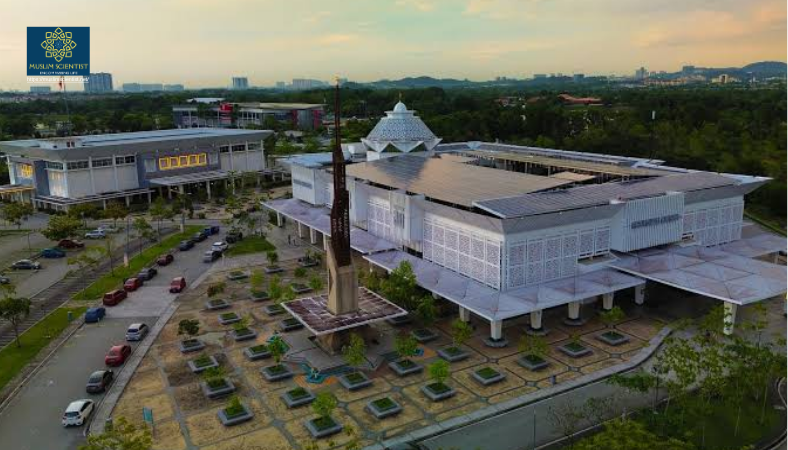
What if a place of worship could also be a powerful symbol of environmental responsibility? A groundbreaking case study published in Scientific Reports, a Nature Portfolio journal, has put the spotlight on a remarkable building that does exactly that. The Raja Haji Fisabilillah Mosque in Cyberjaya, Malaysia, has achieved a significant milestone. It is the first mosque in the country to receive the prestigious Green Building Index (GBI) Platinum certification . This is not just an architectural achievement; it is a profound statement about the potential for religious institutions to lead the way in sustainable development.
A Modern Marvel Rooted in Ancient Principles
The mosque’s design is a sophisticated fusion of modern green technology and traditional Islamic values . The study highlights how the project successfully integrated environmental protection into religious architecture. Consequently, the mosque exemplifies the Islamic principle of mizan (balance), which is described in the Quran. This principle teaches that God established a balance in nature that humans must actively maintain .
By harmonizing sustainable technologies with these spiritual concepts, the mosque creates a living model of tawhid (unity). This approach applies environmental ethics to daily spiritual practice. For the worshippers and the wider community, ecological responsibility becomes an inseparable part of worship (‘ibadah) . This powerful connection gives the sustainability efforts a deeper resonance and longevity, making them more likely to be embraced and continued by the community.
The Green Features: A Closer Look
The Raja Haji Fisabilillah Mosque was not built to be just a beautiful place of prayer, but a high-performance green building. To achieve its GBI Platinum certification, the design team incorporated a wide array of sustainable features . These include low-emissivity (low-E) glass to reduce heat gain, energy-efficient LED lighting, and solar energy systems for renewable power.
Furthermore, the mosque features water-saving fixtures and a rainwater harvesting system to conserve this precious resource. Green rooftops and landscaped areas help to mitigate the urban heat island effect and promote biodiversity. The building’s orientation and design also deliberately incorporate cross-ventilation and a passive dome design, which enhances energy efficiency while maintaining classic Islamic architectural elements .
Table 1: Sustainable Features of the Raja Haji Fisabilillah Mosque
| Category | Sustainable Feature | Purpose/Benefit |
|---|---|---|
| Energy Efficiency | Low-E Glass, LED Lighting, Solar Energy Systems | Reduce heat gain, lower energy consumption, generate renewable power. |
| Water Conservation | Water-saving Fixtures, Rainwater Harvesting | Reduce water usage, collect and reuse rainwater for irrigation. |
| Passive Design | Cross Ventilation, Passive Dome Design | Enhance natural cooling, reduce reliance on air conditioning. |
| Ecological Impact | Green Rooftops, Landscaped Areas | Mitigate urban heat island effect, promote biodiversity. |
Table 2: Comparative Analysis of Sustainable Features in Notable Mosques Worldwide
Global Comparisons and Context
To provide a richer perspective, the study compared the Raja Haji Fisabilillah Mosque with other famous mosques around the world. This comparative analysis reveals how sustainable design principles are interpreted differently across various geographical, historical, and cultural contexts . For instance, the Great Mosque of Djenné in Mali is a marvel of passive design using local, climate-responsive materials like adobe. In contrast, Masjid al-Haram in Saudi Arabia focuses on massive-scale water conservation and cooling systems to accommodate millions of pilgrims .
What sets the Raja Haji Fisabilillah Mosque apart is its explicit certification under a contemporary sustainability framework while maintaining Islamic design principles—a balance not all mosques have attempted . This makes it a unique and valuable model for future religious constructions.
Challenges on the Path to Green Certification
The journey to create this green mosque was not without its hurdles. The project team encountered several interrelated challenges that required innovative solutions and careful negotiation between competing priorities .
- Financial Considerations: The initial capital investment for sustainable technologies like solar panels and rainwater harvesting significantly exceeded conventional construction costs. The team had to conduct detailed cost-benefit analyses to demonstrate long-term operational savings. They also had to educate donors and financial institutions about the alignment between Islamic values of resource stewardship and modern sustainability principles .
- Technical Complexities: Applying green building standards, which were developed primarily for commercial structures, to a religious building with unique functional requirements was technically challenging. For example, the need for large, open prayer spaces and specific orientation sometimes conflicted with optimal solar panel placement .
- Cultural and Aesthetic Sensitivities: The design team faced the delicate task of balancing innovative sustainable features with traditional mosque aesthetics. Some stakeholders initially worried that contemporary green design elements might compromise the building’s Islamic character. Extensive community consultation was necessary to demonstrate how sustainable features could be incorporated while maintaining essential Islamic architectural elements like minarets and domes .
- Regulatory Hurdles: When construction began in 2013, Malaysia’s building codes and GBI requirements were still evolving for religious structures. The project team often found themselves navigating ambiguous regulatory territory and sometimes pioneering new standards .
- Knowledge and Skills Gaps: Many local contractors had limited experience with green building technologies. This necessitated additional training programs and quality control measures to ensure proper installation, a capacity-building effort that extended the project timeline .
Despite these obstacles, the project succeeded. The mosque now stands as an instructive case study precisely because it navigated these complexities successfully. It created a model that balances innovation with tradition, environmental responsibility with spiritual purpose, and contemporary design with religious identity.
Broader Implications and The Path Forward
The Raja Haji Fisabilillah Mosque case study illuminates a much larger truth. When environmental practices are understood not as external impositions but as expressions of core religious values, they gain deeper resonance and longevity within communities . The study argues that sustainable architecture in religious contexts is most effective when it emerges organically from theological principles and cultural traditions, rather than being merely added as technological solutions .
This has profound implications for the future. As climate challenges intensify globally, religious architecture may well become an increasingly important site of environmental innovation. Here, ancient wisdom and modern technology can converge to address the pressing ecological concerns of the twenty-first century . The mosque serves as a vital demonstration of the role that faith can play in promoting a greener future, positioning itself not only as a sanctuary for spiritual reflection but also as a crucible for environmental responsibility .
Reference: Yu, H., Zahidi, I., Fai, C.M. et al. Sustainable development in mosque construction. Sci Rep 15, 17916 (2025). https://doi.org/10.1038/s41598-025-96786-x