What if a simple, heartfelt “thank you” could do more than just brighten someone’s day? What if it could actually help keep your brain sharp and healthy as you age?
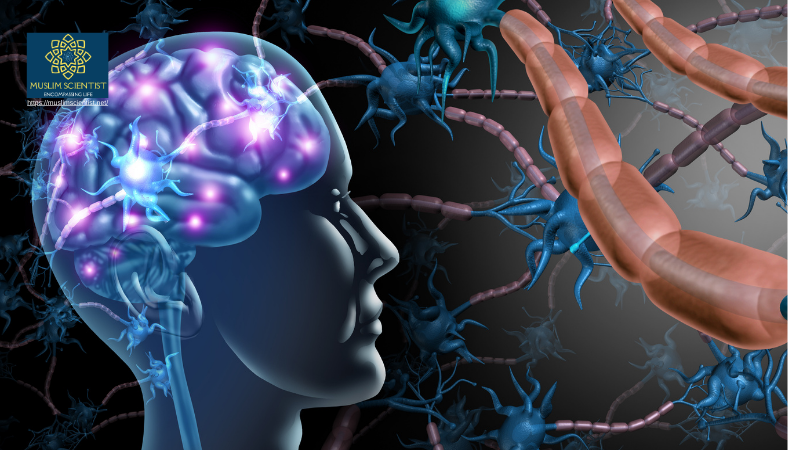
A fascinating new study, published in a leading scientific journal, has uncovered a powerful link between gratitude and brain health. The research, conducted on nearly 500 healthy older adults in Japan, found that people who reported higher levels of gratitude also had better cognitive function. Even more remarkably, the study used brain scans to peek inside the “black box” and discovered a potential reason why: grateful people have larger volumes in key brain regions, particularly the amygdala, which is crucial for processing emotions and memory.
For Muslims, this groundbreaking finding resonates deeply with a core tenet of faith. The concept of shukr (gratitude) is not merely a polite social gesture; it is a profound act of worship and a key to a contented heart. The Quran and the teachings of Prophet Muhammad (peace be upon him) are filled with the promise that gratitude leads to increase—in blessings, in provision, and now, as science suggests, perhaps even in cognitive resilience.
The Silent Epidemic and a Simple Potential Shield
As the global population ages, dementia and cognitive decline have become one of the greatest public health challenges of our time. Scientists are racing to find modifiable factors—things we can actually do—to protect our brains as we grow older. We know that diet, exercise, and social connection play a role. But this new study points to something even more fundamental: our emotional and spiritual state.
The study, part of the larger “Neuron to Environmental Impact across Generations” (NEIGE) project, analyzed data from 478 community-dwelling adults aged 65 and older. The researchers measured two key things:
- Gratitude levels: Using a standard two-item gratitude questionnaire.
- Cognitive function: Using the widely respected Mini-Mental State Examination (MMSE).
- Brain volume: Using magnetic resonance imaging (MRI) to scan specific brain regions involved in emotional processing and social interaction, like the amygdala and fusiform gyrus.
The results were remarkably clear and encouraging.
The Evidence: A Thankful Brain is a Sharper Brain
The study’s findings offer a powerful, hopeful message about the connection between our mindset and our brain health.
Table 1: The Link Between Gratitude and Cognitive Function
This table shows the main result of the study, controlling for other factors that could influence cognition, like age, education, and depression.
| Key Finding | The Data | What It Means in Simple Terms |
|---|---|---|
| Gratitude & Cognitive Function | Higher levels of gratitude were significantly associated with better scores on the MMSE. The statistical coefficient was 0.25 (95% CI: 0.01, 0.49). | This means that for every increase in a person’s gratitude score, their cognitive function score also increased. The connection is small but meaningful and statistically significant. |
| What Was Controlled For | The analysis adjusted for age, sex, education, marital status, and even depressive symptoms. | The gratitude effect is independent of these factors. It’s not just that grateful people are healthier or less depressed; the gratitude itself seems to matter. |
The average gratitude score was 6.3 out of a possible range, and the average MMSE score was 27.1 (scores above 24 are generally considered normal). The key takeaway is that a more grateful disposition was linked to a sharper mind.
Table 2: The “Why” – A Peek Inside the Brain
The study didn’t stop at the behavioral link. It went further to explore the biological mechanism. The MRI scans revealed a fascinating structural difference in the brains of more grateful people.
| Finding | The Brain Region | Why This is Encouraging |
|---|---|---|
| Gratitude is linked to larger brain volume. | Higher gratitude scores were associated with larger volumes in the right amygdala and the left fusiform gyrus. | The amygdala is a key hub for processing emotions and is also critical for memory consolidation. The fusiform gyrus is involved in face perception and social cognition. A larger volume in these areas suggests greater neural resources. |
| The Amygdala as a Mediator | Using advanced statistical models (structural equation modeling), the researchers found that the volume of the amygdala partially explained (mediated) the link between gratitude and cognitive function. | This provides a potential biological pathway: gratitude may help maintain or even enhance the structure of the amygdala, which in turn supports better cognitive function. |
In essence, a grateful disposition is not just a “warm fuzzy feeling.” It appears to be associated with tangible, physical differences in the brain’s structure, which may contribute to resilience against age-related decline.
The Islamic Lens: Gratitude as the Ultimate Brain Food
For a Muslim, these findings are not just interesting; they are a beautiful confirmation of a divinely prescribed way of life. The concept of shukr is woven into the very fabric of Islamic teaching. It is the counterpart to sabr (patience) and is considered a hallmark of true faith.
The Quran is replete with verses linking gratitude to divine reward and, crucially, to increase. Allah promises in the most direct terms:
“If you are grateful, I will surely increase you [in favor]…” (Quran, Surah Ibrahim, 14:7)
This verse is a spiritual law: gratitude begets more. For centuries, Muslims have understood this “increase” in terms of blessings, provision (rizq), and spiritual station. This new study offers a fascinating parallel: gratitude may also lead to an “increase” in neural matter—larger volumes in brain regions critical for memory and emotion.
The Prophet Muhammad (peace be upon him) also emphasized gratitude in every aspect of life. He said:
“He who does not thank people, does not thank Allah.” (Sunan Abi Dawud)
This beautiful hadith connects our horizontal relationships with people to our vertical relationship with the Divine. Expressing gratitude to others is not separate from our faith; it is an expression of it. When we thank a person, we are acknowledging that Allah worked through them. The study now suggests that this very act of interpersonal gratitude, so central to Islamic character, is associated with better brain health.
Furthermore, the brain regions identified—the amygdala and fusiform gyrus—are involved in emotional processing and social interaction. Islam places immense emphasis on purifying the heart (tazkiyah), managing emotions, and maintaining strong social bonds (silat al-rahim). Gratitude is a key tool in all of these. It shifts focus from what we lack to what we have, fostering contentment and strengthening the very social fabric that protects against isolation.
Why This Matters for Everyone
This research is a gift of clarity and motivation. It takes a spiritual and emotional practice and grounds it in measurable, biological reality.
- It’s a Simple, Accessible, and Free “Brain Exercise.” We often think of brain health in terms of crossword puzzles or expensive supplements. This study suggests that cultivating a grateful disposition could be one of the most effective and accessible things we can do. It requires no special equipment, no gym membership, and no financial cost.
- It Protects Against Isolation and Depression. The study controlled for depressive symptoms, showing gratitude’s effect is independent. However, we know that gratitude directly counteracts the negative thought patterns that fuel isolation and depression—both major risk factors for dementia. It’s a two-for-one benefit for mental health.
- It Empowers Us. The finding that our emotional state can be associated with physical changes in our brain structure is profoundly empowering. It suggests we are not passive victims of aging. Our daily mindset and practices can shape our neurological destiny.
- It Unites Science and Spirituality. For people of faith, this study is a powerful example of science catching up to ancient wisdom. It reassures us that the practices prescribed by our tradition—like shukr—are not arbitrary rituals. They are divinely designed interventions for our holistic flourishing, encompassing our spiritual, mental, and now, as we see, our neurological health.
Practical Takeaways: A Prescription for Gratitude
So, how can you harness the power of gratitude to protect your brain and nourish your soul?
- Start a Gratitude Journal: It doesn’t have to be elaborate. Each day, write down three specific things you are grateful for. The study suggests the disposition of gratitude matters, and like any disposition, it can be cultivated through practice.
- Express It Out Loud: Make it a habit to verbally thank people—your spouse, your children, your colleagues, the cashier at the store. The Prophet’s teaching reminds us that thanking people is a form of thanking God. Every “thank you” is an act of worship and a neural workout.
- Turn Complaints into Gratitude: When you feel a complaint forming, try to consciously flip it. Instead of “I’m so tired,” try “I’m grateful for a body that works hard and a bed to rest in.” This mental reframing is a form of cognitive training.
- Make Du’a a Conversation of Thanks: In your daily supplications, spend as much time thanking Allah for His countless, often invisible, blessings as you do asking for more. Cultivate an internal state of shukr.
- Practice Mindfulness of Blessings: Throughout the day, pause and consciously note the blessings around you: your sight, your breath, the kindness of a friend, the food on your table. The Quran commands, “Then which of the favors of your Lord will you deny?” (Surah Ar-Rahman). Contemplating these favors is a form of gratitude.
A Final Thought
This study is a powerful reminder that the most profound solutions are often the simplest. In a world that constantly tells us we need more, the path to a sharper mind and a healthier brain may lie in appreciating what we already have.
For centuries, Islam has called its followers to a life of shukr—a life of gratitude that opens the door to divine increase and inner peace. Now, neuroscience provides a compelling, empirical “Amen.” Gratitude is not just good for the soul. It is good for the brain. It is a spiritual practice with tangible, measurable, and profoundly hopeful results. So, take a moment today. Say thank you. Your brain—and your soul—will thank you for it.
Reference: here
Other Articles: