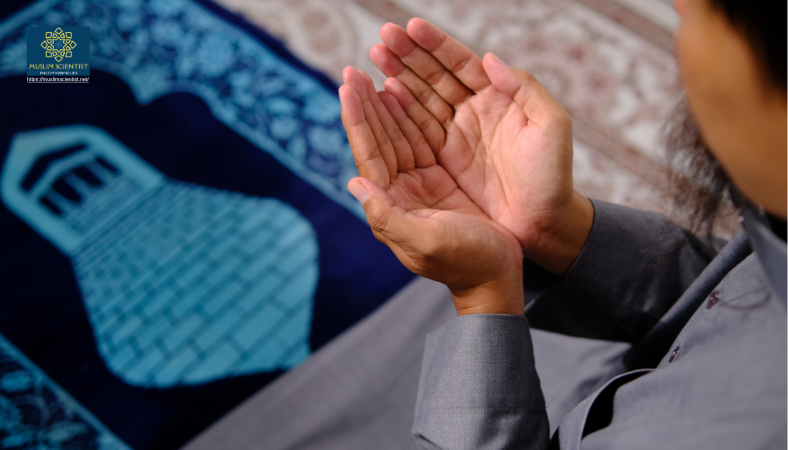
When a cancer diagnosis shatters a family, the first words whispered are often prayers. “Bismillah.” “Inna lillahi wa inna ilayhi raji’un” (To Allah we belong and to Him we return). “Allahumma shfi” (O Allah, heal).
For centuries, Muslim scholars have taught that du’a (supplication) and tawakkul (trust in Allah) are weapons of the believer. But a study has put religious coping under the scientific microscope. The results are profound—and sobering.
The study, conducted on 565 cancer patients in a University Teaching Hospital in Southwest Nigeria (a Muslim-majority region), examined how attitudes toward the self (self-criticism, negative generalization, and high standards) and religious coping (positive vs. negative) affect Health-Related Quality of Life (HRQoL).
The verdict? Not all religious coping is equal. Positive religious coping—trusting Allah’s wisdom, seeking closeness through prayer—improves social well-being. But negative religious coping—feeling punished by God, abandoned, or cursed—amplifies depression, ruins physical health, and destroys functional well-being.
This is not a contradiction of faith. It is a scientific confirmation of the Quranic warning against despairing of Allah’s mercy.
The Three Toxic Thoughts That Destroy Cancer Patients
The study identified three cognitive vulnerabilities (attitudes toward the self) that significantly worsen quality of life for cancer patients:
- Negative Generalization: “If I am sick, my whole life is ruined.” (Thinking one failure defines everything.)
- Self-Criticism: “This cancer is my fault. I deserve this because I wasn’t good enough.”
- High Standards: “I must be strong. I must not show weakness. I must beat this perfectly.”
These are not just “bad thoughts.” The study measured their impact. Negative generalization reduced physical well-being by 19% and functional well-being by 25% . Self-criticism cut emotional well-being by 16% .
But here is the Islamic connection: These thought patterns are the exact opposite of tawakkul and rida (contentment with Allah’s decree). The Prophet Muhammad (PBUH) said: “Wondrous is the affair of the believer. All of it is good. If he is afflicted with hardship, he is patient, and it is good for him.” (Muslim). The patient who catastrophizes (“My life is over”) or self-flagellates (“This is my punishment”) is rejecting the very framework of patience that Islam prescribes.
Toxic Thoughts vs. Islamic Teachings (What the Study Found)
| Cognitive Vulnerability | Scientific Impact (HRQoL Reduction) | Islamic Antidote |
|---|---|---|
| Negative Generalization (One failure = total worthlessness) | Physical well-being ↓ 19%; Functional well-being ↓ 25% | “Allah does not burden a soul beyond its capacity.” (2:286) |
| Self-Criticism (Blaming self for illness) | Emotional well-being ↓ 16%; Physical well-being ↓ 19% | “Do not despair of the mercy of Allah. Indeed, Allah forgives all sins.” (39:53) Illness is expiation, not punishment. |
| High Standards (Perfectionism; hiding pain) | Social well-being ↓ (due to isolation) | The Prophet (PBUH) said: “This religion is easy. No one makes it difficult except that it overwhelms him.” (Bukhari) |
The Mediator That Makes or Breaks: Negative Religious Coping (NRC)
The most important finding of the study is the role of Negative Religious Coping (NRC) . NRC includes beliefs such as:
- “God is punishing me for my sins.”
- “God has abandoned me.”
- “The devil is controlling this illness.”
- “My prayers are not being heard because I am not worthy.”
The study found that NRC acted as a powerful mediator, amplifying the negative effects of self-criticism and negative generalization on every domain of quality of life. Patients who engaged in NRC had 37% lower social/family well-being , 25% lower physical well-being , and 25% lower functional well-being .
In contrast, Positive Religious Coping (PRC) —believing in God’s love, seeking spiritual support, praying for strength—significantly improved social/family well-being by 11% . However, surprisingly, PRC did not directly improve physical or emotional well-being unless it reduced NRC first.
This means: It is not enough to pray. You must believe that Allah is listening with mercy, not with wrath.
The Quranic Warning Against “Negative Religious Coping”
Allah says in the Quran: “And who despairs of the mercy of his Lord except those who are astray?” (15:56). And: “Do not despair of the mercy of Allah. Indeed, Allah forgives all sins.” (39:53)
Negative religious coping—feeling cursed or abandoned—is a form of despair (ya’s). And ya’s is a major sin in Islamic spirituality because it denies Allah’s attribute of Al-Rahman (The Most Merciful) and Al-Latif (The Subtle Kind).
The study confirms that cancer patients who believe “God is punishing me” have worse outcomes than those who believe “God is testing me to elevate my rank.”
The Prophet (PBUH) said: “When a Muslim falls ill, Allah records for him the same deeds he used to do when he was healthy.” (Bukhari). Illness is not a punishment. It is an opportunity for reward—if the patient maintains a positive perception of Allah.
Age Matters: Older Patients Are More Vulnerable
The study also revealed that age moderates these effects. Older cancer patients (mean age 56.6 years) showed sharper declines in physical and functional well-being when they engaged in negative generalization, self-criticism, or high standards.
For younger patients, high standards actually improved physical well-being (b = 0.23). But for older patients, the same perfectionism became destructive (b = -0.10). Why? Because older bodies face more functional limitations. Demanding “perfect recovery” from an aging body leads to spiritual and emotional collapse.
The Islamic lesson here is profound: The religion accommodates weakness with age. The elderly are excused from fasting. They are allowed to pray sitting. The Prophet (PBUH) said: “Take on deeds only as much as you can bear.” High standards that ignore physical reality are not piety; they are self-harm.
Age Moderation – What Works When (Data from the Study)
| Age Group | Cognitive Style | Effect on Physical Well-Being | Islamic Principle |
|---|---|---|---|
| Younger (18–40) | High Standards | Positive (b = 0.23) | Ambition is allowed; the body is resilient. |
| Older (55+) | High Standards | Negative (b = -0.10) | “Allah does not burden a soul beyond its capacity.” (2:286) The elderly have lower capacity—accept it. |
| All Ages | Negative Generalization | Always Negative (β = -0.19 to -0.25) | Do not say “my life is over.” Say “Qadr Allah.” |
| All Ages | Self-Criticism | Always Negative (β = -0.16 to -0.19) | Do not blame yourself. Illness is expiation of sins. |
Practical Takeaways for Muslim Patients, Caregivers, and Imams
1. For Patients: Audit Your “Inner Talk” about Allah.
If you find yourself thinking “God hates me” or “This is a curse,” recognize this as Negative Religious Coping (NRC). It is scientifically proven to worsen your cancer outcomes. Actively replace it with: “Allah tests those He loves.” (Hadith). Seek ruqyah (spiritual healing) not as magic, but as a cognitive reframe.
2. For Caregivers: Do Not Say “This is a punishment.”
The study shows that families who tell patients “You brought this on yourself by sinning” are literally killing them faster. Instead, remind them of the story of Ayyub (Job, peace be upon him) who lost everything—and praised Allah. “Indeed, adversity has touched me, and You are the Most Merciful of the merciful.” (21:83)
3. For Imams & Religious Leaders: Preach Mercy, Not Wrath.
The study confirms that trust in a merciful God (Positive Religious Coping) heals. Preaching that “cancer is a punishment for national sins” or “your lack of hijab caused this” is not just theologically questionable—it is medically dangerous. It amplifies NRC and destroys quality of life.
4. For Mental Health Professionals: Integrate Islamic Concepts.
Cognitive Behavioral Therapy (CBT) that reframes catastrophizing can be combined with Tawbah (repentance) from despair. Help patients distinguish between tawakkul (trust) and tahmeel (overburdening themselves). The study explicitly recommends “culturally and religiously sensitive approaches” for LMICs.
The Surprising Finding About Self-Criticism
One unexpected result: Self-criticism actually positively predicted social/family well-being (b = 0.24) and functional well-being (b = 0.10). The authors suggest that in collectivist cultures (like Nigeria), admitting fault (“I am critical of myself”) may elicit social support. People rush to help a humble, self-critical person.
But Islamically, this is a double-edged sword. The Prophet (PBUH) warned: “Beware of excessive self-criticism (waswas).” A little humility is good; toxic self-flagellation is Satan’s trap. The study found that when self-criticism triggered Negative Religious Coping (thinking “Allah agrees I am bad”), then all benefits disappeared.
Conclusion: Faith Heals – But Only the Right Faith
This study is a landmark for Muslim-majority societies. It proves that religion is not just a comfort; it is a measurable biological and psychological variable that determines whether a cancer patient thrives or declines.
Positive Religious Coping = Closeness to Allah, mercy, patience, and social support = Better quality of life.
Negative Religious Coping = Despair, punishment, abandonment, and isolation = Worse quality of life.
As the Quran says: “And We send down in the Quran that which is healing and mercy for the believers.” (17:82). But for those who believe in a cruel, punishing God, the same verses offer no healing.
The study’s authors call for “tailored interventions that integrate cognitive-behavioral therapy with culturally and religiously sensitive approaches.” For Muslims, this means: Tawbah (turning back to Allah) from despair. Tawakkul (trust) over self-criticism. And Dua that focuses on Allah’s mercy—not His wrath.
If you are a cancer patient, or you know one, repeat this verse daily: “Say, ‘O My servants who have transgressed against themselves, do not despair of the mercy of Allah. Indeed, Allah forgives all sins.’” (39:53)
Your body is sick. But your soul does not have to be.
Other Articles: