A scientific review finds that prayer, Quran recitation, and dhikr significantly reduce perinatal anxiety and depression — offering a free, accessible, and stigma-free path to maternal mental health for 1.8 billion Muslims worldwide.
CHICAGO, USA – For millions of Muslim women around the world, pregnancy and childbirth bring not only joy but also silent suffering. Perinatal anxiety and depression affect up to 1 in 5 pregnant women from minority backgrounds, yet stigma and lack of access to care mean most suffer alone.
But a powerful, free, and readily available solution may already be in their hands — literally.
A new comprehensive research review published in the prestigious journal Frontiers in Psychiatry (May 2022) has found overwhelming evidence that Islamic faith practices — including reciting the Quran, saying personal prayers (Du’a), and remembrance of Allah (Dhikr) — significantly reduce anxiety, depression, stress, and even fear during pregnancy, childbirth, and after infant loss.
The study, led by researchers at DePaul University and the University of Illinois at Urbana-Champaign, analyzed nine original research studies from Iran, Indonesia, Malaysia, and Somaliland. Every single study reported positive results.
“Prayers and other faith-based practices, including reciting parts of the Quran, saying a Dua, or just the simple act of listening to prayers on a smartphone, aided in decreasing stress, pain, and fear in Muslim women before and during childbirth, when experiencing perinatal loss, and during an unexpected cesarean section surgery,” the authors write.
The Silent Crisis of Perinatal Mental Health
Globally, 10% of pregnant women experience mental health disorders. Among racial and ethnic minority women, that number jumps to 17% for depression and 19% for anxiety. These conditions are linked to serious physical consequences: preterm birth, low birth weight, and increased maternal morbidity.
For Muslim women, the problem is compounded by three unique barriers:
- Stigma: Mental health remains a taboo topic in many Muslim communities, preventing women from seeking help.
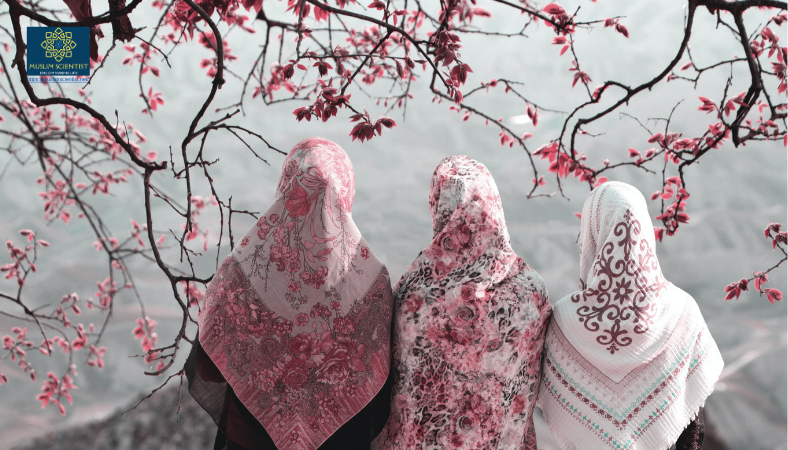
- Discrimination: Muslim women who wear hijab are “easily identified as different,” increasing stress and social anxiety.
- Access: Even when willing, many Muslim women face inequitable access to culturally competent mental health services.
Yet the same faith that can be a source of stigma also holds the key to healing.
What the Science Found: Prayer Works
The scoping review examined both quantitative (6 studies) and qualitative (3 studies) research. The results were remarkably consistent across countries and contexts.
Key quantitative findings include:
- Listening to Quran recitation for 15 minutes, three times per week over 4 weeks significantly reduced anxiety scores in Indonesian pregnant women (Hamidiyanti & Pratiwi, 2019).
- Quran recitation during labor significantly reduced anxiety, cortisol (stress hormone) levels, and even shortened labor time (Irmawati et al., 2019).
- A mindfulness protocol based on Islamic spiritual teachings over 8 weeks was actually more effective than standard cognitive behavioral therapy (CBT) in reducing both anxiety and depression in pregnant women — reducing anxiety scores by 12.13 points more than CBT (Aslami et al., 2017).
- Religious teachings on anxiety delivered over 6 weekly sessions reduced anxiety significantly, with effects lasting at least 2 months after the program ended (Mokhtaryan et al., 2016).
The qualitative studies revealed the human story behind the numbers:
In Somaliland, mothers who experienced stillbirth reported that “Muslim prayer reduced anxiety, fear, and worries around stillbirth and child loss — they overcame the hardship by praying to Allah.”
In Malaysia, bereaved mothers described reciting the Quran and reading Dua as “notable aspects of support during grief to ease sorrow.”
And in Indonesia, new mothers reported that “doing dhikr and reciting Al Qur’an” made them feel “calm and peaceful.”
Key Quantitative Studies — Effectiveness of Islamic Faith Practices
| Study (Location) | Intervention | Timing | Key Finding | Effect Size / Significance |
|---|---|---|---|---|
| Hamidiyanti & Pratiwi (Indonesia, 2019) | Listening to Quran recitation, 15 min / 3x week / 4 weeks | 28-34 weeks gestation | Anxiety significantly reduced | Post-intervention HARS scores: 12.88 (intervention) vs 15.06 (control); p < 0.01 |
| Irmawati et al. (Indonesia, 2019) | Listening to Quran recitation during first stage of labor | During labor | Anxiety, cortisol, and labor time all significantly reduced | p < 0.001 (Friedman test) |
| Aslami et al. (Iran, 2017) | Mindfulness protocol based on Islamic-Spiritual Schemes (8 weeks, 2h/week) | 16-32 weeks gestation | Anxiety and depression reduced MORE than CBT | Difference in anxiety: -12.13; depression: -10.53 ; p = 0.001 (vs CBT) |
| Mokhtaryan et al. (Iran, 2016) | Religious teaching on anxiety (6 weekly 60-90 min sessions) | 20-28 weeks gestation | Anxiety reduced, effect sustained | P ≤ 0.001 (immediately and at 2 months post-intervention) |
| Pakzad et al. (Iran, 2020) | Cross-sectional: Islamic Lifestyle Questionnaire correlation with mental health | During pregnancy | Inverse relationship between Islamic practices and depression/anxiety/stress | r = -0.31; mental health score decreases 0.09 per unit increase in Islamic lifestyle |
Qualitative Studies — Women’s Voices on Faith and Healing
| Study (Location) | Sample | Key Finding | Participant Quote / Outcome |
|---|---|---|---|
| Mutmainnah & Afiyanti (Indonesia, 2019) | 7 postpartum women (2 months – 1 year after birth) | 5 of 7 reported using dhikr and Quran recitation to reduce anxiety | Women felt “calm and peaceful doing so” |
| Osman et al. (Somaliland, 2017) | 10 women who experienced stillbirth (within 6 months) | Muslim prayer reduced anxiety, fear, and worries around loss | “They overcame the hardship by praying to Allah” |
| Sutan & Miskam (Malaysia, 2012) | 16 individual women + 5 focus group + 10 couples (perinatal loss within 6-12 months) | Quran recitation and Dua eased sorrow and supported grief processing | Described as “notable aspect of support during grief” |
Why Does This Work? The Psychology of Islamic Faith Practices
The beauty of these findings is that they align perfectly with both Islamic teachings and modern psychological science.
1. Active Coping, Not Passivity: When a Muslim woman recites Quran or makes Dua, she is not passively waiting. She is actively engaging with her faith, which restores a sense of control during the helplessness of labor or grief.
2. Neurological Calming: The rhythmic recitation of Arabic Quranic verses has been shown to produce physiological relaxation responses — lowering cortisol (the stress hormone) and heart rate.
3. Meaning-Making: Islamic teachings frame pregnancy, pain, and loss as tests from Allah with divine wisdom and reward. This reframing reduces existential anxiety.
4. Connection: Faith practices connect the mother to Allah, to the global Ummah (community), and to generations of Muslim women who have recited the same prayers during birth — reducing isolation.
5. Stigma-Free: For women who are reluctant to see a mental health professional due to community stigma, faith practices are already normalized, accepted, and even encouraged.
Implications for Healthcare: A Call to Action
The researchers are not suggesting that prayer should replace medical care or psychotherapy. Rather, they argue that incorporating Islamic faith practices into standard perinatal care is a low-cost, high-impact, culturally sensitive intervention.
Their recommendations include:
- For obstetricians, midwives, and nurses: Ask Muslim patients if they would like to use faith practices (Quran recitation, Dua, Dhikr) during prenatal visits, labor, or after loss. Normalize it as a health resource, not just a religious ritual.
- For hospitals: Provide access to audio or visual recordings of Quran recitation on hospital televisions or tablets. Allow privacy for prayer during labor by temporarily removing monitoring devices when safe.
- For public health systems: Integrate faith-based coping into perinatal mental health screening and education materials for Muslim communities.
- For imams and community leaders: Address perinatal mental health openly in mosques and women’s circles. Reduce stigma by normalizing both the struggles and the faith-based solutions.
“Non-pharmacological interventions that rely upon individuals’ existing values and coping mechanisms, such as faith practices, may be one free and effective public health intervention to reduce perinatal anxiety and depression across numerous religious groups,” the authors conclude.
A Note on the Study’s Limitations
The researchers are transparent about the limitations of their review. Only nine studies met the inclusion criteria, most were conducted in majority-Muslim countries (Iran and Indonesia), and there was little standardization in how anxiety and depression were measured. More research is urgently needed — particularly on Muslim women living as minorities in Western countries, where discrimination adds an extra layer of stress.
However, the consistency of the positive findings across different countries, study designs, and outcomes is striking. Not a single study found that faith practices were harmful or ineffective.
The Bigger Picture: Faith as a Public Health Resource
This review joins a growing body of evidence showing that spiritual practices are not just “nice to have” — they are clinically effective. Similar research has demonstrated the power of prayer for Christian mothers with postpartum depression. But this is the first known mixed-methods review focused specifically on Muslim women.
For the 1.8 billion Muslims worldwide, and the millions who give birth each year, this is good news. The Quran and Sunnah have always taught that with hardship comes ease. Now science is proving it.
As one mother in the study said simply: “I felt calm.”
In the chaos of pregnancy, the pain of labor, or the darkness of infant loss, that calm — accessible through a whispered prayer, a verse on a phone, or a quiet Dhikr — is nothing short of medicine for the soul.
Reference: here
Other Articles: