For over 150 years, Karl Marx’s critique of capitalism has shaped revolutions, cold wars, and the modern political imagination. His core warning—that private ownership of the means of production inevitably creates a two‑class war between the bourgeoisie (entrepreneurs) and the proletariat (workers)—seemed ironclad.
But a striking academic paper presented at the 1st International Conference on Innovation, Governance and Sustainable Development turns that narrative on its head. This paper argues that Marx was both right and wrong—and that Islam had already solved the problem of capitalist excess more than twelve centuries before Marx was born.
The paper does not defend modern crony capitalism, nor does it call for a socialist revolution. Instead, it proposes a third way: the Entrepreneurs‑Workers Solidarity Model (EnWoS Model), rooted in Islamic civilization’s historical free‑market system and its built‑in mechanism of Zakat (annual compulsory charity).
The Surprising Origin of Global Capitalism: Arab‑Muslim Merchants
Most people assume capitalism was born in 18th‑century Europe with the Industrial Revolution. Dr. Sulaiman’s research shows otherwise.
“The origin of capitalism in the world can be traced to Arab‑Muslim merchants’ global‑trade system started in the 7th century and collapsed in the 18th century,” he writes. Long before Adam Smith or the Dutch East India Company, Muslim traders had built a free‑market, globalized trade network connecting Asia, Africa, and Europe. They operated with private ownership, market‑determined prices, and freedom of consumption, production, and investment—with minimal government intervention.
Key historical evidence:
- 7th century: Arab‑Muslim traders establish presence in southern India, bringing language, literature, free‑trade systems, and crafts.
- 7th–13th centuries: Trade flourishes with China, contributing to the urban development of cities like Guangzhou.
- Trans‑Sahara routes: Berber merchants spread Islam and free‑market principles into West Africa, making Kano (in modern‑day Nigeria) the richest city in West Africa by the 19th century.
- Mediterranean dominance: By the 9th century, Muslims controlled key Mediterranean trade routes, introducing Europeans to sugar, spices, new textiles, and manufactured goods from India and the East Indies.
In short, globalized free‑market capitalism was not a European invention—it was adopted by Europeans from the Muslim world.
How Europeans Recreated Themselves Using Islamic Civilization
When Europe was mired in feudalism and what Arab scholars called a “dark age,” it was trade with Muslim merchants that opened the door to the Renaissance and modernity. Dr. Sulaiman traces several key phenomena:
- Protestant Reformation (1517): Empowered individualistic ethics—a value already showcased by Muslim merchants. Max Weber later noted that Protestants became more entrepreneurial because they could read and interpret scripture directly, much as Muslims had done for centuries.
- Nationalism & Constitutionalism: The creation of nation‑states (England, France) co‑opted the free‑market system from the Muslim world. Yet the Constitution of Madinah (622 CE), established by Prophet Muhammad, is considered the earliest written constitution in human history, guaranteeing religious freedom, rule of law, and mutual defense.
- Democracy: Early Islamic leadership featured consultation (Shura), accountability of rulers, justice before the law, and consent of the governed (bay’ah)—core democratic values long before European liberalism.
- Industrialism: The steam engine was first invented in the Muslim world three centuries before it powered the English Industrial Revolution. Muslims simply did not need to mechanize craft industries because their trade networks already delivered an abundance of hand‑crafted goods.
Thus, “contemporary European Modern Civilization was on the basis of Islamic civilization,” Dr. Sulaiman concludes.
What Marx Got Right (and Islam Already Knew)
Marx’s sharpest critique of industrial capitalism in 19th‑century England focused on four points:
- Exploitation: The bourgeoisie (owners of capital) extract surplus value from workers, paying them less than the value they create.
- Alienation: Workers become mere commodities, divorced from the products of their labor.
- Over‑accumulation: Capital concentrates in fewer hands, leading to stagnant wages and periodic economic crises.
- Class struggle: Eventually, the proletariat would rise up, seize the means of production, and establish socialism.
Dr. Sulaiman acknowledges that Marx was right about the problem—over‑accumulation and inequality remain the most controversial attributes of capitalism today. In fact, economist Thomas Piketty’s 2014 research confirmed that when the rate of return on investment exceeds economic growth, wealth concentrates among the already rich.
But here is the crucial historical correction: Islam had already identified and offered surgical solutions to these exact problems 1,200 years before Marx.
| Problem Identified by Marx | Islamic Solution (7th Century CE) |
|---|---|
| Exploitation of workers / delayed wages | Pay workers before their sweat dries (immediate payment upon agreed terms) |
| Interest‑based lending causes debt spirals and crises | Interest (riba) prohibited; profit/loss sharing instead of fixed interest |
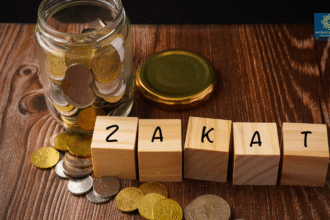
| Wealth concentration / over‑accumulation | Zakat: 2.5% annual compulsory charity on wealth above a minimum threshold (87.48g gold) |
| Lack of social safety net | Zakat redistributes wealth to eight categories of needy, creating a built‑in stabilizer |
“Islam and Marx are on the same page regarding the diagnosis,” writes Dr. Sulaiman, “but Islam did not call for replacing capitalism with socialism.”
Where Marx Was Proved Wrong
Marx predicted that capitalism would inevitably collapse and be replaced by socialism, then communism. History has not been kind to that prediction.
- Russia (1917): First constitutionally socialist state. Collapsed in 1991. Today, Russia operates a capitalist economy.
- China (1949): Adopted socialism, but since 1979 has transitioned to a “socialist market economy”—in practice, a form of capitalism.
- Vietnam (1968): Adopted socialism after the war; has since transitioned to capitalism.
- North Korea: Remains the only pure socialist state—and one of the poorest and most isolated economies on earth.
Dr. Sulaiman argues that capitalism is a natural economic system because humans are created individually, with different gifts, talents, and roles. “Both Christianity and Islam present God as a sovereign being that created humans equal in dignity but with different capabilities,” he writes. Socialism, by contrast, “has no natural foundation and therefore cannot stand and prosper.”
The Entrepreneurs‑Workers Solidarity Model (EnWoS Model)
Instead of class struggle, Dr. Sulaiman proposes a co‑wealth generation system that aligns the interests of entrepreneurs and workers.
The EnWoS Model rule:
Any additional profit above last year’s profit (after tax) should be distributed 60:40 between the entrepreneur(s) and the workforce.
- The 40% share for workers is distributed as a bonus based on grade level, on top of fixed monthly salaries.
- Every worker must invest that bonus into passive income sources (e.g., savings, shares, small businesses) to generate extra earnings.
Why this works:
- Motivation: Workers are directly incentivized to help the company exceed last year’s performance.
- Redistribution: It systematically transfers a portion of surplus value back to labor without confiscating capital.
- Reduced inequality: Over time, workers build wealth through mandatory investment, breaking the cycle of wage dependency.
This model transforms the relationship from zero‑sum conflict to positive‑sum solidarity. It keeps the dynamism of entrepreneurial capitalism while embedding the Islamic principle of Zakat and fair treatment of workers.
Encouraging Data: Two Tables
Historical Timeline – Islamic Free‑Market vs. European Capitalism
| Period | Islamic World | Europe |
|---|---|---|
| 7th–12th centuries | Global trade networks; free markets; Zakat as inequality check | Feudalism; barter economy; Church‑controlled commerce |
| 13th–15th centuries | Mughal‑Islamic Empire in India; Trans‑Sahara gold/salt trade | Late feudalism; Crusades bring contact with Muslim goods |
| 1492–18th century | Ottoman, Safavid, Mughal empires still dominant | Age of Discovery; Europe learns navigation from Muslims; colonizes Americas |
| 18th century | Muslim trade leadership collapses | Industrial Revolution; Europe adopts free‑market system (capitalism) |
| 19th century | Colonial rule over many Muslim lands | Marx writes Das Kapital; critiques industrial capitalism |
| Today | Return to Islamic finance and Zakat‑based social safety nets | Mixed economies; wealth inequality remains unsolved |
Why Marx’s Prediction Failed – Capitalist vs. Socialist Performance
| Indicator | Capitalist Economies (US, Germany, Japan) | Socialist / Ex‑Socialist Economies (USSR, China pre‑1979, North Korea) |
|---|---|---|
| Wealth creation | High GDP per capita; rapid innovation | Low GDP per capita; technological stagnation |
| Poverty reduction | Significant (but inequality persists) | Extreme poverty common; famine events (e.g., USSR 1930s, North Korea 1990s) |
| Entrepreneurial dynamism | High; new firms constantly emerge | Low; state controls means of production |
| Worker freedom | Free to change jobs; collective bargaining allowed | State‑assigned labor; no independent unions |
| Long‑term trend | Continued adaptation (welfare states, profit‑sharing) | Almost all have transitioned to capitalism |
Conclusion: A Third Way Rooted in Ancient Wisdom
The 2025 paper does not call for abandoning capitalism. Instead, it calls for reforming it using principles that Islam perfected centuries ago—principles that Marx himself never knew existed.
The EnWoS Model offers a practical, numbers‑based path forward: 60:40 profit‑sharing above last year’s baseline, with compulsory worker investment. It respects private ownership, rewards innovation, and systematically reduces inequality without revolution.
As Dr. Sulaiman writes, “The relationship between bourgeoisie and proletariat should not be struggle or conflict, but economic and social solidarity.”
For the common person, the message is hopeful: you do not have to wait for a revolution, nor accept exploitation. The tools for a fairer capitalism already exist—in 7th‑century Medina, in the concept of Zakat, and now in a 21st‑century model that finally reconciles Marx’s diagnosis with Islam’s timeless cure.
Reference: here
Other Articles: