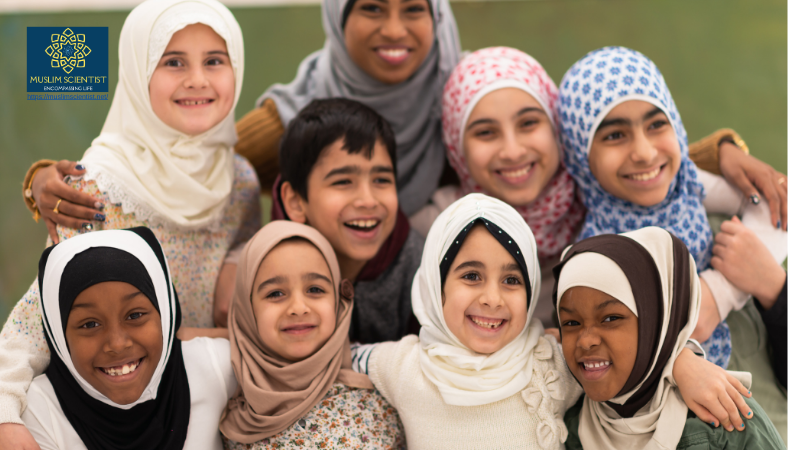
A four-year-old child does not understand abstract concepts like “Allah is the Creator” or “the Hereafter.” But that same child can light up when hearing a cheerful nasheed about God’s love, trace their finger over a beautifully illustrated story of Prophet Yunus (AS) and the whale, or act out the kindness of the Prophet Muhammad ﷺ to a stray cat.
For over a decade, Turkey has been quietly pioneering a bold experiment: structured, institutional religious education for children as young as four. The results are changing how the Muslim world thinks about early childhood faith formation.
A study evaluated the use of educational materials in Turkey’s Qur’an courses for 4–6-year-old children—a network of over 6,200 centers that have already graduated nearly 200,000 children. The findings offer a roadmap for Muslim communities worldwide on how to nurture faith in the “golden age” of learning.
The ‘Golden Age’ of Learning
Early childhood, from ages 4 to 6, is a critical window. Psychologists call it the “golden age” of learning—a period when children absorb information rapidly, form foundational attitudes, and develop their first understandings of right and wrong.
Piaget, Erikson, and Kohlberg all agree: the attitudes and behaviors acquired during these years have lasting effects on personality development and social adjustment. Children at this stage think concretely, not abstractly. They learn through stories, songs, play, imitation, and hands-on activities.
As the study’s authors note: *”Children are still developing abstract thinking skills at the ages of 4–6 years… therefore, supporting early childhood education with concrete experiences, play-based activities, storytelling, drama, and the use of visual and auditory materials is considered pedagogically indispensable.”*
In other words, you cannot lecture a four-year-old about tawhid. But you can show them through stories, songs, and loving examples.
Turkey’s Bold Experiment: Qur’an Courses for 4–6-Year-Olds
In Turkey, formal religious education in public schools begins in the 4th grade (around age 10). But the Turkish Constitution guarantees every family’s right to religious education. Enter the Presidency of Religious Affairs (Diyanet), which established Qur’an courses specifically for children aged 4–6 in 2013.
By 2026, these courses had grown to 6,271 centers. In 2023 alone, 192,068 children graduated.
The curriculum avoids fear- and punishment-based approaches. Instead, it emphasizes love, trust, role modeling, and values education. Instructors teach basic Qur’anic recitation, prayer awareness, love of the Prophet, and core Islamic values through:
- Storytelling (prophetic tales, moral fables)
- Play-based activities (drama, games, movement)
- Music and nasheeds (auditory learning)
- Arts and crafts (visual and tactile materials)
The study surveyed 363 female instructors across five Turkish provinces (Elazığ, Diyarbakır, Şanlıurfa, Gaziantep, and Malatya) to understand their attitudes toward instructional materials and which materials they use most frequently.
What the Data Reveals: Overwhelmingly Positive Attitudes
The researchers used the Attitude Scale Toward Material Use in the Classroom Environment, a validated 20-item scale with two subdimensions: Material Use (items 1–12) and Attitude Toward Material Use (items 13–20).
The results were striking:
- Overall material attitude mean score: 4.59 out of 5 (high level)
- Material Use subdimension: 4.72 (high level)
- Attitude Toward Material Use subdimension: 4.39 (high level)
Instructors are not just using materials—they genuinely believe in their pedagogical value. The scale’s internal consistency (Cronbach’s alpha = 0.929) confirms the findings are statistically robust.
Instructor Attitudes Toward Material Use (N = 363)
| Dimension | Mean Score (out of 5) | Interpretation |
|---|---|---|
| Material Use (practices) | 4.72 | High Level |
| Attitude Toward Material Use (beliefs) | 4.39 | High Level |
| Overall Scale | 4.59 | High Level |
*Source: Attitude Scale Toward Material Use in the Classroom Environment (Akbulut & Tatli, 2013); Cronbach’s α = 0.929*
Interestingly, the Material Use score was higher than the Attitude score. This suggests that instructors see materials not just as “nice to have” but as functional necessities for effective teaching. They are using materials because they work.
Which Materials Work Best for Little Muslims?
The study also asked instructors how frequently they use different types of materials:
- Auditory materials (songs, nasheeds, audio stories): Mean frequency 3.90 (moderate level) – Most used
- Printed materials (books, worksheets, flashcards): Mean 3.24 (moderate level)
- Visual materials (posters, illustrations, puppets): Mean 2.88 (moderate level)
- Digital materials (apps, videos, animations): Mean 2.51 (low-above level) – Least used
Why are auditory materials the top choice? Because children aged 4–6 learn through listening, repetition, and rhythm. A cheerful nasheed about Allah’s love sticks in a child’s mind far longer than a lecture. The Prophet ﷺ himself appreciated beautiful voices reciting the Qur’an, saying: “Adorn the Qur’an with your voices.”
The relatively low use of digital materials is not necessarily a negative finding. The researchers note that technological infrastructure in many Qur’an courses remains limited, and structured digital content officially approved for this age group is still under development. This is not a rejection of technology—it is a reflection of current accessibility.
Frequency of Material Use by Type
| Material Type | Mean Frequency (out of 5) | Level | Examples |
|---|---|---|---|
| Auditory | 3.90 | Moderate | Nasheeds, audio stories, rhythmic recitation |
| Printed | 3.24 | Moderate | Workbooks, picture books, flashcards |
| Visual | 2.88 | Moderate | Posters, illustrations, puppets, felt boards |
| Digital | 2.51 | Low-Above | Educational apps, videos, animations |
*Interpretation: 1.00–1.80 = low; 1.81–2.60 = low-above; 2.61–3.40 = moderate; 3.41–4.20 = moderate-above; 4.21–5.00 = high*
Do Years of Experience Matter? Yes—But Not How You Might Think
The study found that instructors with 0–5 years of experience had significantly higher material use scores than those with 11–15 years or 16+ years of service. In other words, newer teachers use more materials.
Experienced instructors (16+ years) had the lowest material use scores. This could indicate that veteran teachers rely more heavily on traditional, lecture-based methods or have developed habits that do not prioritize material diversity.
But the good news: The overall attitude toward materials remained high across all experience levels. Even experienced teachers believe in materials—they just may need refreshing on how to integrate them effectively.
This finding has clear implications for professional development. In-service training programs should focus not only on introducing new materials but also on re-energizing experienced instructors about their pedagogical value.
Provincial Differences: Context Matters
The study also found statistically significant differences in material attitudes by province. Instructors from Elazığ had the highest overall attitude scores, while those from Gaziantep had the lowest.
This suggests that institutional support, regional infrastructure, and local leadership play important roles in shaping how instructors use materials. It is not just about individual teacher motivation—it is about the system around them.
Islamic Teaching: The Prophetic Model of Teaching Children
The findings of this study resonate deeply with Islamic teachings about education, child development, and the use of diverse teaching methods.
1. The Prophet ﷺ as a Teacher of Children
The Prophet Muhammad ﷺ was not just a leader—he was a teacher. He adapted his approach to his audience, especially children. He would greet children warmly, play with them, shorten prayers when he heard a child crying, and speak to them at their level of understanding.
Ibn Abbas (RA) reported that the Prophet ﷺ put his arm around him and said: “O boy, I will teach you some words…” (Hadith, Tirmidhi). He did not lecture—he connected physically and emotionally first.
2. The Command to Make Learning Easy
The Prophet ﷺ said: “Make things easy for people and do not make them difficult. Give good news and do not repel them.” (Hadith, Bukhari). This applies directly to teaching children. Using colorful materials, songs, and stories makes learning easy and joyful.
3. The Concept of Tarbiyah (Holistic Nurturing)
Islamic education is not just about transmitting information—it is tarbiyah: nurturing the whole child—spiritually, morally, emotionally, socially, and physically. Materials that appeal to multiple senses support this holistic approach.
4. The Prohibition of Harshness with Children
The Prophet ﷺ said: “He is not one of us who does not show mercy to our young ones.” Fear-based, punishment-heavy teaching contradicts this prophetic mercy. The Turkish Qur’an courses explicitly avoid fear-based approaches, emphasizing love, trust, and positive role modeling.
5. The Power of Storytelling in the Qur’an
The Qur’an itself uses stories—over 30 major narratives—to teach moral and spiritual lessons. Stories of Prophets (Adam, Nuh, Ibrahim, Yusuf, Musa, Isa, Muhammad ﷺ) are not abstract theology. They are concrete, emotionally engaging narratives that children can understand and remember. This is the ultimate divine endorsement of story-based learning.
6. Luqman’s Gentle Counsel
The Qur’an presents Luqman as a model parent who advises his son gently, respectfully, and in an age-appropriate manner (Surah Luqman, 31:13-19). He does not shout or threaten. He explains why shirk is wrong, why gratitude matters, how to pray, and how to behave with humility. This is the template for Islamic education at every age.
7. The Sensory Nature of Worship
Islam is not purely abstract. Worship involves physical actions (salah), spoken words (dua, dhikr), visual elements (the Qur’an’s script, the direction of the qibla), and auditory experiences (the adhan, Qur’anic recitation). This multi-sensory dimension of Islamic practice makes it inherently compatible with material-based learning for young children.
Practical Takeaways for Muslim Parents and Educators
Based on the Turkish study and Islamic teachings, here is how to nurture faith in young children:
1. Use Auditory Materials
- Play nasheeds (vocals only) about Allah’s love
- Tell stories with different voices and sound effects
- Teach short surahs through rhythmic repetition
2. Use Visual and Tactile Materials
- Show illustrated books of prophetic stories
- Use felt boards, puppets, and dolls to act out stories
- Create simple crafts (e.g., making a model of the Kaaba)
3. Do Not Fear Digital (But Use It Wisely)
- High-quality Islamic animations and apps can be effective
- But screen time should be limited and co-watched with a parent
4. Train and Support Teachers
- New teachers need encouragement to use diverse materials
- Experienced teachers need refreshing on the why and how
5. Avoid Fear and Harshness
- The Prophet ﷺ taught with mercy, not threats
- Focus on Allah’s love, mercy, and beauty
The Bottom Line: A Model for the Muslim World
Turkey’s Qur’an courses for 4–6-year-olds are not perfect—digital infrastructure remains limited, and experienced teachers sometimes fall back on older methods. But the data is clear: instructors believe in materials, they use them frequently, and the model is reaching hundreds of thousands of children.
The Prophet ﷺ said: “Each of you is a shepherd and each of you is responsible for his flock.” Teaching children about Allah is not just education—it is an act of worship and a sacred responsibility.
The Turkish study shows that when educators take that responsibility seriously, and when they are equipped with the right materials, young children can begin their faith journey with love, joy, and understanding—not fear, confusion, or boredom.
That is a lesson every Muslim community needs to hear.
Reference: here
Other Articles: