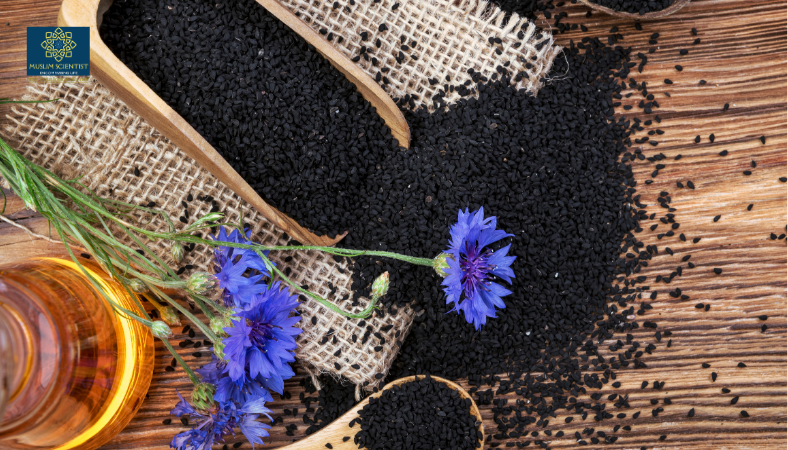
A Tiny Black Seed With a Big Reputation
Few natural remedies carry as much historical weight as Nigella sativa, commonly known as black seed or black cumin. Within Islamic tradition, this small seed holds a legendary status, largely because of a striking statement attributed to Prophet Muhammad (peace be upon him) in Sahih Bukhari. According to this hadith, the Prophet described black seed as a cure for every disease except death itself. Consequently, generations of Muslims have kept black seed in their kitchens and medicine cabinets, treating it as both food and remedy.
Today, that centuries-old confidence faces a very modern test: scientific scrutiny. Researchers worldwide have spent the past decade investigating whether black seed truly deserves its reputation. Interestingly, PubMed data show that annual publications mentioning Nigella sativa jumped from around 277 in 2015 to more than 1,265 in 2025, reflecting surging scientific interest. This article examines what Islamic teaching says about black seed, then compares those claims against current peer-reviewed research, using clear tables to make the evidence easy to understand.
The Hadith That Started It All
The most frequently cited hadith regarding black seed appears in both Sahih Bukhari and Sahih Muslim. In it, the Prophet reportedly said that black seed contains a cure for every ailment except death. Scholars of hadith generally classify this narration as authentic (sahih), which explains why it carries such weight across Islamic medical tradition, known as Tibb an-Nabawi (Prophetic Medicine).
Nevertheless, classical scholars offered nuanced interpretations of this statement rather than treating it as a literal cure-all. Ibn Qayyim al-Jawziyyah, in his renowned work on Prophetic Medicine, explained that black seed strengthens the body’s natural resistance rather than curing every illness directly. Similarly, other commentators noted that the phrase “cure for every disease” reflects black seed’s broad-spectrum supportive properties, not an instant remedy for all conditions.
Furthermore, this hadith encouraged centuries of practical use across the Muslim world, long before laboratory testing existed. Physicians in classical Islamic civilization, including figures associated with the broader Unani and Tibb traditions, incorporated black seed into remedies for digestive issues, respiratory complaints, and general weakness. As a result, black seed became deeply embedded in household practice, passed down through generations as a trusted natural remedy.
What Modern Science Has Found
Contemporary research increasingly examines the compound most responsible for black seed’s effects: thymoquinone, along with related alkaloids and fixed oils found in the seed’s kernel. Multiple systematic reviews now compile evidence from dozens of randomized controlled trials, offering a clearer picture than isolated studies once provided. The table below summarizes key research areas and the current strength of evidence behind each claim.
| Health Area | Reported Effect | Evidence Strength |
|---|---|---|
| Cardiovascular health | Lower LDL cholesterol, triglycerides; higher HDL | Strong (82-trial meta-analysis, 2025) |
| Blood sugar control | Improved glycemic markers in diabetic patients | Moderate (multiple small RCTs) |
| Respiratory conditions | Bronchodilatory and antihistaminic effects in asthma | Moderate (clinical trials since 1993) |
| Inflammation & oxidative stress | Reduced inflammatory markers | Strong (consistent across reviews) |
| Weight management | Reduced fat cell accumulation, modest anthropometric change | Emerging (2025 cellular and human studies) |
Clearly, the strongest evidence currently supports cardiovascular and anti-inflammatory benefits. Meanwhile, research on diabetes and respiratory health remains promising but still relies on relatively small trial sizes. Therefore, scientists generally describe the current evidence as encouraging rather than conclusive, calling for larger, longer-term studies before firm medical guidelines can emerge.
Nutritional and Bioactive Composition
Beyond its medicinal reputation, black seed also offers a distinct nutritional profile that supports its traditional use as both food and remedy. The following table outlines the primary bioactive components found in Nigella sativa seeds and oil.
| Component | Approximate Content | Known Function |
|---|---|---|
| Thymoquinone | 0.5–1.5% of seed oil | Antioxidant, anti-inflammatory |
| Fixed oils | 35–38% of seed weight | Source of essential fatty acids |
| Protein | ~20% of seed weight | Tissue repair and growth |
| Dietary fiber | ~8% of seed weight | Digestive support |
| Alkaloids (e.g., nigellicine) | Trace amounts | Immunomodulatory activity |
| Essential minerals (iron, calcium, zinc) | Variable trace levels | General metabolic support |
In this context, the seed’s dual role as nourishment and remedy becomes easier to understand. Additionally, thymoquinone concentration varies depending on extraction method and seed origin, which partly explains inconsistent results across different studies. Consequently, researchers increasingly call for standardized dosing when testing black seed’s therapeutic effects.
Safety, Dosage, and Practical Guidance
Although black seed enjoys a long safety record, current evidence still calls for sensible caution. The U.S. Food and Drug Administration classifies Nigella sativa as generally recognized as safe when used as a culinary spice. However, concentrated supplements represent a different matter, particularly for people taking other medications.
For instance, black seed may interact with drugs metabolized through cytochrome P450 pathways, potentially altering their effects. Moreover, animal studies have shown liver and kidney concerns at very high doses, even though human data remain limited on this specific risk. As a result, most clinical trials use moderate daily amounts, typically between 500 mg and 2 grams of seed powder or oil, spread across several weeks.
Meanwhile, topical application of pure black seed oil has occasionally triggered allergic skin reactions in sensitive individuals. Therefore, health practitioners generally recommend a patch test before broader topical use. In addition, pregnant women and individuals scheduled for surgery should exercise particular caution, given limited safety data in these specific populations. Overall, black seed appears safe for typical culinary use, while supplement use warrants professional guidance.
Black Seed Across Muslim Cultures
Beyond clinical research, black seed maintains a strong cultural presence throughout the Muslim world, appearing in food, folk remedies, and daily wellness routines. The table below highlights how different regions incorporate this seed into everyday life.
| Region | Common Use | Cultural Context |
|---|---|---|
| Middle East | Sprinkled on bread (khubz) and pastries | Everyday culinary staple |
| South Asia | Mixed into honey or ghee remedies | Home remedy for colds and fatigue |
| North Africa | Ground into spice blends | Traditional seasoning and tonic |
| Turkey | Brewed as çörek otu tea | Digestive and immune support drink |
| Southeast Asia | Sold as capsules or oil supplements | Modern wellness and halal supplement market |
Clearly, black seed’s role shifts from ancient remedy to modern supplement depending on the region. Meanwhile, the global halal supplement industry has embraced black seed oil capsules, marketing them toward health-conscious Muslim consumers worldwide. Similarly, traditional practices like mixing black seed with honey continue alongside newer, standardized supplement formats.
Where Faith and Evidence Meet
Ultimately, the relationship between Prophetic guidance and modern research on black seed reflects a broader pattern within Islamic tradition: encouragement toward reflection and inquiry rather than blind acceptance. Ibn Qayyim’s centuries-old interpretation, framing black seed as a general strengthener rather than a literal cure for every disease, aligns remarkably well with today’s cautious scientific consensus.
Furthermore, ongoing meta-analyses continue to validate specific claims, particularly regarding cardiovascular and anti-inflammatory benefits, while other claims await further confirmation. Consequently, black seed stands as a compelling case study in how traditional wisdom and empirical research can inform one another rather than compete. Neither dismissing centuries of practical use nor uncritically accepting every claim, current science offers a balanced path forward.
Conclusion: A Seed Worth Studying Further
Black seed’s journey from a Prophetic hadith to a subject of rigorous clinical trials illustrates how tradition and science can walk side by side. While research has not confirmed every historical claim, substantial evidence now supports several of black seed’s most cited benefits, particularly for heart health and inflammation. Additionally, its long safety record within reasonable dosing continues to reassure both practitioners and researchers.
As scientific interest in Nigella sativa continues to grow each year, this humble black seed offers a compelling example of how faith-based tradition can inspire, rather than replace, careful scientific investigation.