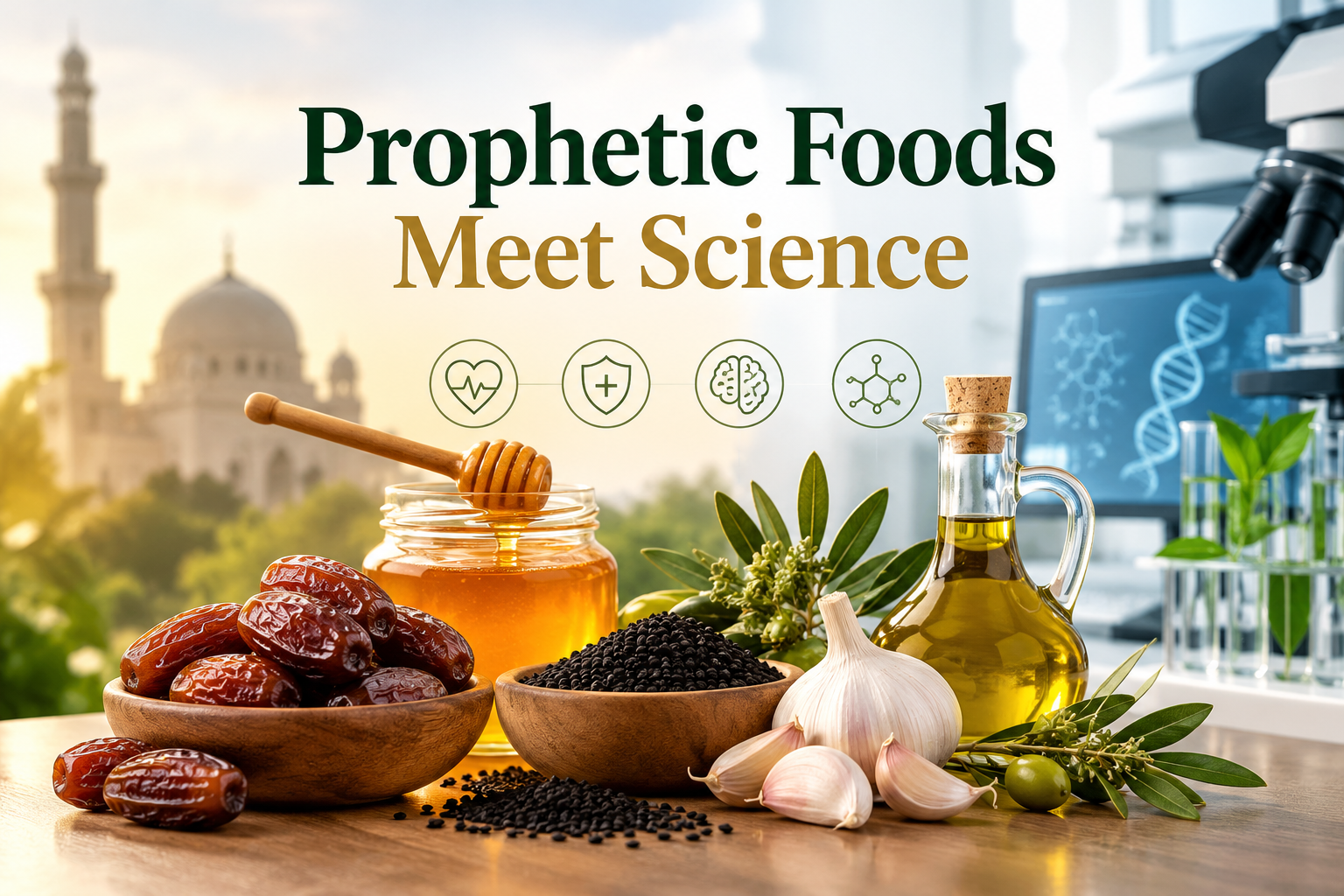
Faith and Food Meet Modern Medicine
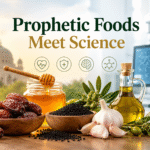
A spoonful of honey, a handful of dates, a cup of Zamzam water. For many Muslims, these everyday items are more than food. They are also health choices rooted in faith. Now, a global survey of 2,292 adults shows how widely people embrace these traditions, and how carefully many of them think about it.
The study appeared in 2026 in BMC Complementary Medicine and Therapies. Researchers asked Muslims from 32 countries about the foods and remedies mentioned in the Qur’an and the Prophetic Sunnah, the teachings and practices of the Prophet Muhammad. The team measured three things: what people know, how they feel, and what they actually do.
Overall, the picture is encouraging. Almost everyone said these foods should support modern medicine rather than replace it. Even so, roughly one in four respondents believed the foods cannot cause harm at any dose. As a result, the authors argue that health systems need better education, clearer rules and more research.
Lead author MoezAlIslam Faris and colleagues from universities in Jordan, the United Arab Emirates, Saudi Arabia, Turkey and the United Kingdom carried out the work. Their message is simple. Faith and science do not have to compete, but both need careful handling.
Who Took Part in the Survey
The team shared an online questionnaire through social media, online forums and religious networks. Friends invited friends, a method called snowball sampling. Data collection ran from November 2019 to October 2024.
The average participant was 38.7 years old, and 60.7 percent were women. In addition, 57 percent held a bachelor’s degree, and another 33.6 percent had a postgraduate degree. More than half (55.1 percent) worked as employees. Most respondents came from the Levant region (58.5 percent), followed by the Arabian Gulf (22.7 percent) and Sub-Saharan Africa (9.2 percent).
Moreover, participants described themselves as fairly devout. About 63.5 percent said they were moderately religious, and 34.1 percent said they were highly religious. Only 2.4 percent reported low religious commitment.
These details matter for one reason. The group is highly educated, active online and mostly from the Middle East. Consequently, the results cannot speak for every Muslim worldwide. The authors say so themselves, and readers should keep that in mind throughout this report.
Strong Beliefs, Mixed Views on Safety
Knowledge scores looked strong. About 80.8 percent of participants showed adequate knowledge, with an average of 4.8 out of 6. Meanwhile, 94.7 percent held positive attitudes, averaging 3.75 out of 4.
Nearly all respondents (97.9 percent) agreed that foods such as honey, dates, garlic, Zamzam water and black seed can support modern treatment. Similarly, 90.2 percent agreed that remedies such as cupping can complement medical care.
However, views split on bigger claims. Half of the participants (50.4 percent) said these foods and remedies could serve as alternatives to modern therapies, while 34.9 percent disagreed. In addition, 26.4 percent believed the foods cannot cause harm regardless of amount or health status. Another 27.4 percent said the remedies suit every medical condition. About two-thirds disagreed with each of those statements.
Why does this matter? Natural does not always mean safe. The authors note that honey and dates can raise blood sugar in people with diabetes, and cupping may be risky for people with heart or vascular problems. Likewise, they cite concerns about black seed oil in people with liver disease. For that reason, the one-in-four who see no risk may be the group most exposed to avoidable harm.
What People Eat and Do Every Day
Beliefs turn into daily habits. In fact, 92.8 percent said they eat these foods at least sometimes to prevent illness, aid healing or stay healthy. Olive oil led the list at 78.5 percent. Honey followed at 77.1 percent, then palm dates at 75.6 percent and Zamzam water at 63.3 percent.
Remedies told a different story. Voluntary fasting was the clear favorite. Using water to cool a fever came next, followed by cupping, known as Hijama. Cauterization and the use of camel milk or urine ranked last. The authors link those low numbers to pain, health risks and ongoing religious debate.
Good habits also extend beyond medicine. Nearly all respondents (99.4 percent) follow Prophetic eating manners, such as saying “bismillah” before a meal and washing hands. Furthermore, 96.5 percent try to avoid food waste.
The Most Popular Foods and Remedies
| Item | Share of participants using it |
|---|---|
| Olive oil | 78.5% |
| Honey | 77.1% |
| Palm dates | 75.6% |
| Zamzam water | 63.3% |
| Black seed | 48.6% |
| Voluntary fasting | 62.7% |
| Water for fever | 39.3% |
| Cupping (Hijama) | 34.3% |
| Cauterization | 2.3% |
Where People Learn About These Remedies
Where do people get their information? Religious books top the list at 42.7 percent. Peer-reviewed scientific books and journals sit close behind at 41.9 percent. YouTube (38 percent) and social media (35.2 percent) also play major roles.
When it comes to people, nutritionists were the most common source (58.9 percent). Alternative medicine therapists followed, then medical doctors and Islamic scholars. Meanwhile, only 11.8 percent turned to media personalities.
Notably, 92 percent said they check the credibility of food and remedy information with reliable sources. The authors see this as a positive sign. Nevertheless, they caution that some alternative medicine practitioners lack training in medical or nutrition science. In addition, they point out that social media claims have strongly shaped public beliefs about these remedies.
Where Participants Get Their Information
| Source | Share of participants |
|---|---|
| Nutritionists | 58.9% |
| Alternative medicine therapists | 47.3% |
| Medical doctors | 46.5% |
| Islamic scholars and imams | 44.9% |
| Religious books | 42.7% |
| Scientific books and journals | 41.9% |
| YouTube channels | 38.0% |
| Social media | 35.2% |
| Media personalities | 11.8% |
The Puzzle: More Knowledge, Lower Practice Scores
The most surprising result involves the link between knowing and doing. Statistically, people with more knowledge scored lower on practice. The effect was small but significant. Moreover, 87.4 percent of the “poor practice” group had adequate knowledge, compared with 76 percent of the “good practice” group.
Attitude behaved in a similar way inside the researchers’ statistical model. Knowledge raised positive attitudes slightly. Yet attitude itself showed a negative direct link to practice. Put simply, believing in these remedies did not automatically mean using them more consistently.
The authors offer several possible explanations. For instance, money, stress, low motivation and the difficulty of changing habits can all block action. Overconfidence may also play a role. Nonetheless, a cross-sectional survey captures one moment in time. It cannot prove that one factor causes another, so these explanations remain educated guesses.
Importantly, the authors note that similar gaps appear in many other health studies. In other words, knowing what is healthy often falls short of changing behavior. Public health teams around the world know this problem well.
How Religious Commitment Bridges the Gap
One factor seems to help. Religious commitment showed a clear positive link to practice. Furthermore, when the researchers tested its combined effect with attitude, the result was also positive and statistically significant. In plain terms, a strong sense of religious duty may help turn beliefs into action.
The pattern was not simply “more religious means healthier.” Participants who described their commitment as moderate scored better on knowledge, attitude and practice than those reporting high or low commitment. Women, employed participants and respondents from the Levant region also scored higher on all three measures.
As a result, the authors suggest that community health programs could work with religious leaders. A trusted imam or scholar can reach people who might ignore a pamphlet from a health agency. Likewise, mosques and Islamic schools could carry clear, science-based messages about safe use.
Still, the researchers stress that this finding is a statistical pattern, not a guarantee. Individual choices depend on many personal factors that the survey did not measure.
A Public That Wants Safety Rules
Participants did not ask for fewer rules. They asked for more. About 96.5 percent agreed that these foods should be promoted alongside traditional medicine. Similarly, 94 percent supported teaching them in schools, and 94.1 percent said treatments such as cupping and cauterization should be regulated by law and performed by qualified practitioners. Another 90.3 percent wanted government authorities to monitor practices including camel urine use, cupping, cauterization and Ruqyah.
These views make sense given past problems. The paper recalls infections linked to poorly sterilized cupping tools and a harmful case involving camel urine products. Therefore, regulation and training are not abstract ideas for the people who answered this survey.
Scholars also debate how to read the Prophet’s medical advice. Some see it as guidance shaped by the medicine of his time. Others treat it as religious instruction. The authors note that many scholars place the protection of human health first, and that both views can fit within a holistic approach, provided evidence guides how people use these remedies.
Limits of the Study
Every study has weak points, and this one is no exception. First, convenience sampling means the group is not a random slice of the Muslim world. Second, online recruitment likely missed people without internet access. Third, people may have answered in ways they believed were socially acceptable. In addition, self-reported answers can contain memory errors.
Moreover, the survey is cross-sectional, so it shows patterns rather than causes. The “practice” score also measured how often people use certain foods and treatments, not whether their health improved. Therefore, nobody should read these results as proof that any remedy works or fails.
Even so, the study has real strengths. It is large, it covers many countries, and it examines a wider range of foods and remedies than earlier work. According to the authors, it is the first of its kind to look at these beliefs through a modern medical lens.
What Happens Next
The authors close with practical recommendations. They call for education programs that explain proper use, laws that regulate practices such as cupping, and culture-centered training for healthcare providers. They also want laboratory research on the active ingredients, effective doses and best methods of use.
The paper stresses a core rule: any traditional remedy should be safe, effective and should not interfere with established medical treatment. Consequently, readers who take medication or manage a chronic condition should talk to their doctor before changing their routine.
The bottom line is hopeful. Millions of people already care about both faith and facts. With clear guidance, trained practitioners and honest research, those two values can work together for healthier communities.